| | In this edition: Kenya-US health deal sparks continent-wide data concerns, US approves Lobito loan, ͏ ͏ ͏ ͏ ͏ ͏ |
| |  | Africa |  |
| |
|
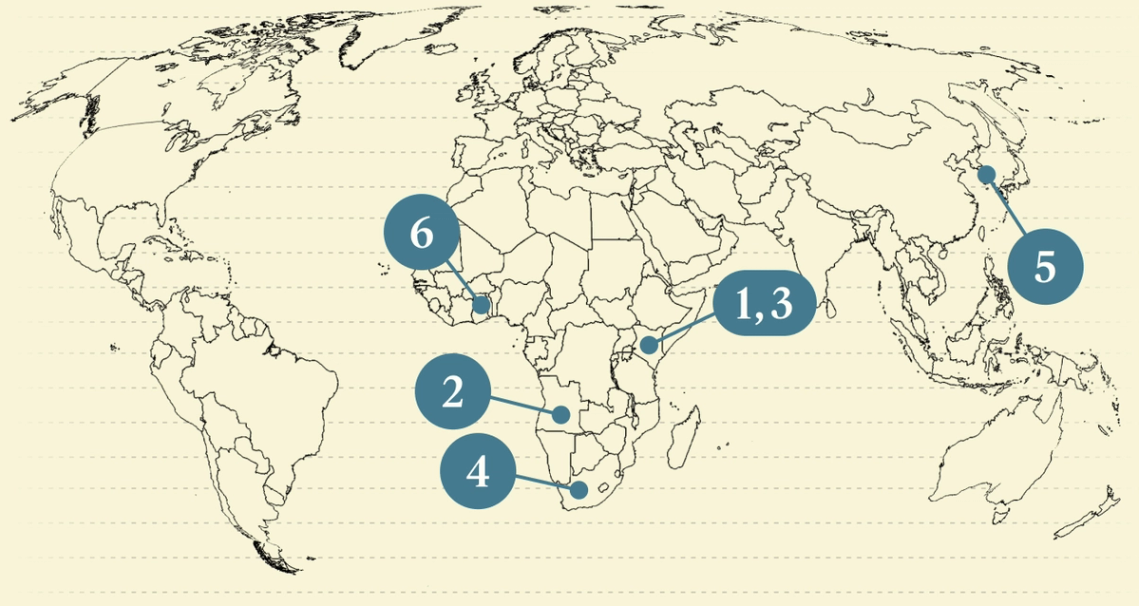 - Kenya-US health fallout
- US approves Lobito loan
- Kenya’s energy deal
- Afrikaner row grows
- HYBE enters Africa
- Ghana’s fugitive ex-minister
 Weekend Reads, and a Burkinabé-German architect’s new library in Rio. |
|
Kenyans criticize US health deal |
| |  | Martin K.N Siele |
| |
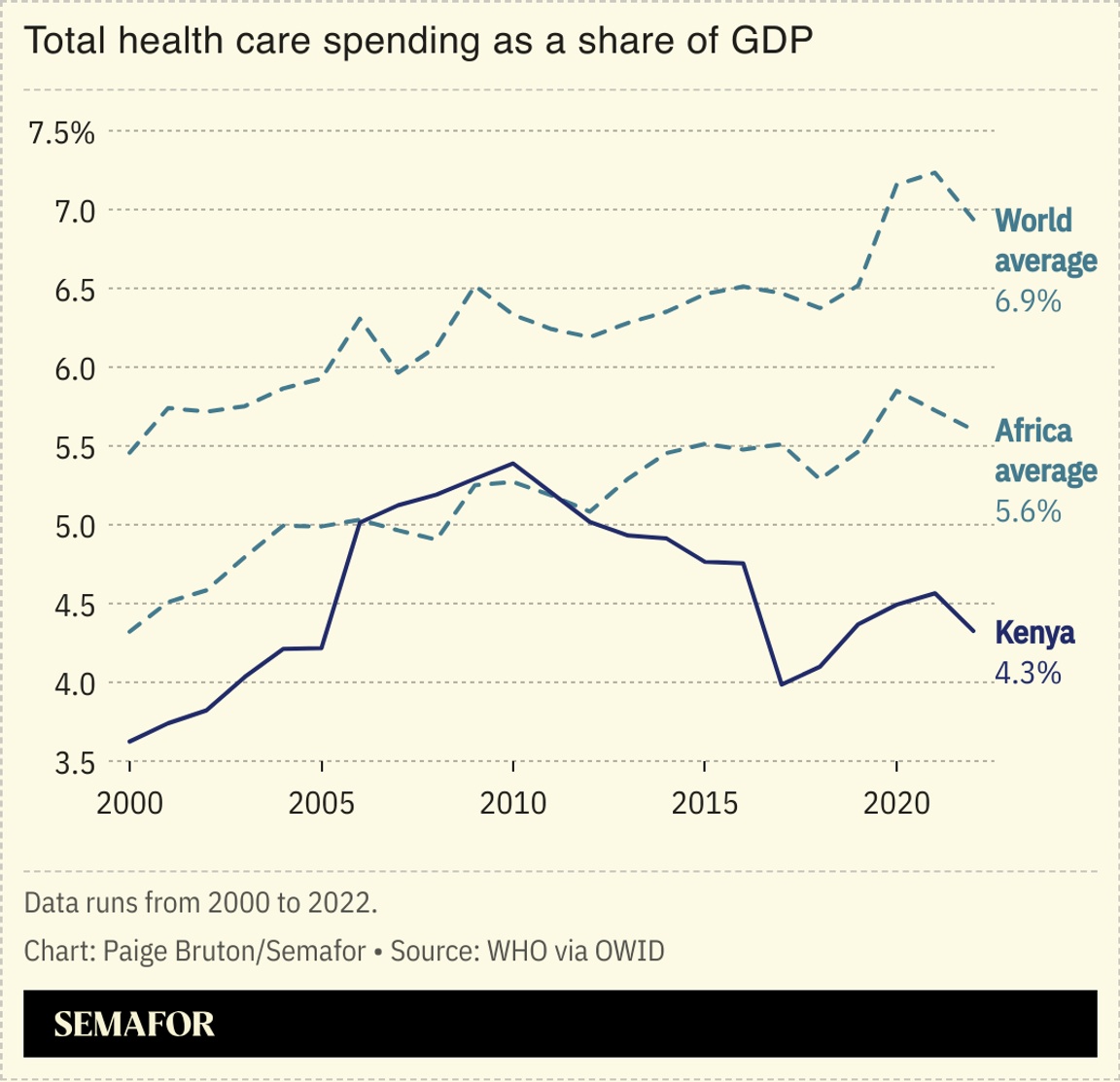 Criticism of a $2.5 billion health cooperation agreement between Washington and Nairobi is growing in Kenya over data privacy concerns, sparking calls for other African countries signing deals with the US to demand “fair terms.” Kenya became the first country to sign a new health agreement with Washington this month, but a Kenyan court last week suspended implementation of the deal. The Trump administration’s America First Global Health Strategy — a successor to USAID, which previously funded vital health programs across Africa — is in line with its more business-led approach to the continent. Washington’s strategy emphasizes its priorities, such as preventing disease outbreaks before they reach the US, and commits partner countries to increasing their health spending. Eswatini, Lesotho, Liberia, and Rwanda have signed similar deals to the one agreed with Kenya. But last week, 50 civil society organizations from across the continent published a letter to African governments warning that the agreements “undermine your national health and personal security.” President William Ruto has accused nonprofits previously involved in US health programs of spreading misinformation about the Kenyan deal, without providing evidence to support his claims. |
|
US loan to Angola for Lobito railway |
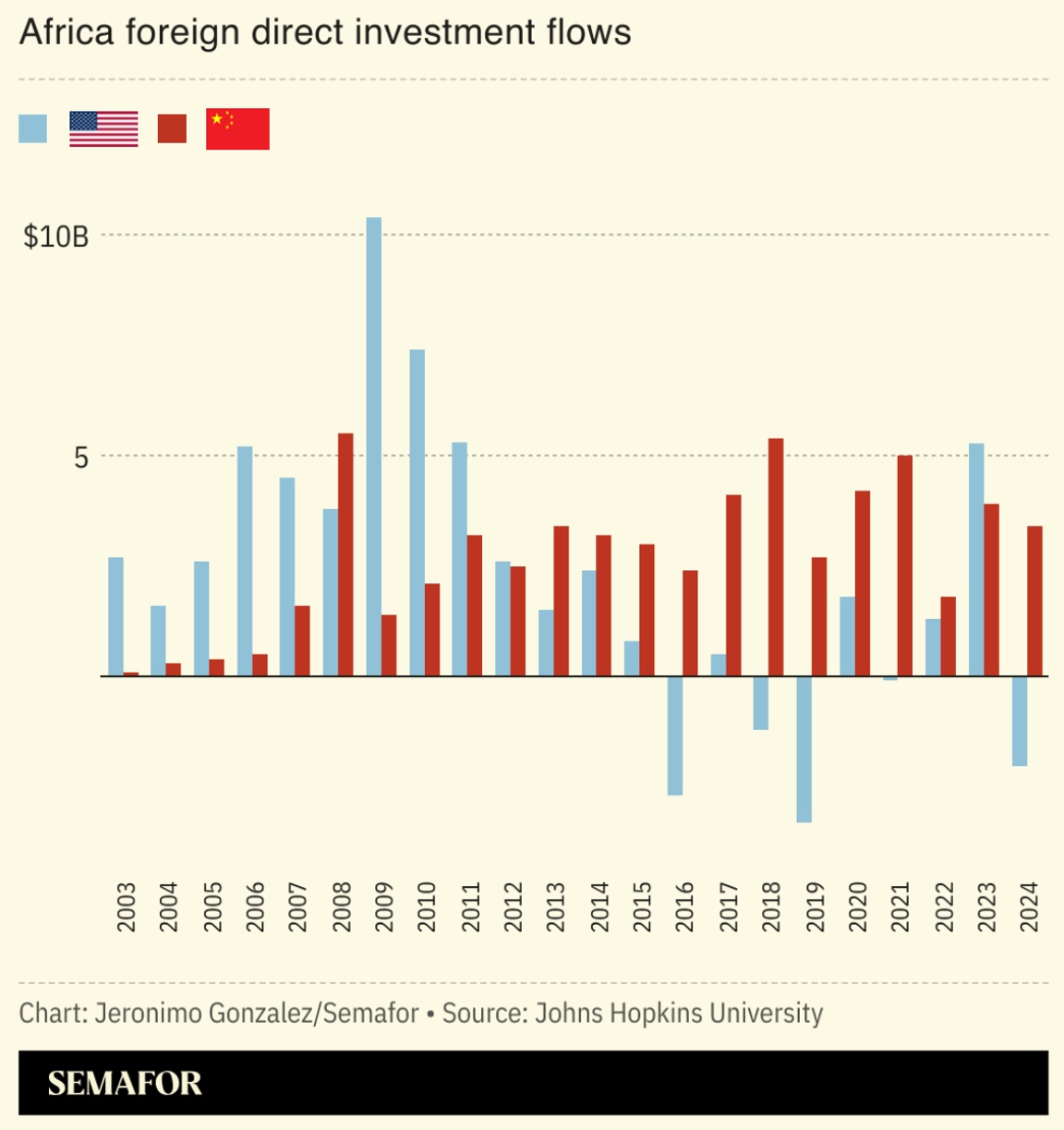 The US approved a $550 million loan to Angola to refurbish a key railway line, part of Washington’s new strategy to promote its interests in Africa. The loan is part of White House efforts to counter China’s influence on the continent, while gaining access to Africa’s vast mineral resources. Once completed, the Lobito Corridor will connect mining regions in DR Congo and Zambia with a port on Angola’s Atlantic coast, making it easier to transport minerals. Zambia and DR Congo produce more than 13% of the world’s copper but it currently takes weeks for the metal to reach ports. “Angola occupies one of the continent’s most strategic junctions” because the country “potentially offers supply chain security for partners around the world,” Alex Vines, Africa program director at the European Council on Foreign Relations, wrote recently. The loan underscores Washington’s shift from providing aid to African nations to financing projects that align with US priorities. However, the sudden pivot to a “trade, not aid” approach has left several African nations struggling to plug funding gaps. |
|
 The value of a new power deal in Kenya to build and operate two high-voltage transmission lines and substations. The agreement is between the state-owned Kenya Electricity Transmission Company and a consortium comprising pan-African infrastructure investor Africa50 and the Indian government’s electricity transmission company Power Grid Corporation. No public funds have been committed, according to the Kenyan government agency. Nearly three-quarters of Kenya’s 53 million-strong population has access to electricity, according to the International Energy Agency. The deal for the new power lines is designed to make the grid more reliable with the addition of renewable energy sources. Africa50 and Power Grid will have a 30-year window to recover their investment by charging tariffs. — Alexander Onukwue |
|
Trump warns S. Africa over Afrikaners |
 Kevin Lamarque/File Photo/Reuters Kevin Lamarque/File Photo/ReutersThe Trump administration said South Africa faced “severe consequences” over Pretoria’s opposition to US efforts to aid Afrikaners, widening a bilateral rift. Washington on Thursday condemned South Africa’s recent detention of US officials, saying they were providing “humanitarian support to Afrikaners.” Since the start of his second term, US President Donald Trump has accused South Africa of waging a “genocide” against its white population — an allegation rejected by experts — imposing hefty tariffs as punishment. South African officials have sought to improve ties by making concessions, only to be rebuffed by the US. “How do you take this forward is a real conundrum,” a South African expert told the Financial Times. The US Senate on Thursday, meanwhile, confirmed the appointment of Leo Brent Bozell III as ambassador-designate to South Africa in a move that is likely to add to tensions between the two countries. Bozell — a longtime conservative media critic with no diplomatic background — has previously criticized the anti-apartheid movement and offered support for disputed claims that Afrikaner farmers are under attack in South Africa. |
|
K-pop looks to Africa market |
 South African singer Tyla. Jamie McCarthy/WireImage. South African singer Tyla. Jamie McCarthy/WireImage.K-pop juggernaut HYBE is making a big push into Africa, starting with one of the continent’s biggest breakout stars. The entertainment company, which is behind mega-popular boy band BTS, announced a new joint venture with Brandon Hixon and Colin Gayle, two African music veterans. HYBE will also oversee global management for Grammy-winning South African singer Tyla. The expansion is in line with HYBE’s “multi-home, multi-genre” strategy. Beyond South Korea, it has already set up shop in the US, Latin America, China, and India, with a goal of developing acts in the K-pop framework that appeal to local audiences and tastes. Tyla is a logical first signing in Africa: Her fusion of pop and amapiano has made her a Gen-Z hitmaker with global influence. The continent’s music industry is also primed for growth, with sub-Saharan Africa’s music revenues surpassing $100 million for the first time last year. — J.D. Capelouto |
|
Person of Interest: Ken Ofori-Atta |
 Ernest Ankomah/Getty Images Ernest Ankomah/Getty ImagesGhana has requested the extradition of former Finance Minister Ken Ofori-Atta from the US over corruption charges. The 66-year-old was declared a fugitive this year after failing to attend interviews in relation to his case — he stands accused of causing financial losses while he was in government. Interpol issued a red notice, alerting law enforcement agencies to locate and detain Ofori-Atta, soon after. He has denied any wrongdoing. The former banker oversaw Ghana’s debt restructuring efforts as finance minister between 2017-2024. He was dismissed by then President Nana Akufo-Addo, his paternal cousin, at a time of soaring inflation and growing calls for his resignation from both opposition and ruling party MPs. |
|
 - Northern Nigerians are responding with satire to US President Donald Trump’s threats of military action over his widely disputed claims of Christian persecution. Growing numbers of social media posts and videos lampoon the idea of an invasion, writes Amatallah Saulawa for Africa Is a Country, tapping into a long tradition of using humor to launch social critiques. “Will Nigeria call America’s bluff?” Saulawa asks, saying that the skitmakers certainly hope so.
- Chinese tech companies are relying on a shadow workforce of young Kenyans to label data used in AI training. Workers are recruited through WhatsApp groups “that operate like digital factory floors,” Rest of World reports. Students and recent graduates are lured into long working hours on short-term projects, with no formal contracts. “We have no idea what they are doing with this annotation work,” one said in a story highlighting the lack of worker protections in emerging global tech supply chains.
- Climate funding in Africa must shift from carbon-centric mitigation to local adaptation, a columnist argues for NextBillion, calling for a focus on drought resilience and food security instead of offset metrics. Only about 15% of global climate finance currently goes to adaptation. This imbalance “risks turning African landscapes into carbon farms for the Global North,” writes the chief growth officer at a social enterprise working with farmers. Instead she urges funders to invest in “climate-smart” practices such as improving pest management and using certified seeds to boost agricultural output.
- China’s dominance in Africa’s critical minerals sector has made it difficult for African countries to advance up the value chain, an analyst at the Africa Center for Strategic Studies argues. In recent years Beijing has acquired major African mining assets including Botswana’s Khoemacau copper mine, Mali’s Goulamina lithium mine, and Tanzania’s Ngualla rare earth mine, to name just a few. African countries must do more to harness the potential of minerals for African citizens, Paul Nantulya writes. He urges technology and skills transfer agreements in all mining deals, plus investments in infrastructure and human capital, among other measures.
- Somalia urgently needs a “new way forward” as the African Union’s peace mission in the country struggles with funding and capacity, a security analyst writes in The New Humanitarian. Recent gains by the insurgent group al-Shabab “have exposed a troubling lack of readiness,” Samira Gaid argues, saying state failures in delivering basic services have created a vacuum for the militants to step in. She calls for the prioritization of humanitarian support to close the gap in critical areas such as food and health, while also advancing governance through political negotiation.
|
|
 Business & Macro |
|
|


