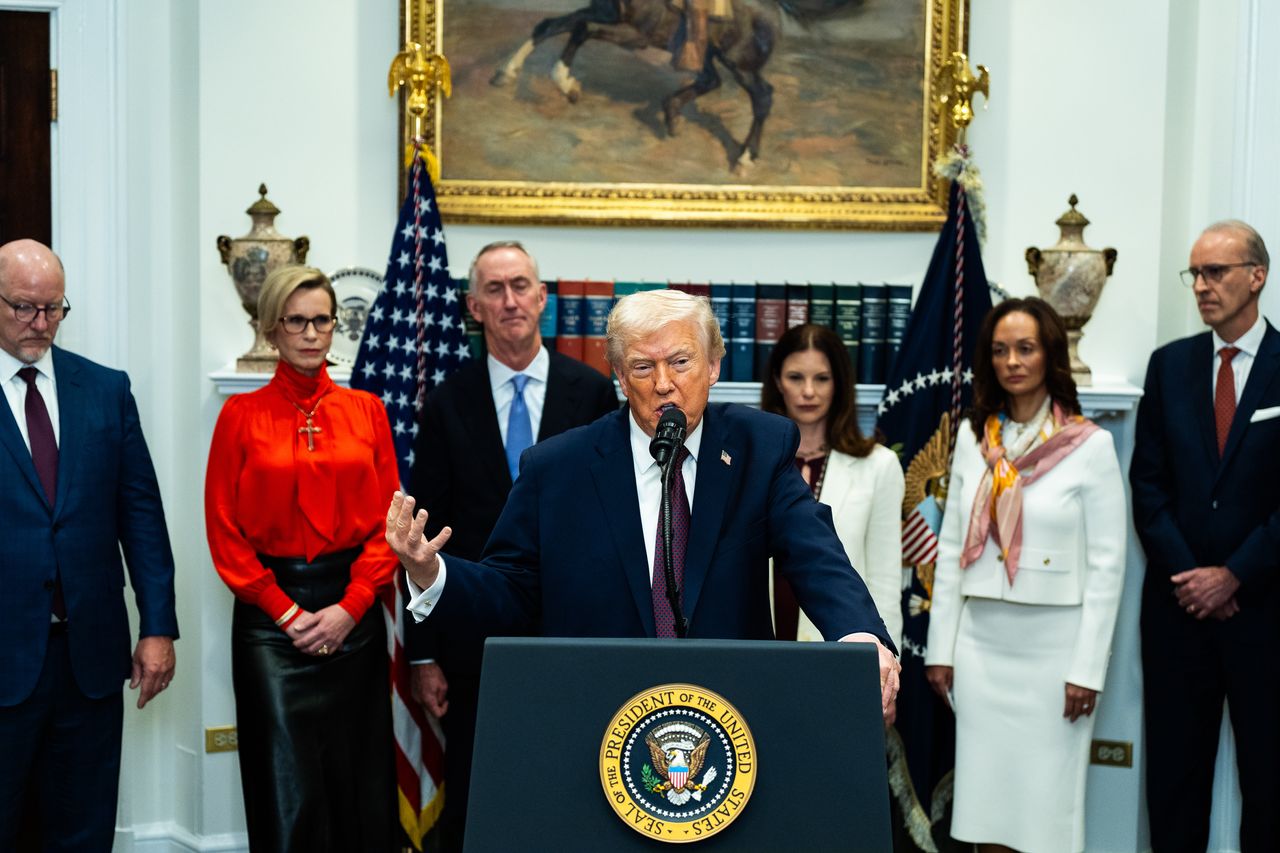
| |  | The Lead Brief | Nine pharmaceutical companies cut drug pricing deals with the Trump administration today, the largest group of agreements to be announced at one time since the White House began rolling them out in September. The companies — Amgen, Boehringer Ingelheim, Bristol Myers Squibb, Genentech, Gilead Sciences, GSK, Merck, Novartis and Sanofi — all said they’d be slashing prices on some of their products, including ones used to treat HIV, diabetes, heart disease, the flu, and respiratory illnesses including asthma and COPD. For example, Bristol Myers Squibb said on Friday it would be offering its blood-thinner Eliquis — which has been subject to Medicare’s price negotiations — to the Medicaid program for free. In July, the company announced that patients could begin purchasing the drug directly from the company at a discount. It’s part of President Donald Trump’s push for companies to lower the costs of their medications to put them in line with other wealthy countries, also known as most-favored-nation pricing. “These people really are pioneers,” President Donald Trump said during a White House announcement Friday, as he was surrounded by top health agency officials and executives from the companies involved. “What they’re doing is so great, and, in the end, they do much more business. I think it’s going to even out for them.” Drug companies will be offering medications directly to Americans at a cash discount through a government-run website, TrumpRx, slated to launch next year. They’ve also promised increased U.S. investments. In exchange, drugmakers are receiving tariff relief and expedited reviews of their medications. → As part of Genentech’s deal, the company said in a release, it will “not be subject to future pricing mandates,” thus securing sweeping protection from any future actions by the administration. The specific terms of the agreement, it added, are confidential. Read Dan Diamond’s report for The Washington Post on the deals, “Drug companies line up to make deals with Trump after initial hesitation.” As Dan reports, some analysts and outside experts say that the drug pricing arrangements could potentially help some patients, but the overall savings to the health system ultimately may not be that wide-ranging. “Giving Most Favored Nation prices to Medicaid, particularly for older drugs, likely won’t save that much,” said Craig Garthwaite, director of health care at Northwestern University’s Kellogg School of Management. Medicaid already secures large discounts from drugmakers for medicines, and some analysts have said that states already get better deals than ones being offered by MFN pricing arrangements. Separately, some medications that are being offered directly to consumers are still priced at hundreds of dollars per month, which may not help the affordability problem. More than 40 percent of uninsured Americans have trouble paying for their prescriptions. Merck said it would offer patients discounts of 70 percent off list prices on several drugs — Januvia, Janumet and Janumet XR — that are used to treat diabetes. However, cheaper generic versions of these medications are expected next year. Earlier this year, Trump wrote letters to 17 large drugmakers, ordering them to, among other things, provide most-favored pricing for new drugs and offer additional discounts for medicines covered by Medicaid. → AbbVie, Johnson & Johnson and Regeneron are the only companies that have yet to make a deal. Trump said that Johnson & Johnson would be making an announcement next week. Officials said that the other companies will soon be making an announcement, Dan reported. Not much is known about the specifics of the 14 deals that drugmakers have made with the administration beyond the small details that accompany the announcements. Each company called out specific drugs in their portfolio that would receive price cuts, but the full scope isn’t known. Earlier this week, congressional Democrats wrote to four companies — Pfizer, AstraZeneca, Novo Nordisk and Eli Lilly — asking for in-depth answers about the contents of their agreements with the government. The letters probe for information about which drugs are included in the MFN pricing deals, how companies will determine launch prices for new drugs and other details. Many companies involved in Friday’s announcement said in press releases that the aspects of their agreements with the government are confidential. | 

_tstmp_1756933376-1920-1080.png)