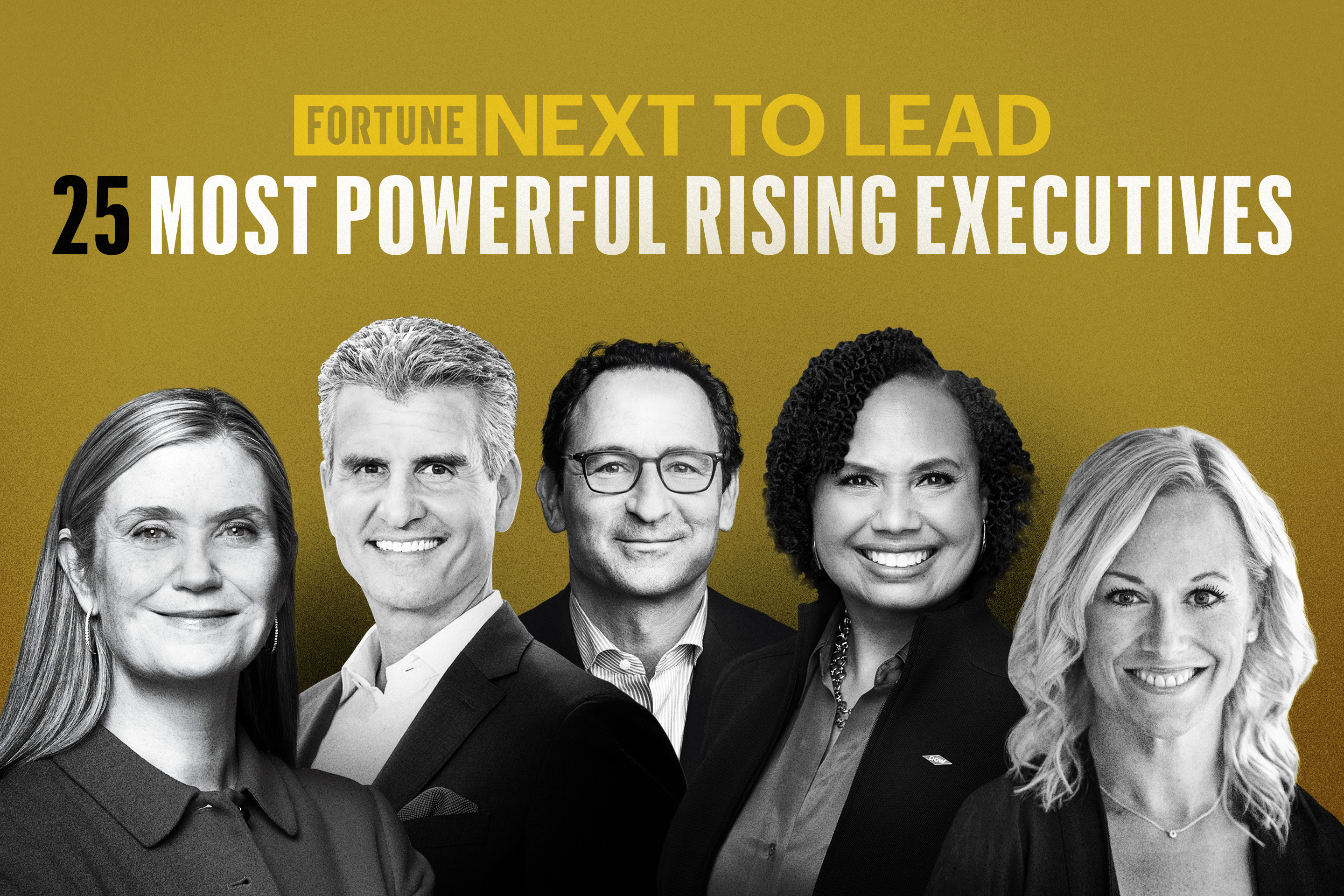
Plus: The 25 Most Powerful Rising Executives in the Fortune 500.
Fortune 500 Digest with Alyson Shontell
Saturday, December 20, 2025
Foreword
Alyson Shontell
Editor-in-Chief

All eyes are on the Big Tech LLM race and, at least in the eyes of investors, it seems like Google (owned by Alphabet, No. 7) could run away with the win.

Google’s Gemini has been steadily stealing buzz and AI traffic share over the last few months from OpenAI. And if there was any moat to be had in LLMs, it would seem like it would belong to the company with the biggest treasure chest of personal data on users. That almost indisputably would be Google, thanks to Android, YouTube, Search history, Maps, and Gmail. On top of that, the company has one of the top AI minds, Demis Hassabis, and Google cofounder Sergey Brin leading its troops toward dominance.

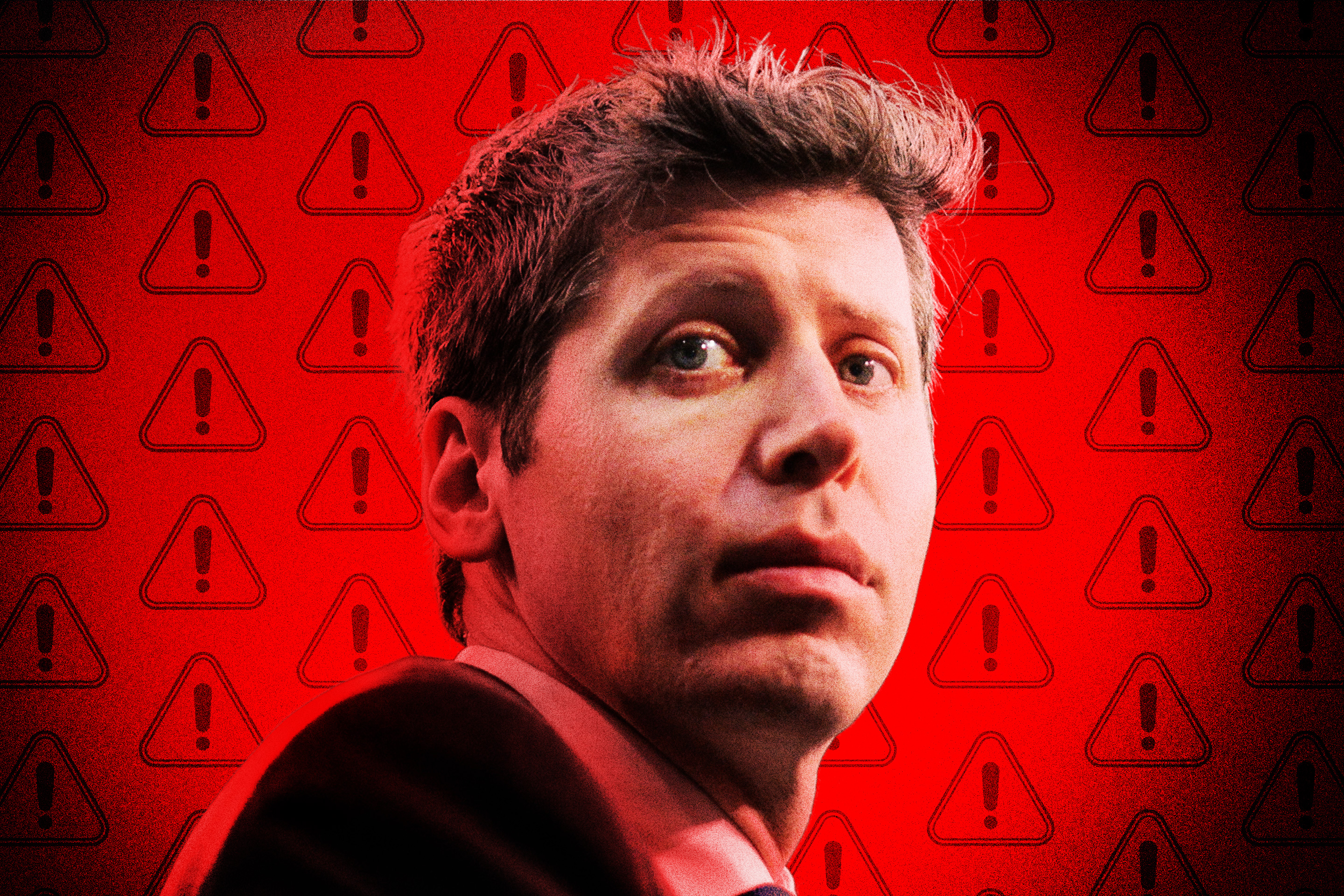
Perhaps that’s why Sam Altman is setting his sights on winning what could be an even higher-stakes AI battle: creating the future mass AI consumer device. Altman feels that in the long term, his greatest foe will be Apple (No. 4), not Google, Meta (No. 22), or Amazon (No. 2). He recruited iPhone designer Jony Ive to OpenAI this May, and Ive has said the company’s secret device could be ready in the next two years.

What will that device be like? If you ask Altman, he describes limitations with the mobile phone. First of all, it can be turned off. It also can’t scan the room around you and give you real-time context and know exactly when to deliver relevant information to you. He sounds more bullish about audio than visual as the primary means of communication. And he sees no reason why a device and an operating system should be sold separately, like Google and Android—a future device should come with the trademark LLM baked in, like iOS in an iPhone.

Thanks largely to that iPhone, Apple is generating tens of billions of dollars a year in cash flow that it can plow into new devices and armies of engineers to design them—two areas where OpenAI lags far behind. Then again, Apple seems ripe to be disrupted: As Meta founder Mark Zuckerberg said on Joe Rogan’s podcast earlier this year, “They haven’t invented anything great in a while. It’s like Steve Jobs invented the iPhone, and now they’re just kind of sitting on it 20 years later.”

But for now, OpenAI and its team are all about perfecting ChatGPT. For more on how Altman is planning to position OpenAI as a long-term hardware play, and how he’s combating fast-rising competition like Anthropic and Google in the short term, check out Fortune’s reporting on what’s happening inside OpenAI as it battles its way through an eight-week code red.

Also, we’re taking a break for the holidays, so Fortune 500 Digest will be back in your inbox Jan. 10. In the meantime, you can read the latest online.

Advertisement
Catch Up
Fortune 500 C-suite Power Moves
Kraft Heinz (No. 166) appointed Steve Cahillane CEO, effective Jan. 1. Marathon Petroleum (No. 29) appointed Maria A. Khoury EVP and CFO, effective Jan. 19. Performance Food Group (No. 80) appointed Scott McPherson CEO, effective Jan. 1. Intel (No. 86) appointed Annie Shea Weckesser SVP and Chief Marketing and Communications Officer and Pushkar Ranade as interim CTO.
And more in this week's Fortune 500 Power Moves.
Advertisement
RumFish Beach at TradeWinds
St. Pete Beach’s pristine sands meet a playground of coastal charm at RumFish Beach at TradeWinds, where every moment invites you to dive deeper or drift farther into vacation mode. Swimming with the fishes might sound ominous elsewhere, but here, it’s your cue to slip into the 33,500-gallon aquarium and tread with a green moray eel, snook, and the rest of Florida’s finned elite. Back on shore, the resort’s rhythm pulses through beachfront cabanas, interactive Touch Tanks, and fire pits flickering with marshmallow-roasting stories. Live music spills from the beach bar while dive-in movies cast a cinematic glow over poolside nights.
Book now
Deals & Developments
  • Amazon (No. 2) is in talks to invest at least $10 billion in OpenAI, per The Information. The deal would provide much-needed funding for OpenAI and see the company use Amazon Web Services chips, giving Amazon more credibility in the AI race. Analysts who spoke to Fortune were cynical about the deal, however, as OpenAI would need to use the $10 billion investment to purchase the chips that the deal would require the company to buy. “It certainly looks like circular financing,” one analyst said.
  • A group of investors including Oracle (No. 87) have reportedly signed a deal to acquire the U.S. business of TikTok. The deal, which is expected to close at the end of January, will see ByteDance, TikTok’s parent company, retain 20% of the company and existing ByteDance investors keep 30%. Oracle, which will also be responsible for storing user data, will take a 15% stake in the company, as will Silver Lake and MGX.
  • Netflix (No. 116) announced a deal to exclusively host the most popular iHeartMedia video podcasts on its streaming platform. iHeartMedia will retain the audio-only distribution of the podcasts, but Netflix will add videos of some past episodes and all new episodes of the selected podcasts in early 2026.
  • Union Pacific (No. 177) and Norfolk Southern (No. 346) told federal regulators that their merger would siphon demand for long-haul trucking and remove around 2 million truckloads traveling across the U.S. each year. A coast-to-coast railroad under the new company would transport that cargo instead.
  • ServiceNow (No. 386) is in discussions to acquire Armis, a cyber threat management company active in defense, education, health care, and other industries for up to $7 billion, Bloomberg reported. The company was purchased by Insight Partners and other investors for $1.1 billion in 2020, and said in September that it had received multiple offers.
Overheard
“The trends are not our friends here.”
—Cris deRitis, deputy chief economist at Moody’s Analytics, said he’d place a 40% likelihood on a recession occurring next year
On earnings calls:
  • FedEx (No. 49) reported quarterly revenue of $23.5 billion, up nearly 7% year-over-year and beating Wall Street expectations. The company cited strong gains in domestic and international Priority shipping and continued success in cost-cutting measures. FedEx also raised its fiscal 2026 revenue growth outlook from a range of 4% to 6% to 5% to 6%.
  • Nike (No. 90) reported quarterly revenue of $12.43 billion, surpassing analyst expectations despite a 17% decline in Greater China sales. Net income fell 32% year-over-year even as North America sales rose 9%. During the company’s earnings call, CEO Elliott Hill said the company is “in the middle inning of our comeback.” Read more: Nike is broken. Can Elliott Hill fix it?
  • Lennar (No. 129) reported $9.4 billion in revenue as the homebuilder delivered 4% more homes in the quarter than in the same quarter last year. In a statement announcing the earnings, co-CEO Stuart Miller noted that “the overall market remained challenged” despite slight interest rate relief. The company’s average home price fell 10% year-over-year to $386,000.
  • General Mills (No. 216) posted $4.9 billion in quarterly net sales, down 7% from a year earlier but above Wall Street forecasts. On the company’s earnings call, CEO Jeff Harmening noted that price-cutting initiatives across the company have yielded positive results as consumers continue to seek out deals, b