Of Lumber and Steel:
Material Culture of the Clerk’s office
Court records provide insight into changes in the Clerk’s office based on office culture, technology, and cost.
Several suppliers of office furniture and supplies appear in the record. In the 19th century, W. L. Thompson supplied nails and lumber used to make boxes for the clerk. These boxes served to transport books to Richmond.
In 1835, p 171 June 19, 1818, Clerk of the Court F. W. Richardson purchased a desk for the office of the circuit superior court. On June 22, 1847, $41.52 paid to Albert Bradt for bookcase for clerk’s office and $2 paid to John Mitchell for repairing chairs. An incredibly small amount of .25 was paid to Hub Furniture. The handwriting is difficult to read but might spell “scissors.”
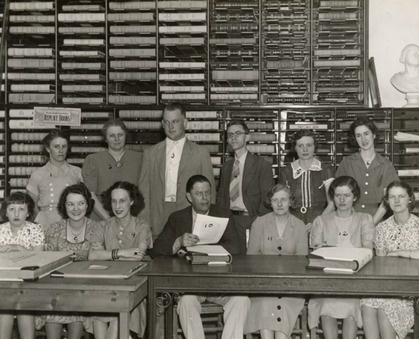
Photographs provide a wonderful visual of how the Clerk's office looked. Those who have visited HRC will see familiar looking shelving!
Clerk of the Court Whalen and his staff with bookcases holding records behind them.
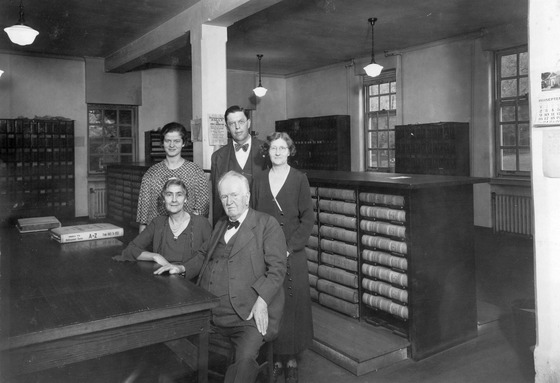 1934 Clerk F. W. Richardson, supporting clerks, Records Room
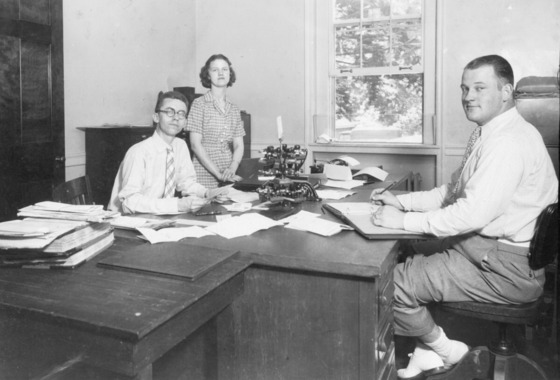
20th century photographs of the Clerk’s office and staff display utilitarian wooden desks and chairs. Boxes for books, pen and stamp holders, and stationary were also used.
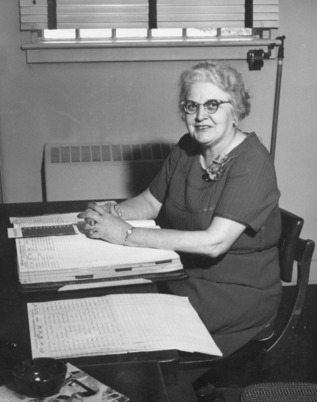
Court Clerk indexing a book
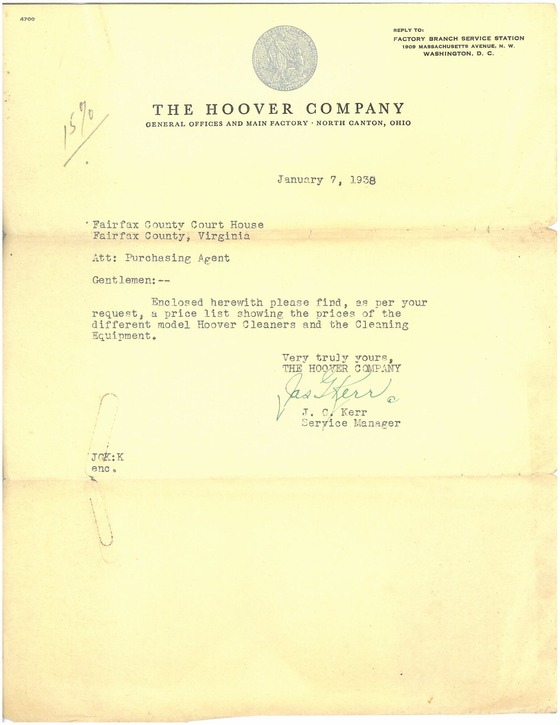
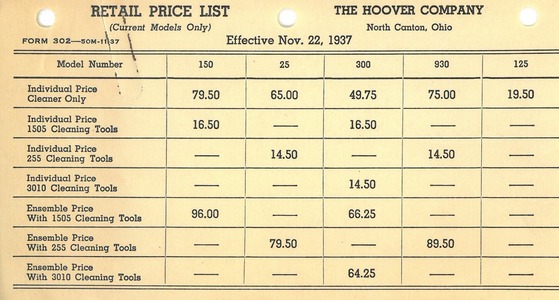
 Keeping the clerk’s office clean is supported by several court documents. In 1893, one broom was purchased. While unclear if any items were bought from them, The Hoover Company provided the court with a price list for different models of hoover leaners and cleaning equipment. Prices ranged from $19.50 dollars to $79.00.
  Freight cost records also reveal office purchases. In 1916, the southern railway company was paid for transporting steel filing cabinets.
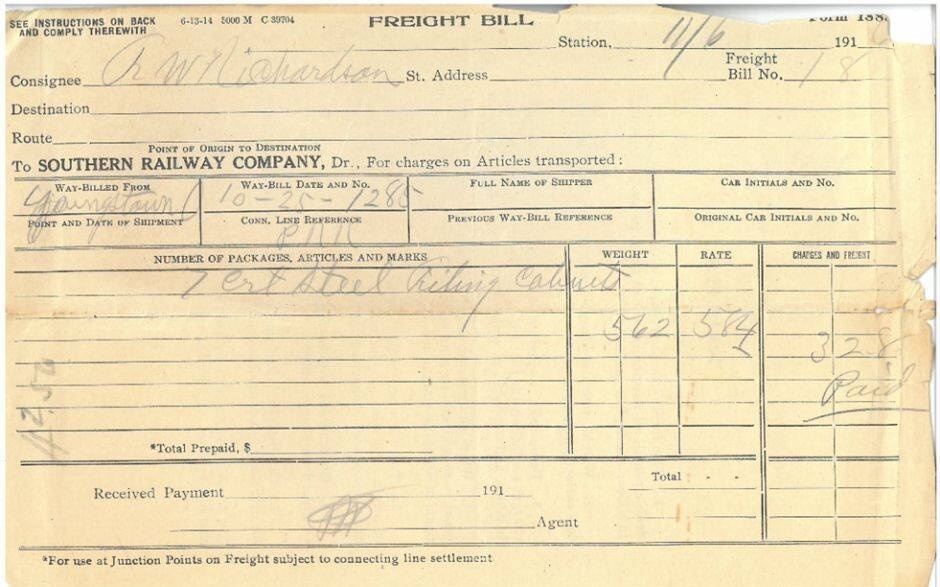 Document for transporting steel filing cabinets.
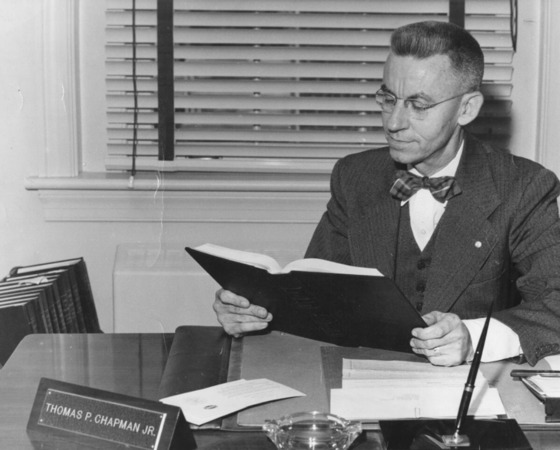 Clerk of the Court Thomas Chapman. Photo taken by Fairfax High School student
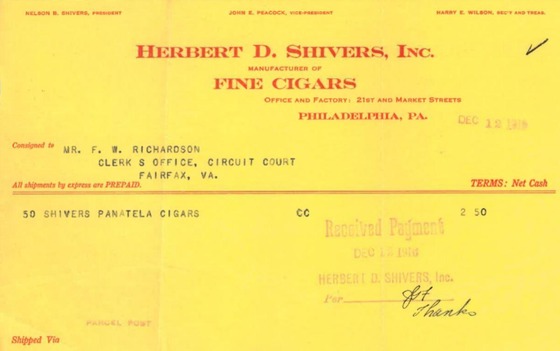 Receipt for 50 Shivers Panatela Cigars
Our office may be changing but we look forward to seeing you again soon!

|