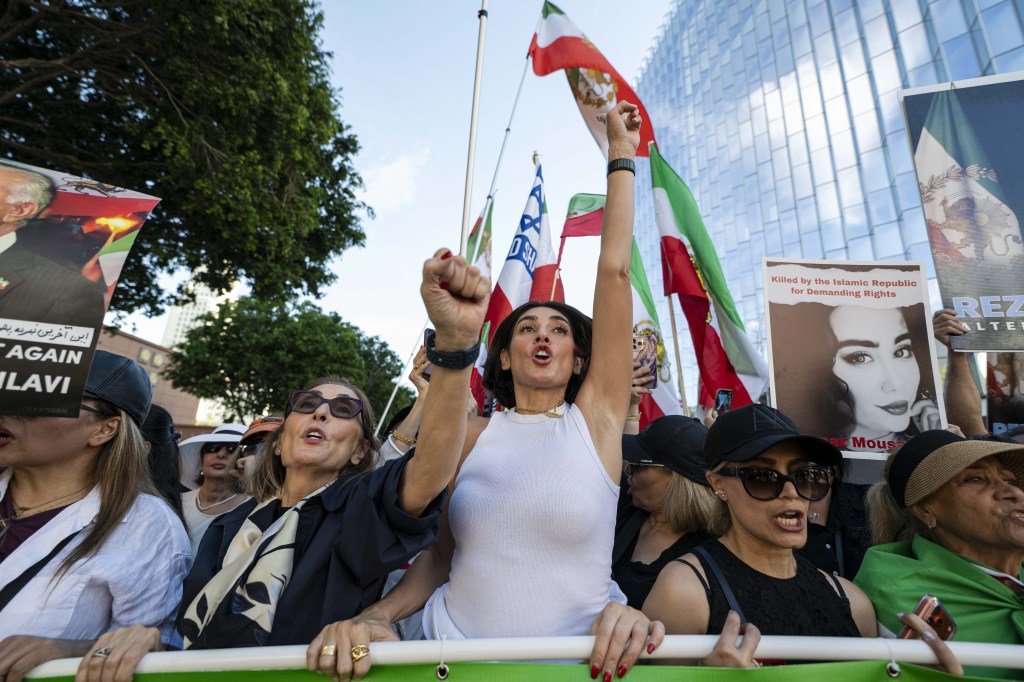
On December 28th of 2025, protests started in Iran’s capital in response to soaring prices and a collapsing economy. They swiftly fanned across the country and morphed into a mass movement against Iran’s theocratic government led by Ayatollah Ali Khamenei. Over three weeks later and
thousands are reported dead, the result of
a violent crackdown on protestors by the authorities. The majority of those murdered are thought to be younger than 30, a horrifying but perhaps unsurprising statistic in a country whose population skews young due to the baby boom that followed the 1979 revolution.
A government imposed internet blackout in the country means information about the victims is scarce,
but some names have emerged: Akram Pirgazi, 40, the first woman reported to have been killed in the protests and a mother of two; Rebin Moradi, 17, a promising footballer and Robina Aminian, a 23-year-old studying fashion design at university in Tehran. Two weeks ago, after finishing class for the day, she joined an anti-regime rally. A human rights group says that she was shot in the head from close range shortly after. “She was thirsty for freedom, thirsty for women’s rights, her rights,” Aminian’s
uncle told CNN in the wake of his niece’s murder.
Aminian’s spirit and unspeakable bravery is, remarkably, not unique in a country where female resistance has been a lifeblood of anti-government protest for almost half a century. Women were crucial participants in the 1979 revolution that overthrew the last Shah (king) of Iran and his oppressive rule. They hoped for a freer society. Instead, Khamenei’s new regime began policing their lives and rolling back their rights. Examples include a husband having the legal right to restrict his wife’s travel and employment, unequal divorce rights and punishment for appearing in public without a hijab ranging from fines to prison time to flogging.
The latter ignited a 2022 uprising when
Mahsa Amini, 22, was dragged off the street by Iran’s morality police, a unit within the national police tasked with implementing Islamic codes, for not wearing her headscarf correctly. She died in custody, with eyewitnesses alleging that she was beaten unconscious inside a police van. Her death, along with that of a teenager,
Armita Geravand, the following year in similar circumstances, stirred a collective rage that fueled the
Women, Life, Freedom movement. Although its protests didn’t lead to regime change, they sparked much-needed global awareness of Iran’s human rights abuses. They also created an irreversible current of social resistance, particularly among young Iranians, that helped position women’s rights as a key pillar of the country’s democratic future. Women are at the forefront of the current protests.
A now
widely-shared video from earlier this month shows an elderly Iranian woman protesting in the street, blood pouring from her mouth. “I’m not afraid,” she shouts. “I have been dead for 47 years”—the length of the current regime. From the comfort of our couches and desks, it’s hard to fathom the moral conviction of the women, young and old, whose desire for change and freedom overrides their fear of imminent death. But yet again, Iranian women are showing the rest of us what courage truly looks like.
Ellie Austin
ellie.austin@fortune.comThe Most Powerful Women Daily newsletter is Fortune’
s daily briefing for and about the women leading the business world. Today’s edition was curated by Emma Hinchliffe. Subscribe here.