|
 |
Fighting for journalism and profitable news media
When the clicks stop, what publishers should do next
Membrana Media's rewarded ad formats offer publishers an alternative to paywalls and a better way to monetise fewer clicks (sponsored post)
| |||||||||||||||


When clicks disappear, “more ads per page” stops being a strategy. AI is killing the publisher traffic model, so the answer cannot be “more of the same monetisation, just harder.” It requires a different view of how value is created between user, publisher and advertiser, and that is where Membrana Media starts
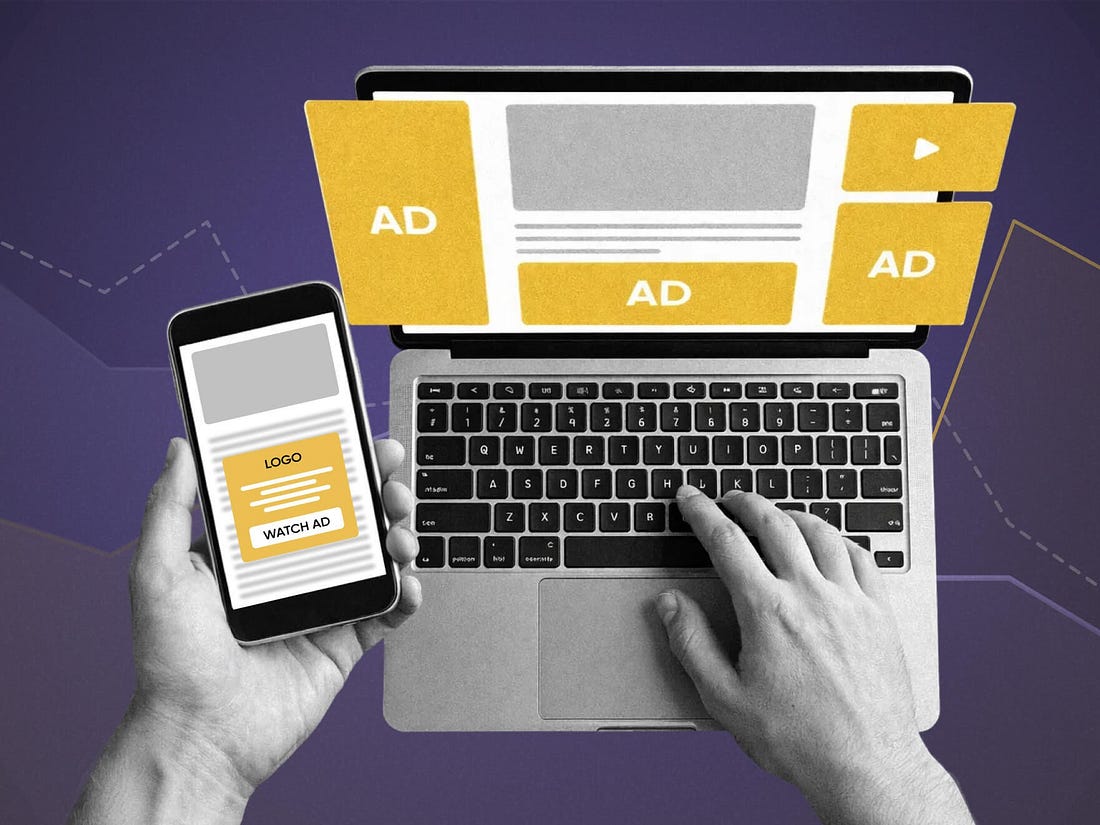
Instead of forcing another low-impact impression into a cluttered page, publishers can invite users to opt into a focused, rewarded moment they understand and control. In this model, attention is not a soft engagement metric, but an explicit value exchange the user actively agrees to.
Thanks for reading Press Gazette! Subscribe for free to receive new posts and support my work.
For years, publishers have treated Google traffic volatility as a temporary problem: a core update here, a ranking dip there. Painful but survivable. What is happening now with AI Overviews is not that.
Since the rollout of AI Overviews, search referrals to news sites have fallen sharply, in some cases by more than a third. Large publishers report year-on-year drops of 30-40%, and the direction of travel is clear. This is not an SEO problem; it is a structural shift in how journalism is consumed.
 |
AI answers mean fewer clicks by design
Google’s AI summaries are increasingly able to answer the user’s question without sending them anywhere. The open web still produces the reporting, but the platform keeps the audience.
As Mike Kudriavsky, CEO of Membrana Media, puts it: “Google, OpenAI and Perplexity are competing for the audience. And Google has the biggest impact by retaining users with AI descriptions that have already absorbed up to 30% of web traffic.” This is not an unintended consequence. It is the product.
The industry’s reflex: squeeze the remaining traffic
Faced with falling visits, the response has been predictable: if there is less traffic, extract more revenue from each session. More ad slots, heavier refresh, louder formats.
It works briefly. Then engagement drops, ad-fatigue sets in, blockers spread and loyal readers quietly disengage. This approach assumes traffic will somehow recover. AI Overviews suggest it will not.
The uncomfortable truth is that publishers are optimising a model that is being phased out. Search is no longer a reliable distribution channel; it is becoming an extraction layer. Winning back blue links is not a strategy. Building a business that does not depend on them is.
Why rewarded formats work when display doesn’t
Rewarded ad formats demonstrate the attention-first model in practice. Across multiple markets, they deliver near-total viewability, very high completion rates and revenue uplifts of 25–50%, while consistently ranking among the least disliked ad experiences.
The reason is straightforward: the user chooses the interaction.
A mid-size US news publisher replaced one high-density display slot with a single rewarded moment. The test delivered a double-digit revenue uplift on that section, with no drop in time spent and fewer ad-related complaints.
This unlocks models that traditional display cannot support, for example:
Access premium analysis without registration in exchange for a short rewarded video
Offer ad-light reading for a limited period after a branded interactive
Unlock early access to investigations, newsletters, or datasets through a high-impact sponsored experience.
Each interaction is transparent and driven by choice, not coercion.
Rebuilding what platforms hollowed out
For years, publishers fed platforms with their content and traffic. In return, platforms gradually took ownership of the audience relationship. The result is a strong reach through intermediaries, but a weaker direct audience that publishers can actually see and understand.
Rewarded attention helps convert anonymous fly-by traffic into known, motivated users.
Membrana Media works with publishers to implement attention-first monetization without compromising UX or editorial trust, and without pretending that CPM tweaks can offset AI-driven traffic loss.
[Thank you for reading this sponsored post/email and helping to support Press Gazette’s journalism. Press Gazette sends these promoted posts out occasionally on behalf of sponsors. We do not share your email information with anyone.]
Thanks for reading Press Gazette! Subscribe for free to receive new posts and support my work.
