| Welcome, Weekenders! In this newsletter: |
| • The Big Read: Inside Anne Wojcicki’s plan to revive 23andMe |
| • News Analysis: The week Anthropic went to war with OpenAI and the Pentagon |
| • The Information Events: Tennis enters the analytics era at our Indian Wells retreat |
| • Plus, Recommendations—our weekly pop culture picks: “Data,” “A Scandal in Königsberg” and “Paradise” |
| |
| No one in tech has ever gotten very far by running around talking about what they can’t do—or what they shouldn’t do. Or what’s going wrong. That kind of attitude isn’t what lands a person a big-ass check from a Rosewood hotel meeting. Let alone a second and fifth check. |
| Well, all of a sudden, the conversation about what constitutes a red line is a topic du jour within Silicon Valley, courtesy of Anthropic’s Dario Amodei. |
| On a basic level, I’d argue that what Amodei has said he won’t do isn’t really that extraordinary. He’s refused to allow his AI to be used for mass surveillance of American citizens and fully autonomous weapons. I think his caution is perfectly warranted. He’s purveying an unproven technology that still has plenty of kinks to straighten out. And, I mean, look, let’s say Claude has reached humanlike intelligence: How many of you flesh-and-blood humans really knew a Khomeini from a Khamenei a week ago? It’s fine if you mix up your ayatollahs—less so for the intelligence hurling a missile in their direction. |
| Amodei has won his fair share of supporters—if Claude’s trajectory up the app download charts is any measure. Nonetheless, his refusal to give the Pentagon unfettered access to his company’s AI has also won him plenty of critics. On Thursday, he was trying to put a lid on the controversy, with a statement that functioned partly as an apology for his internal memo lambasting the Pentagon and OpenAI that became public knowledge earlier in the week. (That happened thanks to a tireless squad of scoopsters at The Information—sorry, Dario.) |
| I don’t think Amodei deserves a great deal of hero worship, though. As I said, what he’s refusing to do seems pretty minimalist. What I do find rather amusingly extraordinary in this situation is that it has taken nothing less than a debate about weapons of mass destruction and tools of mass surveillance—which, c’mon, often aren’t great—to spark a widespread, public conversation about red lines from the tech elite. |
| More typically, red lines are what occupy the attention of fusty academics and the annoying journos trampling around Silicon Valley, bothersomely peering into its gated corners. The best of the McKinsey set might bring them up, too, as might sweaty-palmed Ted, wearing down the carpet in the broom closet recently converted into his chief legal officer’s “office.” But, hey, part of the fun of hiring those khakied dweebs is to delight in promptly ignoring them. |
| Few professions other than tech CEOs take such a flexible attitude toward what’s permissible and acceptable. Imagine if a school teacher adopted the same attitude: How mad would we be if one came back with only three of the seven kids they took to the playground? What if accountants decided to squishily consider right and wrong? You’d be annoyed if they did that and you ended up in the clink bunking next to Sam Bankman-Fried. Now that’s a fella who definitely never thought about a red line. |
| What else from this week… |
| • The Wall Street youths seem to have watched waaay too much “Industry.” Frankly, I bet too many of them grew up attending ultraexclusive nursery schools, entry to which has become a point of great, great consternation. |
| • “Of the many problems modern life has promised to solve, dinner remains a stubborn nuisance.” |
| • Mar-a-Lago? More like War-a-Lago, chuckles Vanity Fair. |
| • “We know this shouldn’t be allowed,” said one Kalshi-crazed fraternity brother. “People are like, ‘Is this insider information? Is this regulated?’ You feel like you’re doing something you’re not supposed to. It feels like someone should stop you.” |
| • Money may not grow on trees, but in Bolivia, it literally fell from the sky. |
| • In Texas, businessman Byron Stinson hopes to find divine salvation from a peculiar mission: exporting the most unblemished red heifers to Israel. |
| • Oh, yeah, the Oscars are this weekend. Related: The Scandi movie business is socialist! “Most Scandinavian movies are publicly funded, which means you don’t necessarily have to sell a million tickets. You’re not forced to hire a superstar.”—Abram Brown (abe@theinformation.com) |
| |
|
|
 |
|
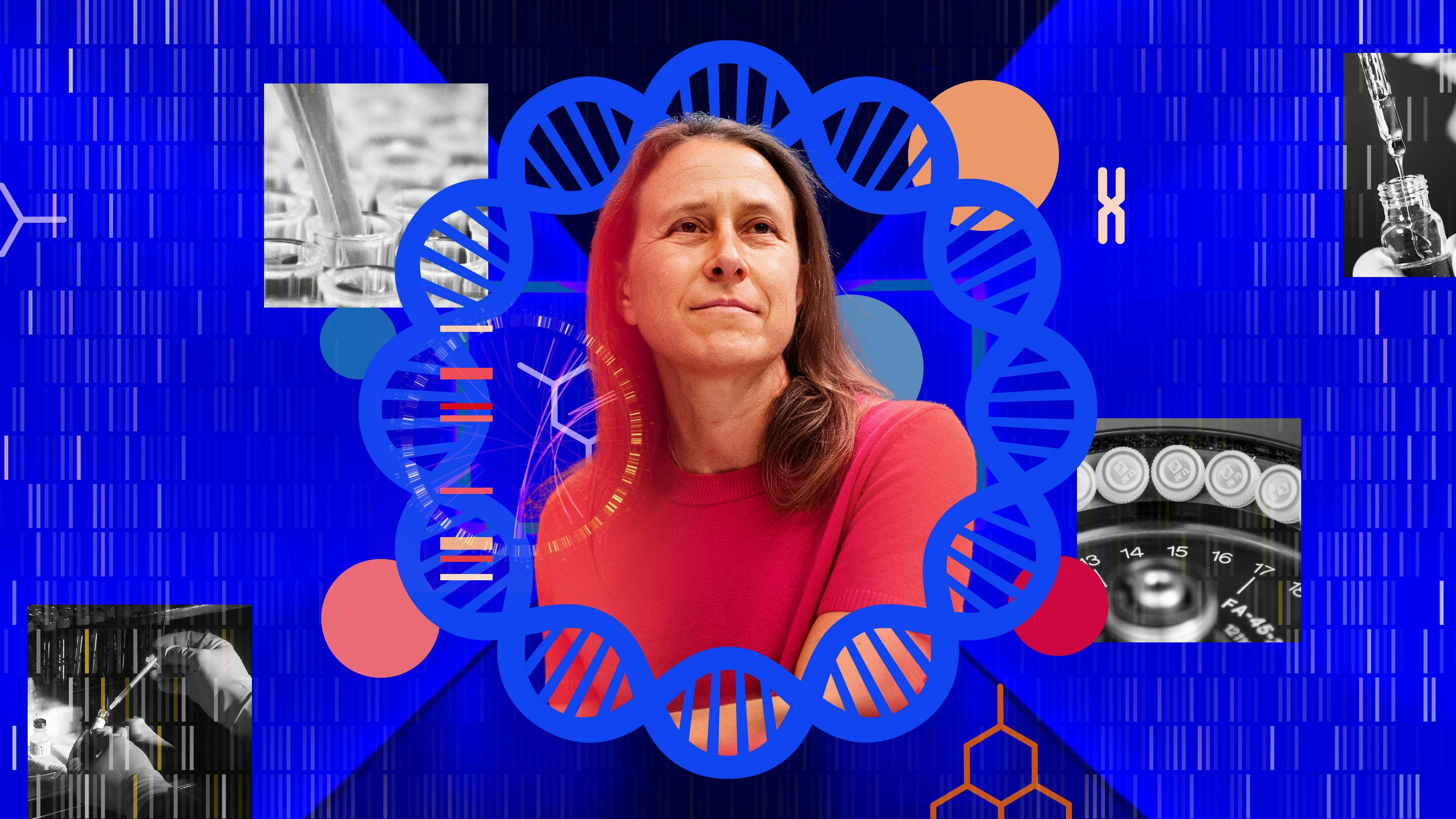
| Months ago, Anne Wojcicki emerged as the surprise winner of the bankruptcy auction for 23andMe, the seller of at-home DNA tests that she co-founded two decades earlier. To revive it as a nonprofit, she intends to court rich donors, improve its tests and perhaps even court the MAHA crowd. She thinks it is entirely doable without changing much about the mission the organization has long followed. |
|
 |
|
| An off-script memo from Anthropic’s CEO derailed talks with the Pentagon and needled rival OpenAI. As a likely court battle with the Defense Department looms, Anthropic may have averted disaster for its business though. |
|
 |
|
| While action unfolded at the BNP Paribas Open this week, we gathered dozens of tech and finance leaders for two days of tennis and tech conversations on the sidelines in Indian Wells, Calif., near Palm Springs. |
| |
 |
| Attending: “Data” |
| “Data,” a play running at New York’s Lucille Lortel Theatre until March 29, asks: Are we the sum of our data? |
| The show follows Maneesh, a young programmer. In college, he developed a powerful algorithm for sports predictions. Now he’s out working for a living, and his employer wants him to redeploy it for a more dubious purpose: scoring immigrants and deciding who gets into America. Those goals sit uneasily with Maneesh, a child of immigrants himself. |
| It’s a timely production, and it was eerie to see it the weekend after Anthropic’s standoff with the Pentagon over ethical concerns in government contracts dominated headlines. It’d be an easy watch even if it wasn’t rooted so much in the present day, however: Visually, it’s clean, defined by the cyan-tinged office aesthetic that has crept into popular media in the past couple of years. And while it can get a little heavy-handed in its caricature of Silicon Valley, the four young actors in the cast do a good job of bringing tech jargon and office dynamics to life, inviting people to reflect on the consequences of the work they do and might look past. |
| There are no plans yet for a Bay Area run, but it feels inevitable.—Shane Burke |
| Reading: “A Scandal in Königsberg” by Christopher Clark |
| The moral panic and great tumult that beset early 19th-century Königsberg—which, to provide reference for those without stein and magnifying glass nearby, lies on the Baltic Sea in what was then Germany and is today Russia—may seem like a tale not worth revisiting in the early 21st century. Perish the thought. In the hands of author Christopher Clark, the retelling of the past is an eerie reflection of the present: In 1835, Johannes Ebel and Georg Heinrich Diestel, a pair of Lutheran preachers, were tried for running what their opponents viewed as a sex cult, with its worship centered on pseudoscience. The case scandalized the heavily religious town, setting up a clash of forces easily recognizable to us today, including the kind of toxic professional envy and rivalry that would make Amazon look like a pleasant workplace. |
| Clark acknowledges that the “campaign of denunciations and rumour” waged against Ebel and Diestel “belongs to an age before the advent of paparazzi, radio, television and digital social media. |
| “But that is precisely what endows their story with fabulous power,” writes Clark, a Cambridge University expert on German history who writes with greater lucidity than most dons. (His earlier “The Sleepwalkers,” an account of pre-World War I Europe, was a bestseller.) “Resemblances to present-day persons and situations, though not intended, cannot be ruled out.”—Abram Brown |
| Watching: “Paradise” |
| To see “Paradise,” Hulu’s political thriller-cum-apocalypse tale starring Sterling K. Brown, shooting off into a strong second season must be a personal hell for all the Hollywood executives who’ve tried and failed to assemble something like it. And many, many have tried in these later years of prestige television, attempting to take the best components of serial, propulsive network television and gloss them up. |
| “Paradise” occupies that slim part of the TV milieu I might call high lowbrow. (It’s where, for instance, Netflix’s “The Diplomat” sits, too.) Much of the show is pulpy and potboiler-ish: In the first season, we follow Brown as Xavier Collins, a former Secret Service agent steadily unraveling the mysterious death of the president of the U.S. Oh, yes—that untimely demise came within a bunkered city under a Colorado mountain where, apparently, the only 25,000 people left on Earth have taken up residence after some terrible natural disaster. |
| The plot barreled along, and it continues to do so in season two, with Xavier deciding to venture out of the bunker to search for his wife, who—eek, twist!—seems to be alive. The pacing is important: If it was slower, you might start to think about the ridiculousness of the plot, held together as it is by a gooey substance quite like what passes for cheese in Xavier’s adopted hometown. Brown is his usual handsomely magnetic self, and he is just the principal member of a roundly talented cast that also includes Julianne Nicholson as the bunker’s villainous head honcho and Shailene Woodley as Annie, a onetime medical school student who joins Xavier in his aboveground quest.—A.B. |