In the crowded theatre of Middle Eastern diplomacy, unlikely actors often prove the most effective. Right now that actor be Islamabad. Over the past two weeks, Pakistan has been positioning itself as a potential mediator between the US and Iran. A high-level US delegation’s visit to the Pakistani capital, which included talks with army chief Field Marshal Asim Munir, signals that Washington is exploring an off-ramp from a conflict that risks spiralling beyond its current contours.
This is not diplomacy for diplomacy’s sake. Pakistan’s offer to host talks between Washington and Tehran – contingent on both sides agreeing – has already been publicly floated and amplified by US president Donald Trump. On Wednesday 25 March, Iran received a 15-point proposal from the US, delivered via Pakistan, outlining a potential path to a ceasefire. Islamabad’s role might appear unexpected. But as Michael Kugelman, senior fellow at the Atlantic Council, puts it, Pakistan holds a “rare status” as one of the few countries maintaining a relationship with both Washington and Tehran. That, Kugelman argues, gives the country a degree of access that traditional mediators currently lack.
Geography is the obvious starting point. Pakistan shares a long border with Iran and deep sectarian ties. The US administration is understood to have a degree of confidence in Islamabad’s leadership, particularly in Munir, whose deep understanding of the Islamic Republic has been publicly acknowledged. But proximity or understanding alone does not broker peace – trust does. Or, more precisely, the careful management of its absence. Pakistan is not an active participant in the conflict and does not host US military bases.
But even its advantages have limits. “While Pakistan can act as a conduit – passing messages and proposals between capitals – persuading Washington and Tehran to sit down face to face is a far more difficult task, given the depth of mistrust on both sides,” says Kugelman. Iran’s position remains the most significant obstacle and it is yet to signal a readiness for talks – this is where Pakistan’s diplomatic balancing act becomes critical.
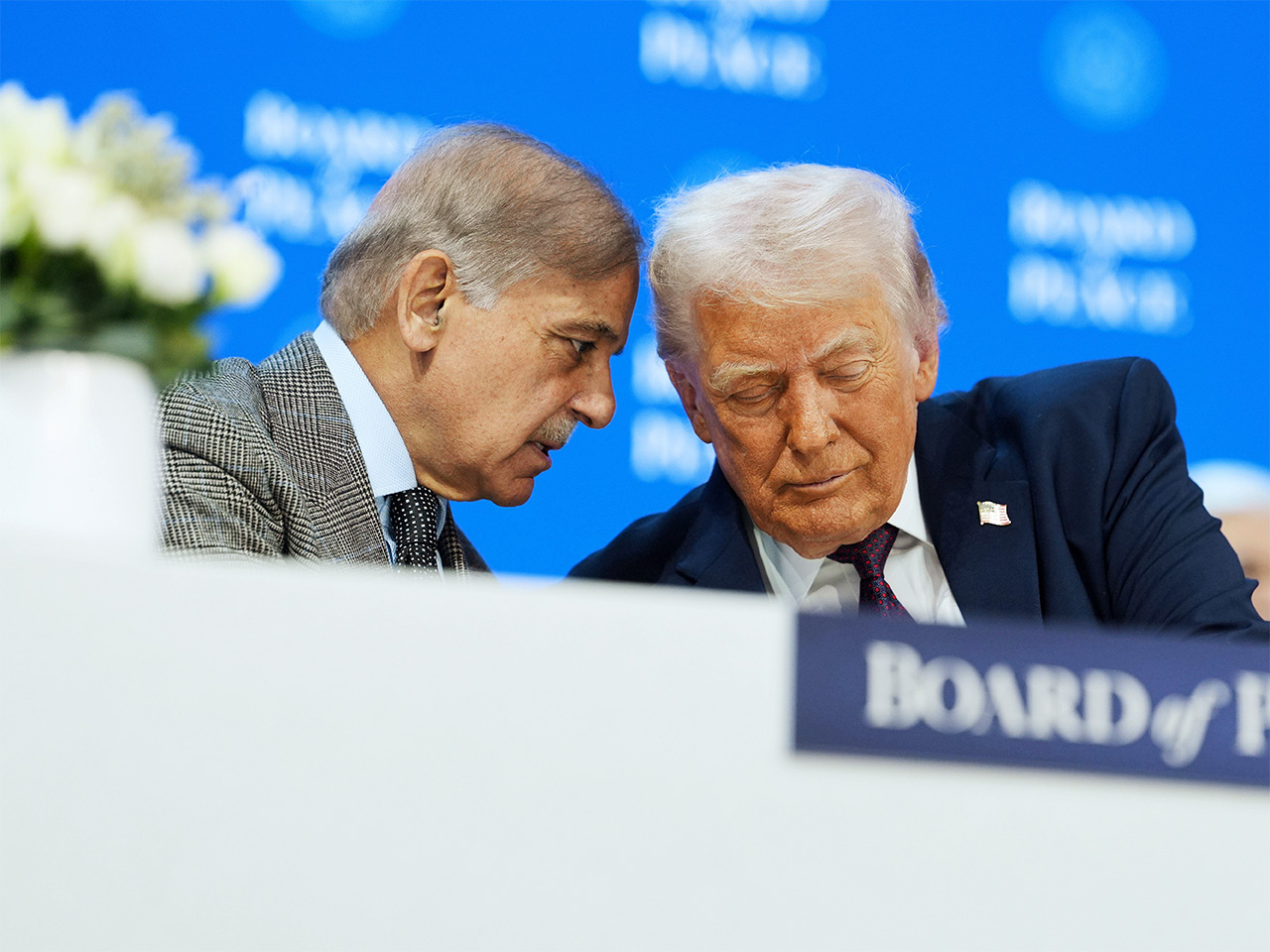
Pakistan is not operating in a vacuum. Its mediation efforts are increasingly intersecting with the priorities of the Gulf states – Saudi Arabia in particular. This week’s call between Pakistan’s prime minister, Shehbaz Sharif, and Saudi Crown Prince Mohammed bin Salman, in which Sharif briefed Riyadh on his country’s diplomatic efforts, underscores just how closely aligned Islamabad’s diplomatic outreach is with the kingdom’s strategic concerns. For Saudi Arabia and its neighbours, negotiation with Iran cannot be limited to nuclear issues alone. Ballistic missiles and drone capabilities are no longer peripheral irritants; they are central to the region’s security calculus.
The Gulf states have, over the past decade, moved from viewing Iran as a contained rival to an unpredictable threat. The ability of Tehran and its proxies to deploy missiles and drones across multiple theatres – from the Gulf to the Red Sea – has fundamentally altered the risk environment. For the region’s economies, which are built on stability, trade and investor confidence, this is not an abstract concern but an immediate vulnerability. A settlement that fails to address Iran’s capacity to strike “whenever and wherever” would leave Gulf states exposed.
Pakistan is not attempting to convene a bilateral dialogue but a multi-layered negotiation that reflects the realities of today’s Middle East: one where Gulf capital, Iranian deterrence and US security guarantees are deeply intertwined.
From Islamabad’s perspective, the calculus is pragmatic. As one senior Pakistani official put it, the country has been working “at all relevant levels” to mitigate not only the humanitarian toll on Iran but also the economic fallout for the Gulf and, crucially, the global economy. A prolonged conflict on its border is a risk that Pakistan can ill afford. The urgency is evident for the US as well. Though Trump publicly claims victory, the US’s presence in the region means that Washington faces a familiar challenge: converting military leverage into a durable political outcome. Pakistan offers a potential exit route, allowing the US to pivot towards negotiation without appearing to retreat.
But one more variable continues to loom large: Israel, which might be the most unpredictable actor in this equation. Its willingness to act independently could disrupt any fragile diplomatic progress and, for Iran, this is a central concern further eroding already thin margins of trust. Pakistan, then, is not merely mediating between two adversaries but navigating a fragmented strategic landscape in which regional powers are increasingly assertive about their own red lines.
There are still reasons to remain optimistic. Pakistan’s neutrality and its geographic proximity give it advantages that many mediators lack. Its recent diplomatic activity suggests co-ordination and intent that go beyond opportunism. But mediation ultimately requires a convergence of political will – and that remains uncertain. The task appears daunting because it is – but if there’s one country that could play the part, it’s Pakistan.
Inzamam Rashid is Monocle’s Gulf correspondent.
Further reading?
- Rising rhetoric and deepening Gulf tensions push the Middle East to the brink
- Who is Mojtaba Khamenei, Iran’s new supreme leader?
- The view from the Strait of Hormuz: Ground zero for Iran’s war on global commerce