Image

Daily News Brief

March 27, 2026

Welcome to CFR’s Daily News Brief. Today we’re covering what Trump’s delay on a threat to strike Iranian energy sites means for the war, as well as...

  • A Saudi Arabia-Ukraine security deal
  • France’s defense pact with the Philippines
  • Nepal’s new prime minister


Top of the Agenda

Trump yesterday extended a pause on his threat to target Iran’s energy infrastructure, allowing more time for potential diplomacy. Trump’s latest delay—now tied to an April 6 deadline—suggested a temporary limit to U.S. escalation. Israel continues heavy attacks across Iran, while Iran fires at Israel and Gulf states. Public statements suggest U.S. and Iranian officials remain far apart on conditions to end the war, while Washington is reiterating calls for allies to help reopen the Strait of Hormuz. Group of Seven foreign ministers are discussing the Iran war at a meeting in France today.


Europe’s priorities. France hosted consultations with around thirty-five countries yesterday about plans to protect shipping in the strait after hostilities have ended, its defense ministry said. Top European Union (EU) diplomat Kaja Kallas said today that supporting Ukraine should remain a priority as the Iran war continues. Her remarks came after the Washington Post reported yesterday, citing unnamed U.S. sources, that the Pentagon is considering diverting weapons earmarked for Ukraine to the Middle East. A NATO spokesperson said in response that all equipment designated for Ukraine through a U.S.-European mechanism continues to flow to Kyiv.


Ongoing economic costs. Trump’s new deadline extends the timeline for a potential end to the war and its associated global economic costs. Yesterday, the Organization for Economic Cooperation and Development projected that annual inflation this year across the Group of Twenty will be an estimated 1.2 percent higher than expected in December. The International Monetary Fund has begun to calculate which countries might need new loans if the war continues, Bloomberg reported. Trump’s latest pause to his threat to strike Iranian energy facilities came after the U.S. stock market suffered its worst one-day drop of the war yesterday.


“Iran has learned the lessons of American foreign policy. It has used the tools at its disposal to exacerbate risk, forcing private actors to become unwitting tools of its statecraft…Tehran may now conclude that further pressure is the best way to extract more concessions.”

—CFR expert Edward Fishman, The New York Times


Gulf Leaders Didn’t Want the War, but Need Trump to Win

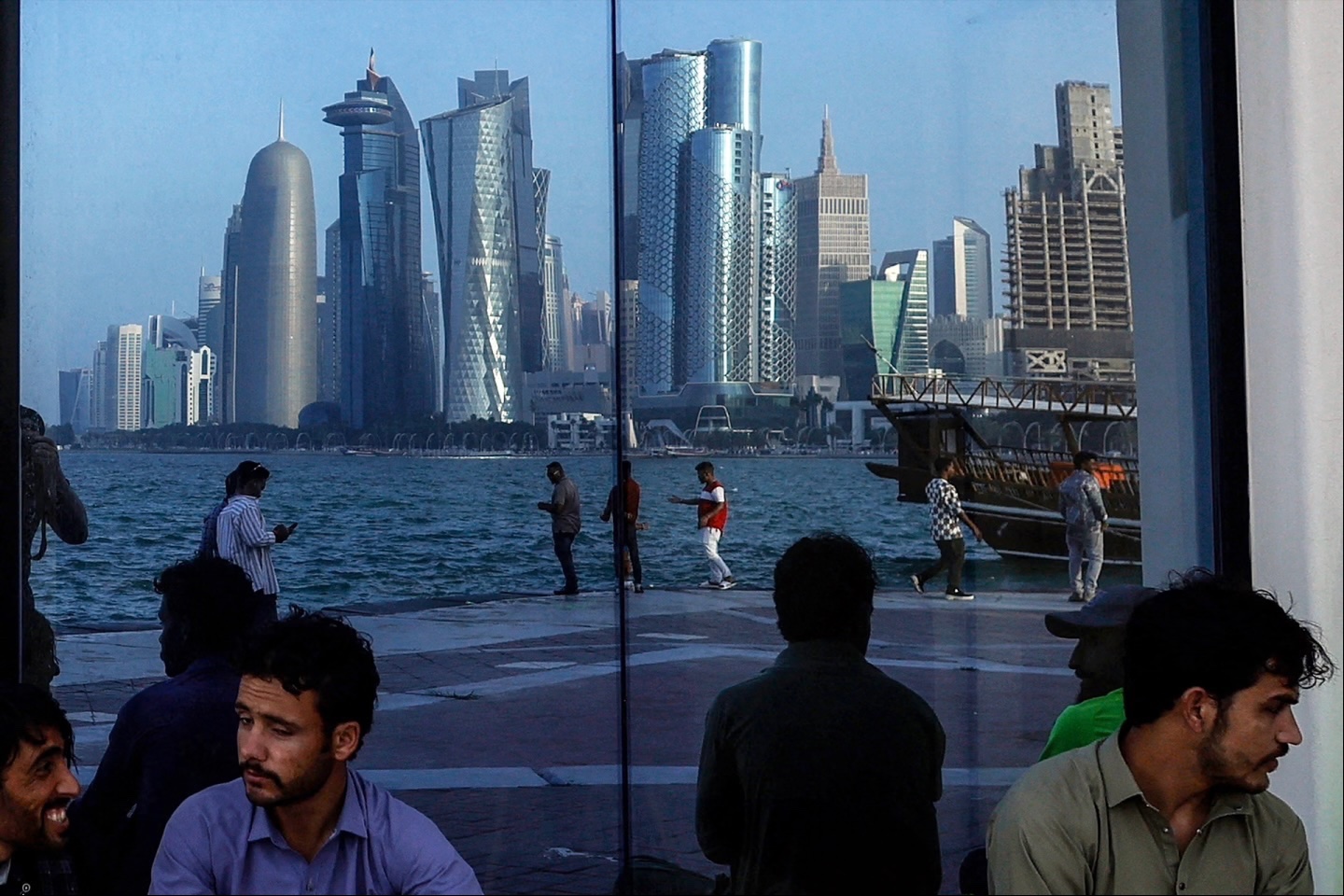
People sit with the reflection of the Doha skyline along the Doha Corniche, on the second day of Eid al-Fitr celebrations marking the end of the Muslim holy month of Ramadan, in Doha on March 21, 2026.

Getty Images

The prospect of Iranian attacks threatens the Gulf countries’ development model, Senior Fellow Steven A. Cook writes in this Expert Take. 


Across the Globe

Saudi Arabia-Ukraine agreement. The two countries’ defense ministries have reached a security cooperation agreement, Ukrainian President Volodymyr Zelenskyy wrote today on social media. The deal, announced during Zelenskyy’s visit this week to Saudi Arabia, lays the groundwork for technology cooperation and investment. Zelenskyy added that Kyiv was ready to share its own military expertise and systems with Riyadh. It comes after he said earlier this month that Kyiv was seeking missile interceptor systems from Gulf countries.  


Qatari PM in Washington. Qatari Prime Minister Sheikh Mohammed bin Abdulrahman Al Thani met with U.S. Vice President JD Vance and Treasury Secretary Scott Bessent in Washington yesterday to discuss responses to “current regional developments,” including the need to ensure Qatari liquefied natural gas reaches global energy markets, Qatar’s foreign ministry said. 


France-Philippines deal. The two countries signed an agreement in Paris yesterday to facilitate joint military activities. Philippine President Ferdinand Marcos Jr. has pursued similar agreements with Japan and New Zealand as part of a push to diversify Manila’s defense partners amid tensions with China in the South China Sea. 


Taiwan opposition party leader sentenced. A Taiwan court yesterday sentenced Ko Wen-je, the founder of the opposition Taiwan People’s Party (TPP) and a former presidential candidate, to seventeen years in prison on bribery and corruption charges. He is also banned from running for president in 2028. Ko, 66, has denied wrongdoing. Some opposition critics argue that Taiwan’s judiciary is being politically weaponized, though President Lai Ching-te said last year that political interference in the judiciary had “ended.”


South Korea’s wartime stimulus. The government announced yesterday it will seek congressional approval for a $17 billion supplemental budget designed to help companies and households cope with the rising cost of energy due to the Iran war. Seoul also announced plans to impose a higher fuel price cap effective tonight.


New IOC rule on trans athletes. The International Olympic Committee (IOC) announced a ban yesterday on transgender women competing in women’s sports at future tournaments. All athletes who wish to compete in women’s categories will be required to undergo genetic testing, the IOC added. The decision, which the IOC said “protects fairness, safety, and integrity in the female category,” followed a multi-year review. The policy will be in effect for the 2028 Summer Olympics. 


Nepal’s new prime minister. Balendra Shah, a thirty-five-year-old engineer and former rapper, was sworn in as prime minister today after rising to national prominence last year in youth-led protests that toppled the former government. His party won almost two-thirds of seats in the lower house of parliament in this month’s legislative elections.


Hurdle to Pentagon’s Anthropic ban. A federal judge yesterday indefinitely blocked the Defense Department’s designation of Anthropic as a supply chain risk, ruling that Anthropic’s disagreement with the government was insufficient to trigger such a measure and calling the Pentagon’s stance “Orwellian.” The judge delayed implementation of the ruling by one week to allow for a government appeal. 


The ‘Donroe’ Doctrine Needs Carrots

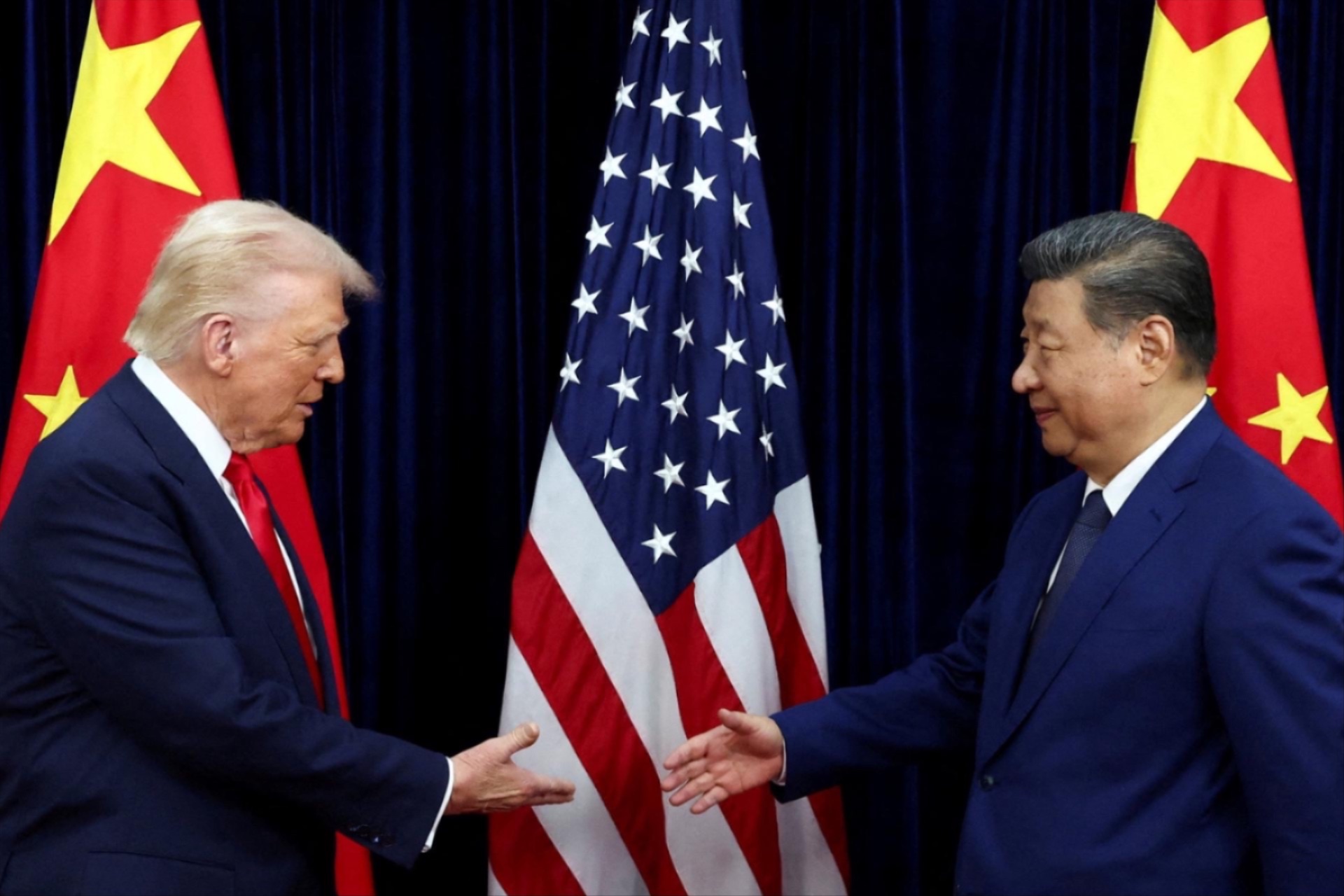
President Donald Trump shakes hands with Chinese President Xi Jinping as they hold a bilateral meeting at Gimhae International Airport, on the sidelines of the Asia-Pacific Economic Cooperation (APEC) summit, in Busan, South Korea, October 30, 2025.

Evelyn Hockstein/Reuters

For the United States to counter China’s influence in the Western Hemisphere, it must provide an alternative to the economic, financial, and technological roles its rival power increasingly plays, CFR expert Shannon O’Neil writes for Bloomberg.


What’s Next

  • Today, EU finance ministers hold a virtual meeting on the impacts of the Iran war.

  • Today, Slovak Prime Minister Robert Fico visits Romania.

  • Sunday, Indonesian President Prabowo Subianto begins a visit to Japan. 


The Frontline of Ukraine’s Military Innovation

Why It Matters podcast

Ukraine transformed its drone manufacturing process from garage ships to a sophisticated, rapidly scaling defense industry, the Snake Island Institute’s Cat Buchatskiy said on this episode of Why It Matters.

Listen
 

Council on Foreign Relations

58 East 68th Street, New York, NY 10065

1777 F Street, NW, Washington, DC 20006

Was this forwarded to you? Subscribe to the Daily News Brief