|
|
|
Newsletter continues after sponsor message
|
|
|
Chip Somodevilla/Getty Images |
|
House and Senate divided on DHS: The Senate voted early Friday on a deal to fund most of the Department of Homeland Security — but not ICE or Border Patrol — after a 42-day standoff over immigration enforcement tactics. Democrats, who had refused to support DHS funding without significant reforms after federal immigration officers killed two U.S. citizens in Minneapolis, were facing increasing pressure to act as the funding lapse led toshort staffing at TSA and long lines at airports. But House Republicans rejected the plan, instead calling for a short-term measure to fund all of DHS.
Mullin confirmed: The Senate this week confirmed Sen. Markwayne Mullin to serve as the next secretary of Homeland Security, putting the Oklahoma Republican in charge of immigration enforcement, one of President Trump's biggest priorities in his second term. Mullin replaces Kristi Noem, who faced bipartisan criticism over her handling of the immigration crackdown in Minneapolis.
SCOTUS wary of counting mail-in ballots after Election Day: Mail-in voting was before the Supreme Court, where the conservative majority seemed ready to overturn laws in 29 states that allow mail-in ballots to be counted after Election Day if they were postmarked by Election Day. The case involved a Mississippi law that allows a five-day grace period for counting election ballots if they were postmarked by Election Day but arrived late. Conservative justices seemed suspicious of extending a grace period and raised concerns about public confidence in elections. The decision could have profound implications for voting in rural areas and for members of the military stationed abroad.
Trump deals another financial blow to farmers: Deportations have thinned out the labor force for some farmers. Tariffs have increased the price of machinery and caused tensions with China. And now, the war with Iran and the resulting restrictions in the Strait of Hormuz have disrupted the flow of nitrogen fertilizer, sending the price spiraling upwards. White House Correspondent Danielle Kurtzleben reports on how Trump’s second term policies are testing farmers’ loyalty to the Republican Party – and what it might mean for the midterms in farm states.
Trump’s objectives in Iran: At the outset of the U.S.-Israel-led war in Iran, President Trump gave lots of reasons for launching the strikes on Iran, from stopping its nuclear capabilities to regime change. Now, Trump seems to be ready to talk about an endgame as back channel negotiations begin. White House Correspondent Franco Ordoñez outlines how Trump’s objectives for starting the war – and ending it – have shifted in the weeks since launching strikes early on Feb. 28. |
|
Yolanda Sangweni (left) and Adriana Gallardo |
The National Book Critics Circle has honored NPR and PBS with the 2025 Toni Morrison Achievement Award. We have both been recognized for our contributions to book culture.
For 13 years running, NPR has been helping you find books that are perfect for you with Books We Love. Our list of 4,000+ books has been thoughtfully curated by NPR staffers and trusted critics.
You can support this freely accessible, independent public service by making a donation today. |
|
|
|
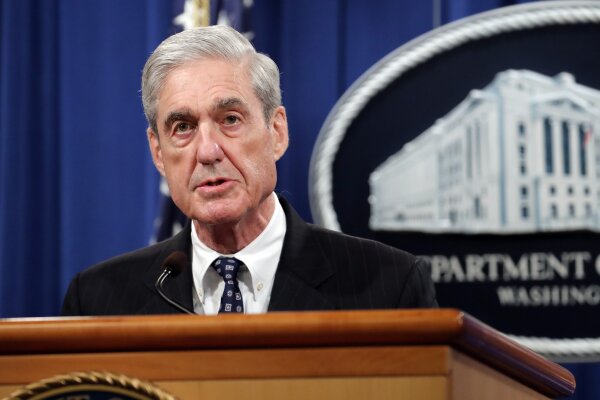
Going Deeper: Robert Mueller’s Legacy, at FBI and Beyond |
You may remember Robert Mueller as the lead investigator of the high-profile probe into Russian interference in the 2016 election and the possible obstruction of justice by President Trump. But before that, Mueller, who died last week at the age of 81, spent more than a decade as FBI director, after being sworn in a week before the Sept. 11 terrorist attacks.
Senior Justice Correspondent Carrie Johnson looks back at Mueller’s career in public service. |
|
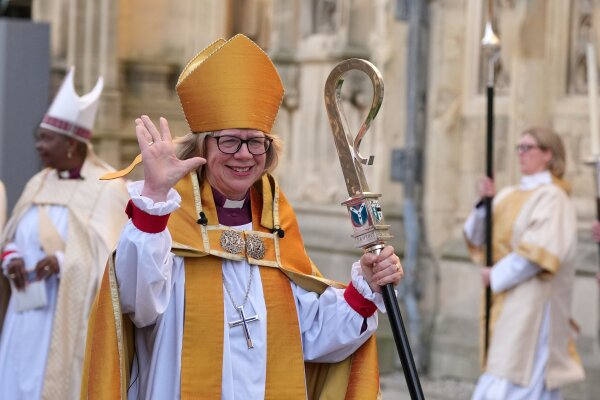
The Shot: First Woman To Lead Church of England |
The Church of England installed its new leader this week, and for the first time in more than 1,400 years the new archbishop of Canterbury is a woman.
Sarah Mullally becomes the 106th person and first woman to hold the job. The Church of England has only allowed women to become priests since 1994 and bishops since 2014. And Mullally's appointment has not been without controversy: one of the church's offshoots, the Global Fellowship of Confessing Anglicans, had expressed its opposition.
Mullally’s installation ceremony was attended by the Prince and Princess of Wales, and Prime Minister Keir Starmer. |
|
|
Listen to your local NPR station. |
|
Visit NPR.org to find your local station stream. |
|
|
| |
|
|
|
|
|
|
|
|
You received this message because you're subscribed to Politics emails. This email was sent by National Public Radio, Inc., 1111 North Capitol Street NE, Washington, DC 20002
|
| |
|
|
|
| |