| | Oil prices surge after Donald Trump escalates his threats again Iran, China could restart its purcha͏ ͏ ͏ ͏ ͏ ͏ |
| |  | Flagship |  |
| |
|
The World Today | 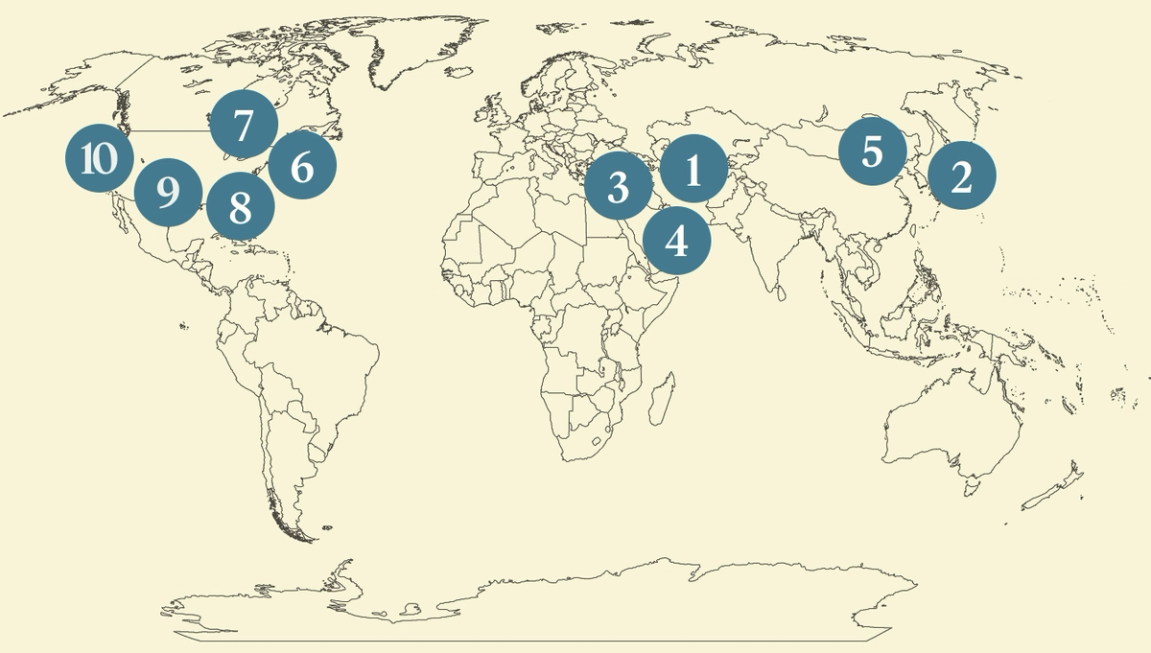 - Trump threatens ‘obliteration’
- Government bonds rally
- Lebanon conflict worsens
- Gulf’s lessons from war
- China eyes US oil, gas
- Riskier retirement accounts
- Air Canada CEO quits
- Turmoil at the CDC
- More spas, fewer stores
- Wikipedia’s new AI rules
 The first rave tragedy. |
|
Trump threatens to ‘obliterate’ Iran grid |
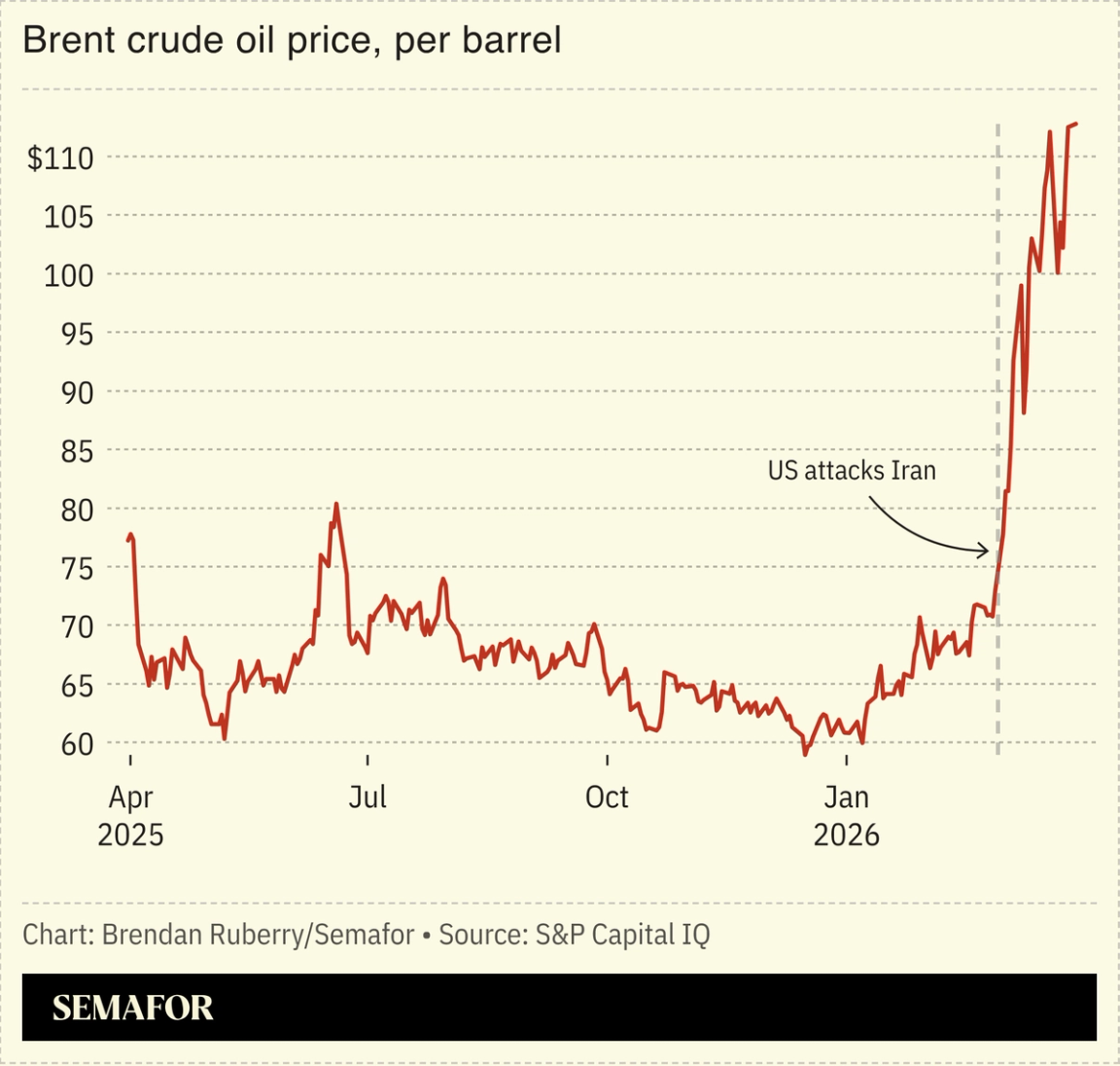 US stocks dipped and oil prices surged Monday after President Donald Trump escalated his threats against Tehran. Even as Trump hailed “great progress” in talks, he warned that the US would “obliterate” Iran’s oil wells, power plants, and offshore terminal at Kharg Island if Tehran did not reopen the Strait of Hormuz. The US crude benchmark closed above $100 for the first time since July 2022, as investors grow skeptical of Trump’s diplomatic optimism, and instead price in a more aggressive US campaign, including a possible ground invasion. A longer conflict will trigger a chip and food crisis alongside an energy one, Foreign Policy’s editor-in-chief wrote, as Iran reminds the world “it won’t go quietly into the night.” |
|
Bonds rise as traders fear slowdown |
 Brendan McDermid/Reuters Brendan McDermid/ReutersGovernment bonds in the US, UK, Germany, and Japan rose Monday as concerns ballooned about an economic slowdown driven by the war in the Middle East. US Treasury yields had risen in the last month on bets the war would fan inflation; that thinking has morphed into fears of a pandemic-like global economic shutdown, with traders betting on interest rate cuts rather than hikes this year, Bloomberg reported. “The market is now letting its imagination run wild” about what could happen if there is no resolution to the war in a month’s time, one strategist said. The International Monetary Fund warned Monday that the conflict will dent economic growth in a “global, yet asymmetric” shock. |
|
Israel-Hezbollah war intensifies |
 Adnan Abidi/Reuters Adnan Abidi/ReutersThe UN said Monday that three of its peacekeepers were killed in southern Lebanon within 24 hours, as Israel’s campaign against Hezbollah intensifies. More than a million people in Lebanon have been displaced and some 1,200 killed since hostilities between Israel and the Tehran-backed Lebanese group reignited over the Iran war. An Israeli ground campaign is underway in Lebanon, and is set to widen. Israel plans to keep “effective control” of southern Lebanon even after the current hostilities end, The Jerusalem Post reported. The war has deepened sectarian divisions within Lebanon as it pushes its “fragile state and society towards breaking point,” Reuters wrote, while some analysts argue a lengthy Israeli occupation would only reenergize Hezbollah. |
|
The Gulf’s lessons from a month of war |
 Saudi Press Agency/Handout via Reuters Saudi Press Agency/Handout via ReutersThe leaders of Saudi Arabia, Jordan, and Qatar met on Monday as regional tensions escalated over the Iran war. The first month of hostilities has exposed new realities about Tehran, Gulf states, and the nature of modern warfare, Arab News’ Faisal Abbas wrote in Semafor Gulf. For one, it has revealed the region’s reliance on desalination as a vulnerability, raising government concerns about the weaponization of thirst. It has also made evident that Tehran’s strategy “is to survive by making this war as expensive as possible for everyone.” Even as Arab leaders urged joint action to tackle the economic repercussions of the conflict, the White House suggested Monday it could call on Gulf allies to help pay for the war. |
|
China set to resume US energy purchases |
 Brian Snyder/Reuters Brian Snyder/ReutersChina appears to be restarting its purchases of US oil and gas as the Iran war disrupts shipments from the Middle East. Beijing stopped buying American crude and LNG last year after US President Donald Trump’s tariff salvo triggered a trade war. But Kpler data showed nearly 600,000 barrels of American crude are set to be loaded daily onto China-bound tankers in April, Nikkei reported. While the cargos could still be diverted, the issue will likely come up when Trump visits Beijing in mid-May, and the renewed purchases could give both sides an easy win: Trump has pushed for China to increase imports of US energy, while Beijing is looking to diversify its supply given the Strait of Hormuz closure. |
|
US proposes 401(k) rules change |
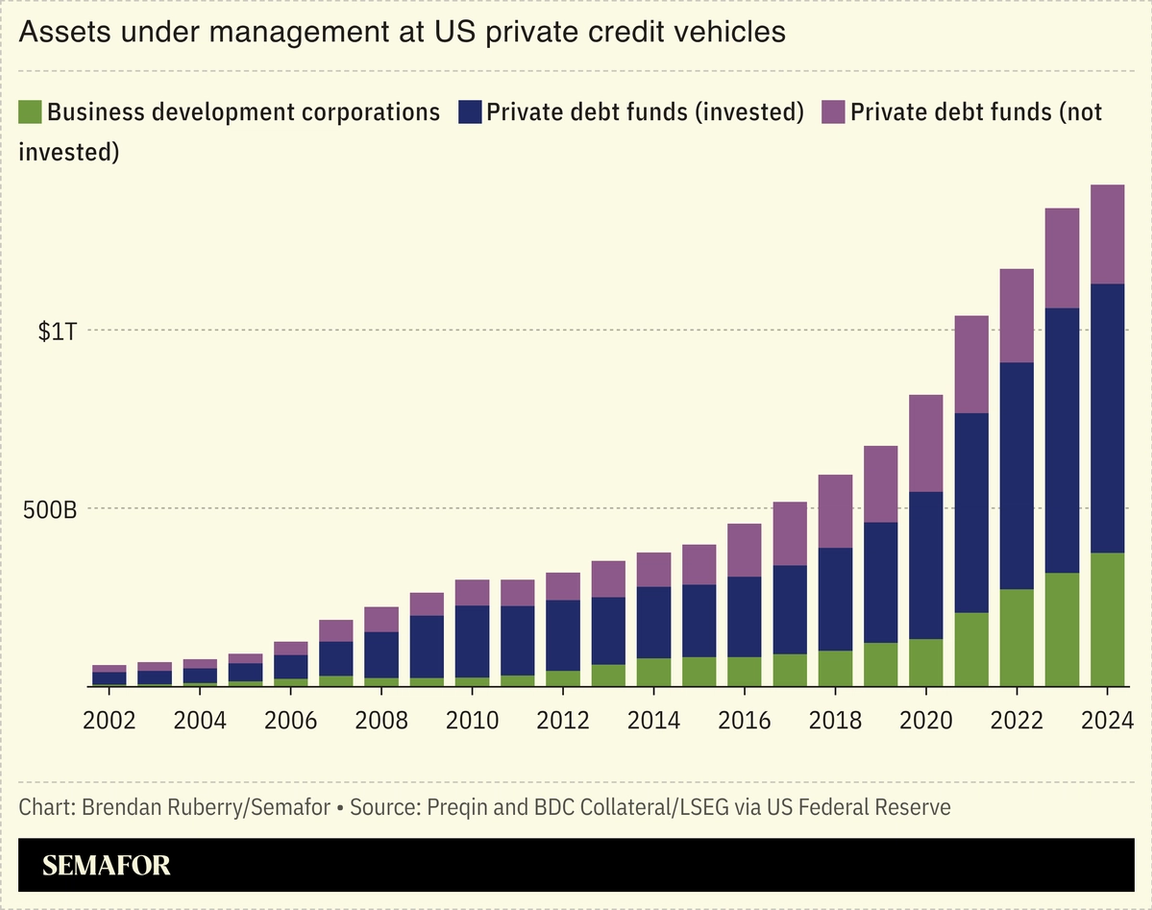 The Donald Trump administration on Monday proposed a rule aimed at opening up US retirement plans to alternative assets like private credit. The regulation wouldn’t direct companies to add those investments — instead it would would make it harder to sue employers who do — but it’s still a win for the private-credit industry at a particularly precarious time. More investors are pulling money from private-credit funds as default rates rise and worries grow about the sector’s exposure to AI-hit software companies. That could prove perilous to the administration’s push to deregulate the financial sector: Critics warn the alternative investments could put everyday Americans’ retirement funds at risk. |
|
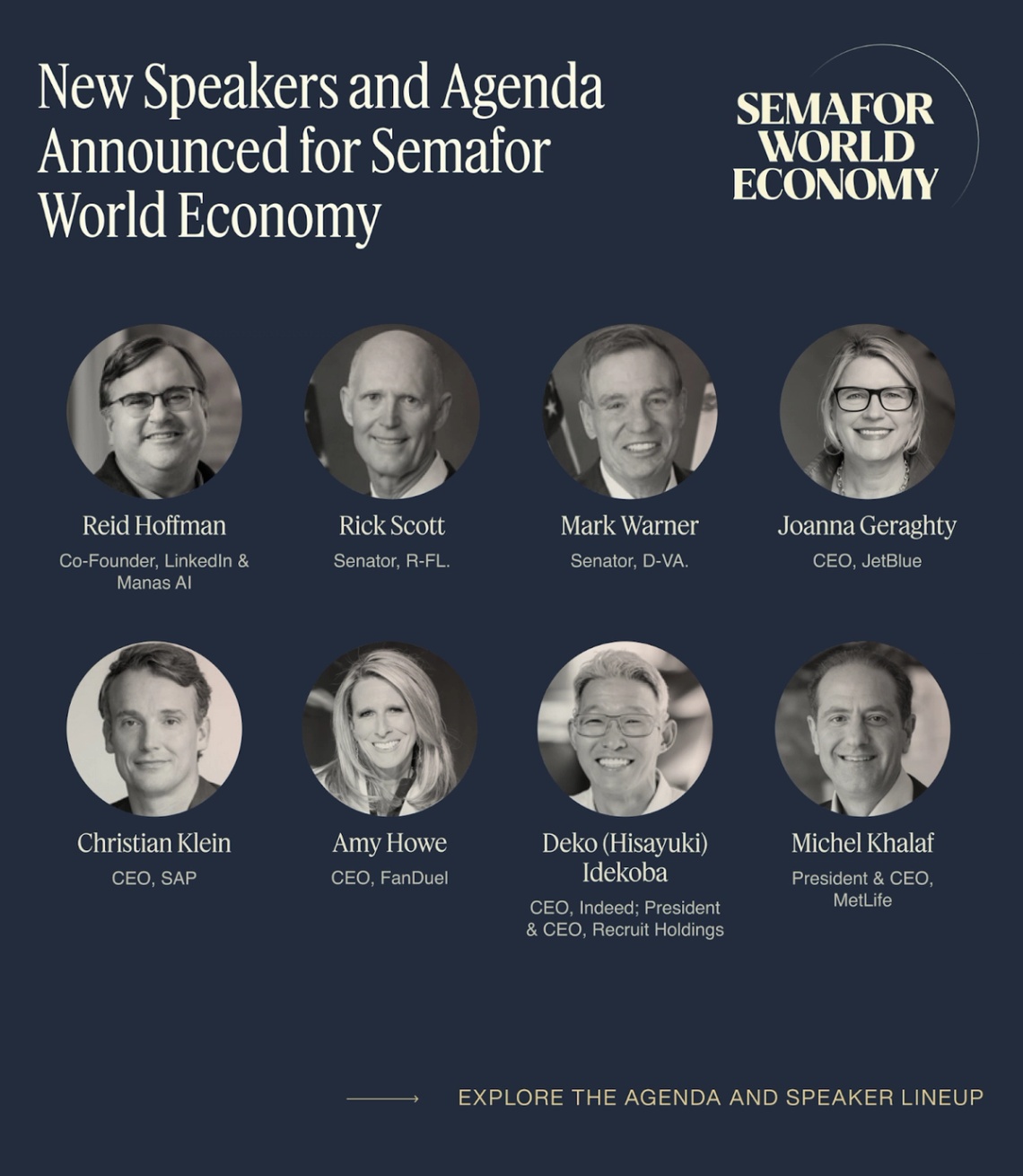 This April, global CEOs, officials, and industry leaders will join Semafor World Economy — the largest convening of its kind in the United States — to sit down with Semafor editors for conversations on the forces shaping global markets, emerging technologies, and geopolitics. See the full lineup of speakers, including Global Advisory Board members, Fortune 500 CEOs, and officials from the US and across the G20. |
|
Air Canada CEO quits after language row |
 Nick Lachance/Toronto Star via Getty Images Nick Lachance/Toronto Star via Getty ImagesAir Canada’s CEO will step down this year following criticism over his English-only condolence message in response to a deadly collision in New York last week. Michael Rousseau faced backlash for not issuing a statement in French: The country’s largest airline is based in French-speaking Quebec, and one of the pilots killed in the crash was a French-speaking Quebecer. Prime Minister Mark Carney said the message showed “a lack of judgment,” and a Montreal historian called it “one of the most tone-deaf and ill-conceived public relations efforts in Canadian corporate history.” Rousseau had previously boasted about living in Montreal for more than a decade without speaking French (he had to apologize for that as well). |
|
WH shifts away from vaccine skepticism |
|
More spas than stores in US |
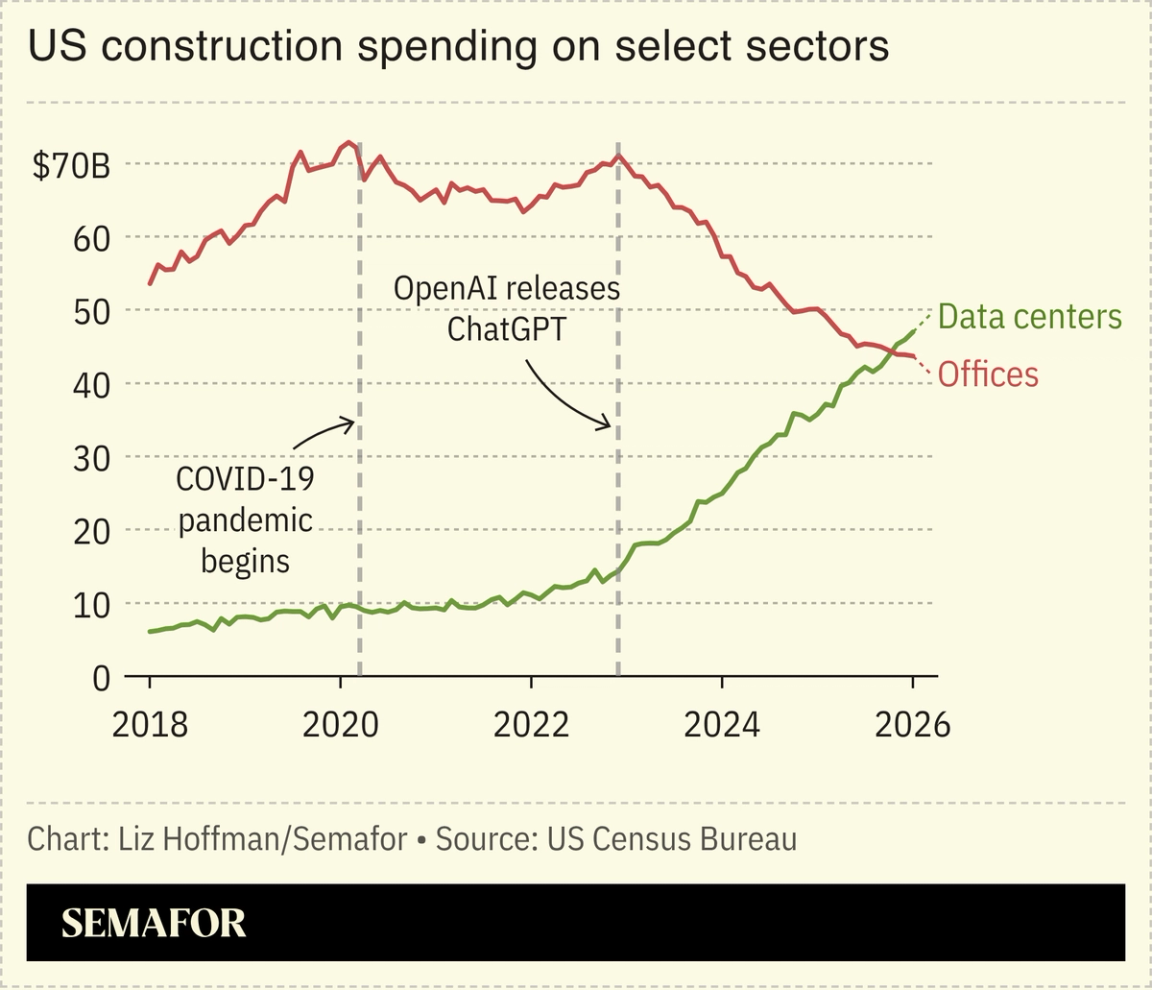 In a sign of the changing economy, the US is spending more on new data centers than on new offices, and has more spas and gyms than shops. Spending on new server farms has risen roughly threefold since ChatGPT’s 2022 launch; spending on new offices has fallen by a third, owing to a shrinking workforce and remote working. Meanwhile, service-based outlets now lease more than 50% of total US retail floor space, up from 40% 15 years ago, as shopping moves increasingly online and the “wellness” market expands. Despite goods retailers reducing their store footprints, retail vacancy remains near record-low levels owing to “the proliferation of salons, spas, and fitness studios,” The Wall Street Journal reported. |
|
|


