What We Lose When We Choose Convenience Over Communal Participation |
|
This month, I volunteered as a poll chaplain in Chicago. Illinois residents were casting votes in primary elections for gubernatorial and congressional candidates, and I went to help at a polling place near my home on the city’s south side. |
|
When I walked in around 5 p.m., the election judge at the check-in table was working through a pile of walnuts with an old metal nutcracker. She looked up, slightly startled, as though she hadn’t expected anyone to walk through the door. When I asked about turnout, she told me it was "pretty good." But if it had been any slower than what I was seeing, I figured she must have had a lot of walnuts, because the place was eerily quiet. |
|
What I saw was far from what I expected. I’m a pastor, and clergy like me sometimes serve as poll chaplains—a role for leaders who want to be a calming presence at polling stations during elections. I had come prepared for the last hectic hours of a contested primary, some of which I vividly remember from my days working in Chicago politics. I expected conflicts to defuse, people to pray with, and maybe a long line of voters who needed encouragement to stay the course. But none of that was needed. |
|
During the last two hours at the polling place, only ten people came in to vote. Outside, there were no campaign workers on the sidewalk making last-minute pitches for their candidates, nor were there political organizers who stopped by carrying hot beverages for faithful precinct workers as they did back in the day. It was just one woman, alone with her walnuts, holding down the machinery of democracy. |
|
The irony is that by every measure, a lot of people were voting in Chicago. On the morning of election day, city officials told a local paper that turnout through early and mail-in voting had outpaced that of from recent midterm primaries. Some 400,000 votes had been cast by that evening, and total primary turnout hit 26 percent (a modest but decent amount) with more mail ballots still to count. Yet the polling place felt abandoned. |
|
This is a paradox I now often see with voting. We have made the process more convenient, and in doing so, we are making democracy a more independent and less communal experience. This is a problem, and Christians can understand something about it that our secular neighbors might be more likely to miss. Throughout Scripture, we see there’s something powerful about presence, physically showing up and being there with people. And extending that awareness to how we see democracy might be one of the greatest contributions we could make to our broader civic life today. |
|
Being among others is most profoundly demonstrated in the Incarnation, which was a statement of God’s presence and closeness. Jesus showed up in a body, in a specific place, and among a specific people, to accomplish redemption. He was tired, hungry, and inconvenienced. Still, he was there, and we imitate him when we gather with other believers every week to display that we are indeed one body. |
|
The church is not America, but the principle that there is something good and dignified about being physically present in meaningful moments, including elections, is not something we can easily set aside. Gathering to vote in person with fellow citizens can foster community and bipartisanship and allow us to carry out simple and unexpected acts of ministry. It shows our democratic way of life is not primarily an idea. It is a practice: local, sometimes inconvenient, communal, and irreplaceable. By reducing it to a transaction—fill out the form, seal the envelope, drop it in the mail—we might be preserving the mechanism while hollowing out its deeper meaning. |
|
That said, independent forms of voting do present some benefits worth acknowledging. A 2020 Stanford study published in the Proceedings of the National Academy of Sciences, one of the most rigorous analyses available, found that universal vote-by-mail modestly increases overall turnout by roughly 2 percent and has no apparent effect on either party’s share of turnout. But the same research found something equally important: Voter interest, not convenience, drives civic engagement. This means most people who vote by mail would vote in person. What mail-in voting changes is how, and with whom, they participate. |
|
That distinction matters, especially for Christians who see their involvement in the democratic process as their type of ministry. Marsha Washington, an African American woman who volunteered to be an election judge in Chicago in the past election, told me she’s been volunteering in the role for more than 20 years. A typical day doing the job, which pays a small stipend, involves fixing broken equipment, dealing with provisional ballots, and enjoying moments of genuine human contact—including assisting people to vote. |
|
During the election this month, Washington told me, she helped a middle-aged man with an intellectual disability who needed help casting his ballot for the first time. She read the ballot to him, which Illinois law allows, and helped him participate in the democratic process. Marsha, who is a Democrat, also told me that when she says goodbye to voters, she makes a point of saying, "Have a blessed day," so people know she’s a Christian. That kind of civic ministry can happen between the parking lot and the ballot scanner, but it can’t happen through the mail slot. |
|
Nationally, when and how we vote has become the subject of intense debate. On top of the recent Republican-backed SAVE Act, which would stiffen voter-identification requirements and make mail voting more difficult, President Donald Trump’s well-documented but perhaps less-than-principled opposition to mail-in voting (he and his family voted by mail in a special election this month), has created a landscape in which skepticism of mail-in voting feels like partisan territory. But the Stanford research makes clear that this type of voting has virtually no partisan effect. And my concern here is about our participation in the democratic process and whether we are weakening the very thing we claim to value. |
|
The most important loss we suffer when we stop showing up together is the further untethering of Americans from each other. Some of the volunteers I met in Chicago know this and are doing their best to contribute in a meaningful way. Nathaniel Stuart, a 27-year-old man who lives on the south side, told me he became an election judge four years ago and keeps doing it despite unpredictable days, occasional conflict, and very little pay. Why? He said, "It’s a way of expressing love for my neighbors and my community." |
|
During the most recent election, Stuart watched a teenager come in to cast his first vote in a primary. The election judges in the room were excited and cheered for the teen, who will likely remember that experience for some time to come. Stuart, who is a Republican, also told me he sat next to his Democrat counterpart, a retired Chicago Sun-Times reporter, during the length of the election day and talked about their neighborhood’s problems. By the end of the night, the two were discussing the possibility of starting a local chamber of commerce to help businesses in the area. |
|
"The more we leave behind in-person voting, the more we forget that our personal lives are located within neighborhoods and around people who have real concerns, who have real fears," Stuart said. |
|
While I am critical of any system that makes communal experiences feel less essential, there is certainly a need to accommodate voters who are sick, soldiers serving our country overseas, and people who are less mobile or lack transportation. We can’t totally discount convenience, and it’s good to explore other communal paths to increasing turnout, such as creating a federal holiday for voting, expanding polling locations in underserved areas, or otherwise ensuring people have the time to participate. Democracy is a team sport, and the benefit of our current system—a 2 percent bump in ballot returns—is simply not worth the further atomization of our civic life. |
|
This year’s primary season runs through September. If your state has not yet voted, there will soon be elections to determine the candidates who will stand for the general election in November. Both the primaries and the general election represent opportunities for more than simply casting ballots. They are opportunities to remind ourselves that our destinies are tied together as neighbors who inhabit the same community. |
|
You can vote by mail. But you can also choose to show up. However, showing up is so much more than voting in person. You can serve as an election judge. You can volunteer on a campaign for a candidate you support. You can come as a poll chaplain, or a poll watcher, or simply as a neighbor willing to drive someone to vote. You can bring your kids and let them watch what democracy looks like from the inside—not the broadcast or mail-slot version but the walnut-cracking, provisional-ballot-filing, cheering-for-a-teenager version. That’s democracy at its best. |
- Haleluya Hadero, Black church editor:
- CNN’s podcast-like experiment on cable news was embarrassing, Jay Caspian Kang writes in The New Yorker.
- In Foreign Affairs, two scholars explain Russia’s growing presence in the Sahel, and the geopolitical mistakes the country is making in the region.
- The New York Times reports Defense secretary Pete Hegseth blocked the promotions of four Army officers who were slated to be one-star generals. Two of the officers are Black, and two are women.
- If you’re looking for vegetarian-friendly recipe sites, try Love & Lemons.
|
|
|
a message from the big tent initiative |
|
One of the privileges we have at the Big Tent Initiative is to expand access to stories and storytellers that CT’s audience might not otherwise encounter. We are now collaborating with the extraordinary 16-year NFL veteran, author, and speaker Benjamin Watson on a podcast called The Just Life. The series will expose problems of injustice, engage with people making a difference, and explore practical ways to live justly in everyday life. |
|
As we build this newsletter and Big Tent Initiative, we would love your feedback and engagement. We plan to publish articles, host webinars, create podcasts, and more to meet the needs of our Big Tent audiences. What are some topics that you would like us to address? We also want to highlight what’s on our shelves, our playlists, and our screens. Share your list with us, and we will select a few to include in our next newsletter. Contact us at bigtent@christianitytoday.com. |
|
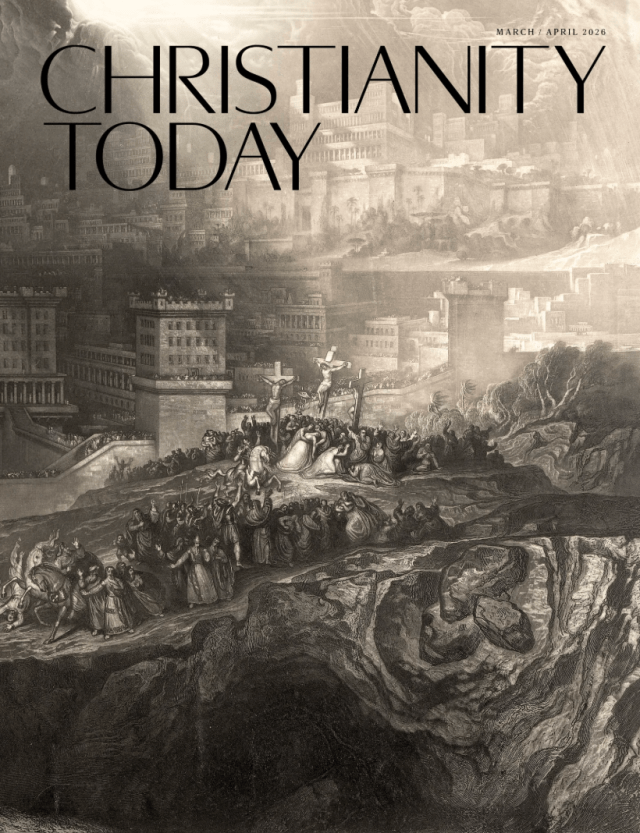
In this issue of Christianity Today and in this season of the Christian year, we explore the bookends of life: birth and death. You’ll read Karen Swallow Prior’s essay on childlessness and Kara Bettis Carvalho’s overview of reproductive technologies. Haleluya Hadero reports on artificially intelligent griefbots, and Kristy Etheridge discusses physician-assisted suicide. There is much work to be done to promote life. We talk with Fleming Rutledge about the Crucifixion, knowing that while suffering lasts for a season, Jesus has triumphed over death through his death. This Lenten and Easter season, may these words be a companion as you consider how you might bring life in the spaces you inhabit. |
| | |