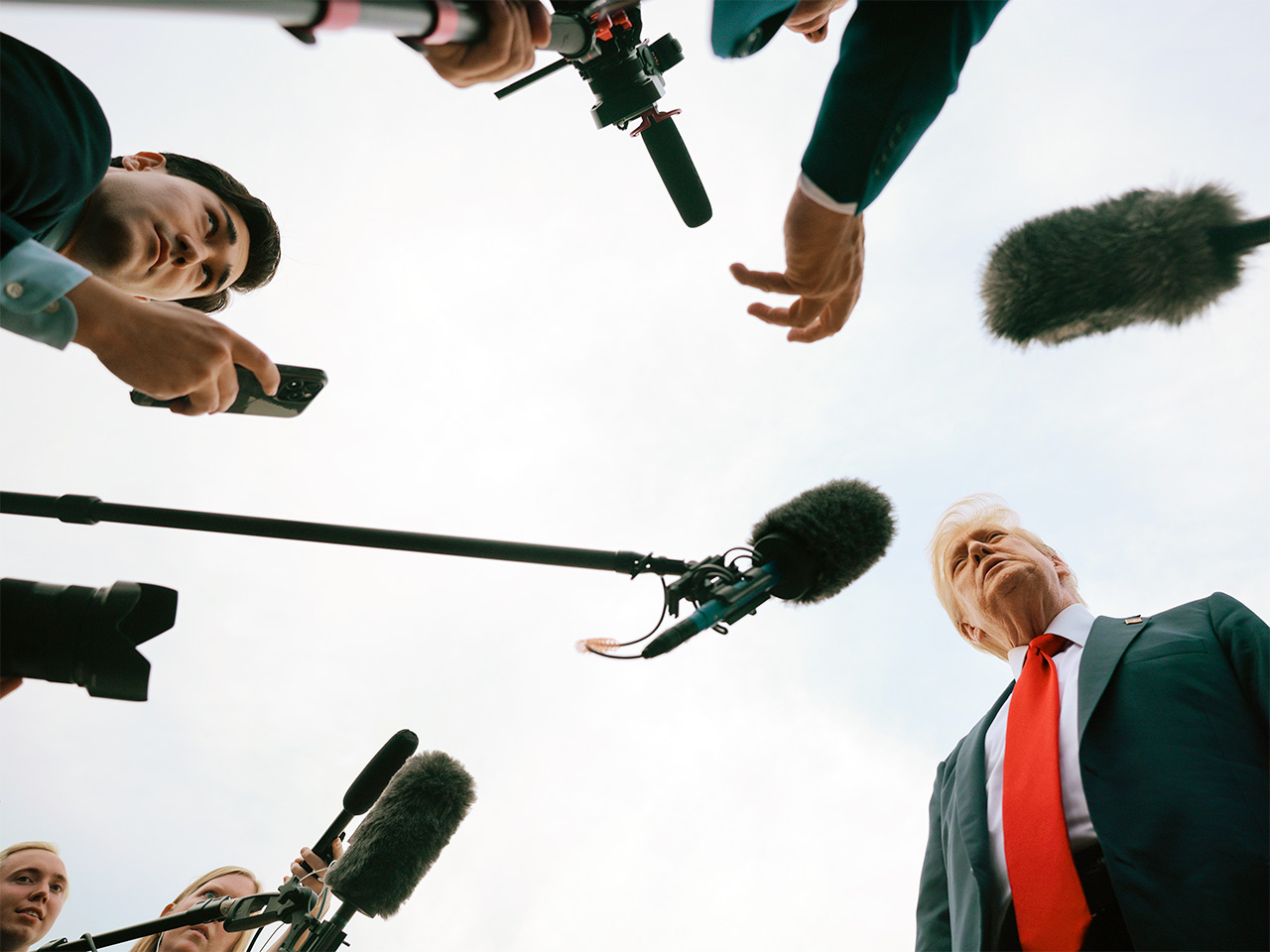
To say that the DC media scene is saturated would be a gross understatement. Since US press secretary Karoline Leavitt announced last year that the White House was opening access to “new media” voices, hundreds of bloggers, content creators and “independent media outlets” have descended on the nation’s capital. So why are senators and congressmen quaking in their boots at the addition of three more reporters into this already eclectic mix?
Because tabloid gossip site and celebrity-baiter TMZ set up shop in Washington this week and marked its arrival with a video of a reporter chasing Republican senator Lindsey Graham down a corridor shouting questions about a bubble blower. It is hardly the stuff of Woodward and Bernstein, and yet there has been intense interest in DC media circles about the new arrivals – and whether this marks a new era of transparency or further spiralling toward the gutter for US politics.
Much like Donald Trump’s White House, the TMZ model of newsgathering breaks all the rules. Owned by the Fox Corporation and operating more like a spy network than a media outlet, TMZ launched in Los Angeles in 2005 to cover the entertainment world and invested in developing a huge web of informants. At airports, newsstands, hotels and other locations where celebrities might lurk, staff were encouraged to snap photos and videos and gather other incriminating evidence to shame the great and the good. Crucially, TMZ paid for the tips and content, considered unethical by mainstream US media and earning it a reputation among loftier titles as the lowest dirt-diggers in the business.
But for all the moral handwringing, the tactics worked, with TMZ getting scoop after scoop, from the audio of actor Mel Gibson’s drunken antisemitic rant in 2006 to the news this week that singer Britney Spears was back in rehab. So what does that mean for Washington?
TMZ happened on this rich new seam of reporting partly by accident. During the recent partial government shutdown, when airport security staff went without pay, TMZ’s network started sending in photos of politicians enjoying themselves on holidays.
The snaps of politicians at leisure – including a group of congressmen and women at a Scottish castle and Graham clutching a Little Mermaid-themed bubble blower at Disney World – aimed to highlight inequality and hypocrisy. The photos were an immediate hit on social media, where TMZ boasts millions of followers.
So, TMZ founder Harvey Levin swiftly dispatched three brash young producers to DC and promised that they would “show how pop culture and politics converge”. One of those new arrivals, Charlie Cotton, announced, “We love DC, [and] DC is going to love us.”
That is optimistic: while there were some voices on social media welcoming any greater transparency in Congress, there was also nervousness among congressional staffers. Because there is no shortage of scandals to uncover on the Hill. Just this week, two members of Congress were forced to resign over accusations of sexual misconduct. Of course, politicians engaging in inappropriate dalliances is nothing new. But levels of trust among the public towards their representatives is pitifully low, with a recent Pew Research Centre survey showing just 17 per cent trust the government to act in the interests of its people – trust in the media is equally dismal according to Gallup, hovering at around 28 per cent.
While there has been a flood of new outlets covering the White House, most of them are not the “independent journalists” that Leavitt promised but rather conservative outlets throwing softball questions at the president. Traditional networks and newspapers, meanwhile, cover the Trump White House with a po-faced sense of doom.
For all its dubious ethics, TMZ will go after anyone of any political stripe with the same ferociousness and its crowd-sourced method of newsgathering creates the veneer of authenticity. Breaking past the perceived wall separating the people from their representatives is a tantalising prospect and, so far, traditional media have struggled to do this.
Whether the TMZ approach will work remains to be seen. Covering Washington is about building trust with contacts and sources, and combative corridor encounters don’t tend to foster bonhomie.
But with an anarchic president breaking all the rules to pursue his vision for the country, an anarchic media outlet operating with a similar disregard for convention seems to be the perfect fit for the moment.
Charlotte McDonald-Gibson is Monocle’s Washington correspondent.
Further reading?
– How Karoline Leavitt became the world’s most famous White House press secretary
– ProPublica’s new pitch: Finding whistleblowers on the Washington Metro
– When it comes to Dulles airport, Trump might actually have a point