| | Donald Trump says the US struck and seized an Iranian-flagged ship, global energy supply worries gro͏ ͏ ͏ ͏ ͏ ͏ |
| |  New Delhi New Delhi |  Barcelona Barcelona | Beijing |
 | Flagship |  |
| |
|
The World Today | 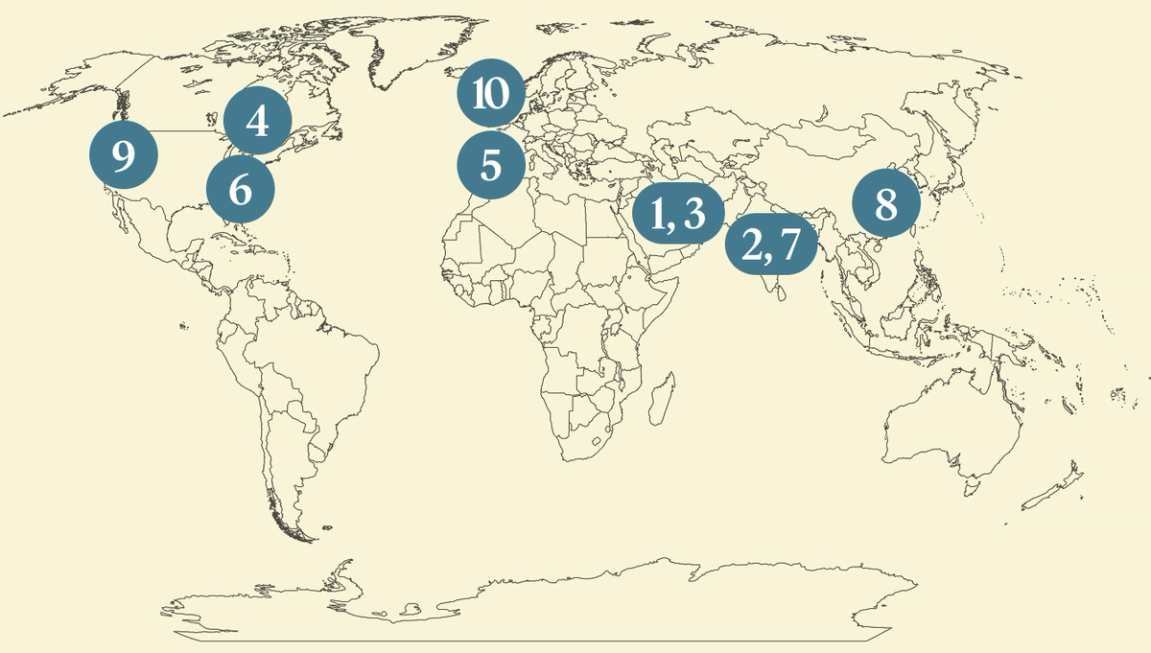 - US seizes Iranian-flagged ship
- Energy supply worries deepen
- Mine-hunting water drones
- US-Canada ties damaged
- Progressives rally in Spain
- Psychedelics research order
- India sees GLP-1 frenzy
- Humanoid race in Beijing
- Future of carbon removal
- Solving Shakespeare mystery
 The debauchery of a mad monk. |
|
US seizes Iranian ship as strait is closed |
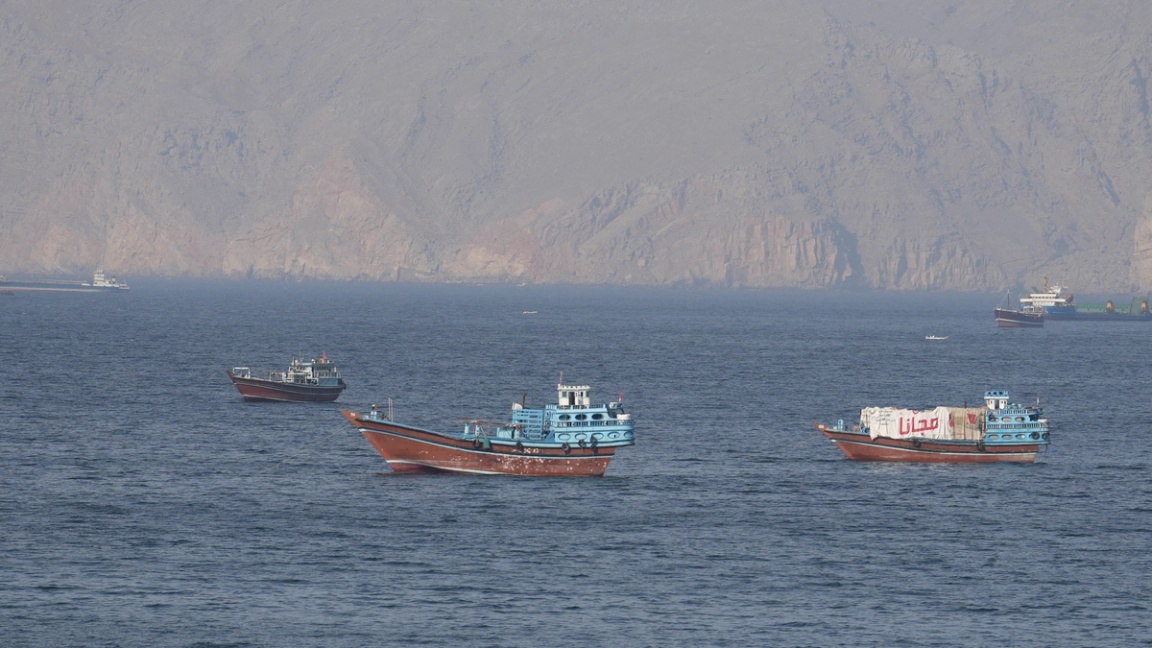 Reuters ReutersThe US struck and seized an Iranian-flagged cargo ship trying to evade a blockade in the Gulf of Oman, President Donald Trump said Sunday, as Tehran reversed its decision to reopen the Strait of Hormuz. The incident — the first in which the US used force to impose its blockade — came after Trump said Washington and Tehran would hold a new round of peace talks in Pakistan on Monday, but Iranian state media said no such meeting had been confirmed. The back-and-forth capped a chaotic weekend in the strait: Iranian officials said Friday the waterway was “completely open” but later reimposed “strict control,” citing the US blockade. Two Indian ships reportedly came under fire and were forced to turn back. |
|
Worries pile up over energy supplies |
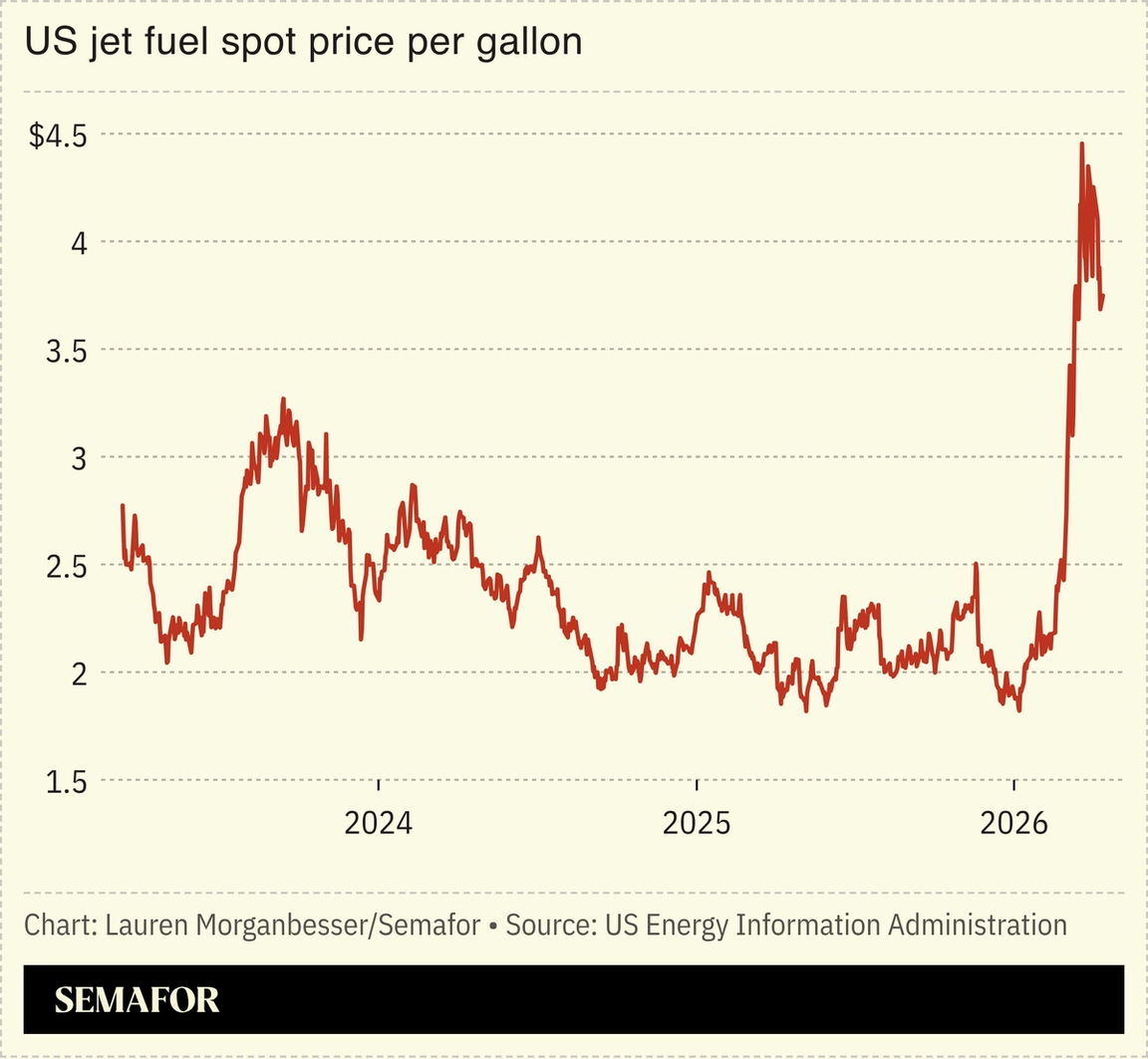 Fresh uncertainty around the Strait of Hormuz over the weekend compounded concerns over global energy supplies ahead of a busy travel season. Even if the waterway were to reopen, it’s unclear how quickly insurance rates would come down, and tankers would still need several weeks to complete their journeys, Semafor’s climate and energy editor noted. Air travel, in Europe in particular, could become chaotic as jet fuel shortages are expected to persist for months, experts said. Asia is already feeling the pressure: India’s chief economic adviser told Semafor World Economy that in an optimistic scenario, the energy market wouldn’t normalize until October, while Bangladesh has raised fuel prices by 10% to 15%. Pakistan is dealing with regular blackouts. |
|
Clearing mines with sea drones |
 US Navy/Handout via Reuters US Navy/Handout via ReutersThe US military is sending “sea drones” to clear mines in the Strait of Hormuz, the latest example of how autonomous machinery is transforming warfare. Explosives in the waterway are a major hurdle to fully resuming maritime commerce; the uncrewed boats and submarines use sonar to scan for mines without putting sailors at risk, The Wall Street Journal wrote. Drones have become ubiquitous in the Ukraine and Iran wars; speakers at Semafor World Economy last week noted that the next evolution in that trend is the further integration of AI. “Every application that demands autonomy, which is everything in space, everything underwater… is going to be the realm of AI,” the Booz Allen Hamilton CEO said. |
|
Carney calls US ties a weakness |
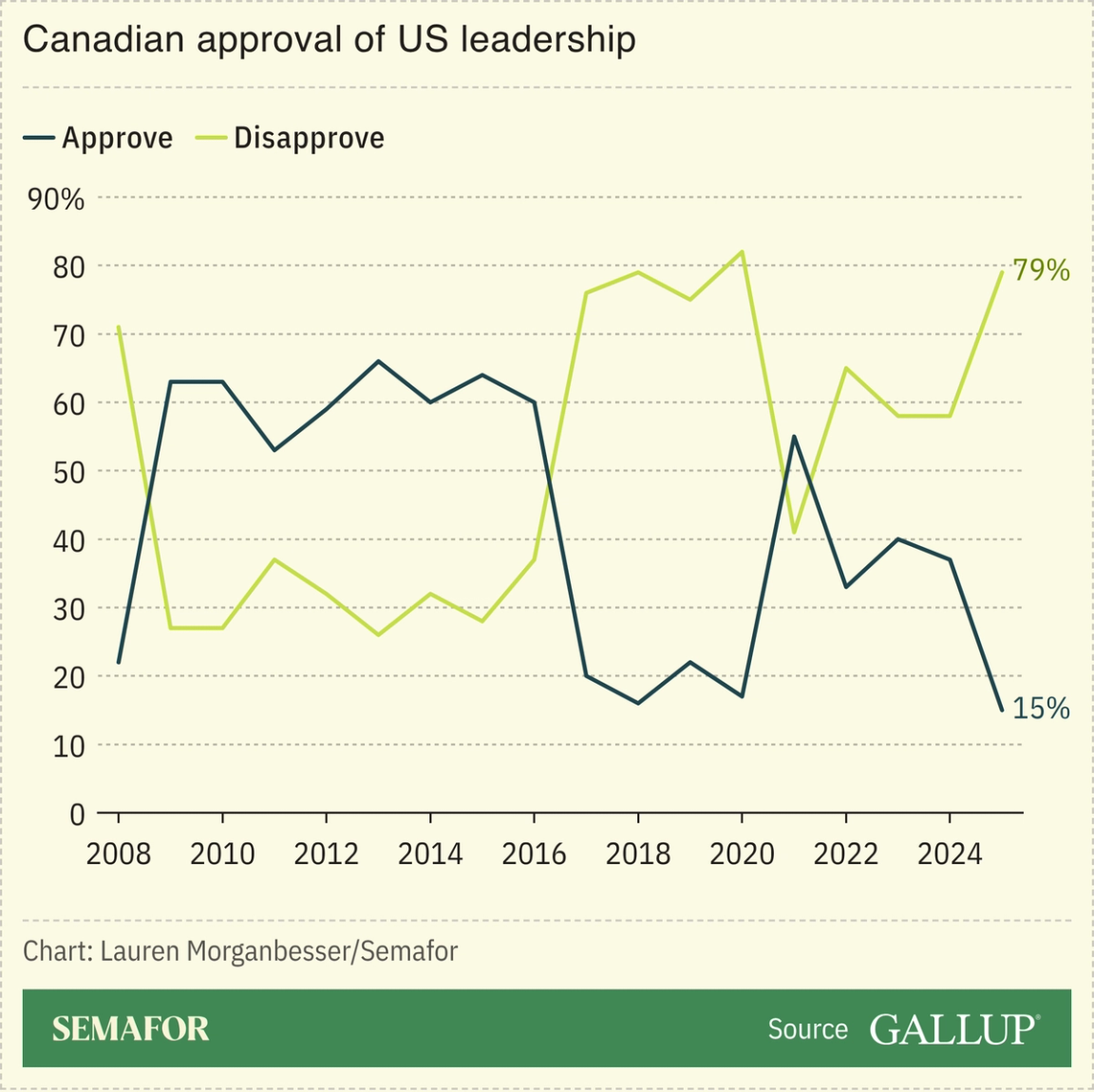 Canadian Prime Minister Mark Carney on Sunday said his country’s close ties to the US have become “weaknesses,” as Ottawa looks to become less dependent on Washington ahead of major trade negotiations this year. Carney’s remarks — “It’s our future. We are taking back control,” he said — came two days after US Commerce Secretary Howard Lutnick blasted Canada’s trade strategy, saying at Semafor World Economy that the current US-Mexico-Canada agreement needs to be “reconsidered and reimagined,” and that Canada mooches off the American economy. Uncertainty about the trade pact has slowed investment and hiring. In a bid to reduce economic reliance on the US, Carney announced a September investment summit aimed at attracting $730 billion in investment in Canada. |
|
Global leftist leaders rally in Spain |
 Nacho Doce/Reuters Nacho Doce/ReutersProgressive leaders of mostly small to mid-sized countries held a rally in Barcelona on Saturday, reflecting an emerging coalition of middle powers positioning themselves as alternatives to nationalist politics. At the gathering, convened by Spanish Prime Minister Pedro Sánchez and Brazil’s Luiz Inácio Lula da Silva, participants avoided mentioning US President Donald Trump by name, but they called for a “reinforced multilateral order.” Many among the global left see Sánchez as a progressive hero for defying Trump, while in Spain, the American president has distracted from Sánchez’s domestic challenges. The recent defeat of Hungarian Prime Minister Viktor Orbán, who was ousted by a fellow conservative rather than a leftist challenger, nevertheless showed that Europe’s far-right “wave can be stopped,” Sánchez said. |
|
Trump promotes psychedelics research |
 Nathan Howard/File Photo/Reuters Nathan Howard/File Photo/ReutersUS President Donald Trump on Saturday ordered federal agencies to speed up research on the therapeutic effects of psychedelics like LSD and ibogaine, underscoring growing political support for the drugs. The podcaster Joe Rogan, a longtime proponent of expanded therapeutic use of psychedelics, attended the signing of the order; Rogan endorsed Trump in 2024 but has since criticized the Iran war. While the vast majority of psychedelics will remain illegal, the move marks a win for Trump administration officials who have championed using the substances to help treat depression and mental health conditions, especially among veterans. Some experts, though, caution the plan could encourage hasty, risky research, The Washington Post wrote. |
|
Indian companies rush to make GLP-1s |
 Indranil Mukherjee / AFP via Getty Images Indranil Mukherjee / AFP via Getty ImagesIndia’s pharmaceutical companies are in an intense race to create cheaper generic versions of weight-loss drugs after the patent for the active ingredient semaglutide expired in the country. The surge in GLP-1 development — which one executive called a “bloodbath” — comes as the industry rushes to meet the growing demand in India, where nearly a third of adults are obese. The landscape is also shaped by manufacturing capacity concerns: At last week’s Semafor World Economy, Eli Lilly’s CEO framed new oral pills as a “huge scale” solution for global supply constraints, saying that “no matter how hard we want to try, we cannot reach the planet” with traditional injectable treatments. |
|
 Some positivity for your news diet. There’s good news out there, but sometimes it’s hard to find. Nice News does the digging for you, delivering uplifting stories to your inbox every morning. And it’s free: Join 1 million readers and subscribe to Nice News today. |
|
China shows off robot advances |
 Maxim Shemetov/Reuters Maxim Shemetov/ReutersA bipedal humanoid robot finished a half marathon in China in under 51 minutes, underscoring rapid advancements in the country’s physical AI sector. The winner, made by Chinese smartphone maker Honor, beat the fastest-ever human half marathon time — with the caveat that the robot crashed and had to be helped by humans and was telecontrolled, rather than being fully autonomous. Still, Sunday’s race in Beijing marked an improvement from last year, when only six of the 21 participating humanoids completed the race, and the fastest took two hours and 40 minutes to finish. China has made robotics a national priority, but despite flashy events like the half marathon, the country’s software still lags behind the US’, analysts said. |
|
Microsoft may retreat from carbon removal |
 Loren Elliott/AFP via Getty Images Loren Elliott/AFP via Getty ImagesMicrosoft will reportedly pull back from carbon capture, which would mark a blow to a nascent industry that it helped create. Proponents say actively removing greenhouse gases is required to avoid climate change’s worst impacts. In 2020, Microsoft pledged to remove all the carbon it created. But emissions have risen as AI-driven power demand has increased, and the tech giant has told some companies that it would pause future purchases, Heatmap reported; Microsoft denied that it was indefinitely halting buys. The industry has suffered since US President Donald Trump’s election: Climeworks, a prominent company, cut 22% of its staff last year. A Microsoft withdrawal would undermine it further. Microsoft accounted for 90% of all carbon removal purchases worldwide last year. |
|
Shakespeare’s house mystery solved |
 William Shakespeare’s childhood home in Stratford-upon-Avon. Marie-Louise Gumuchian/Reuters William Shakespeare’s childhood home in Stratford-upon-Avon. Marie-Louise Gumuchian/ReutersThe location of William Shakespeare’s only London house has been identified. The Bard worked in London for two decades, moving there as a young man around 1590 and staying until his supposed retirement in 1613. But his home remained Stratford-upon-Avon, more than 90 miles northwest; while in London, he rented rooms in people’s homes. The year he left London he bought a home in the city’s Blackfriars precinct, but the address was unknown until a researcher uncovered a floorplan in archives. It may have been a pied-à-terre, implying Shakespeare was more active in his final years than believed. His granddaughter sold it in 1665 to an unfortunate buyer: It burned down in the Great Fire of London a y |
|
|


