| | Iran vows retaliation after the US seized a cargo ship, oil prices spike in response, China restarts͏ ͏ ͏ ͏ ͏ ͏ |
| |  | Flagship |  |
| |
|
The World Today | 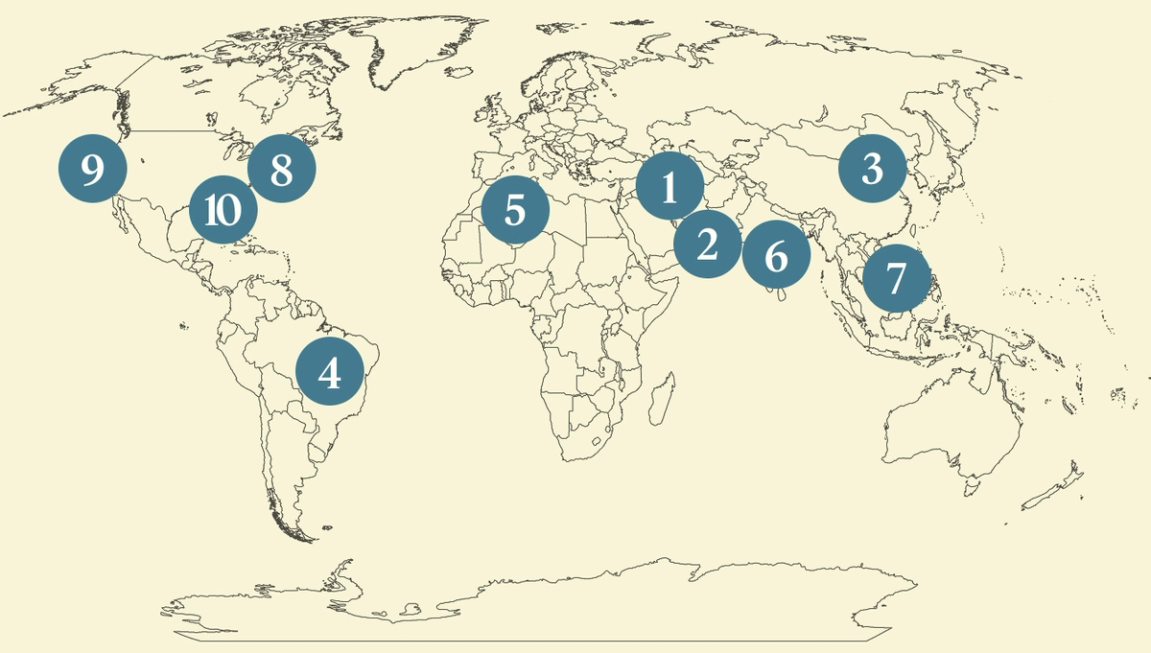 - Iran threatens retaliation
- Tensions raise oil prices
- China looks to coal return
- LatAm’s timely oil boom
- Algeria’s gas exploration
- Iran war helps EV sales
- Japan joins Pacific drills
- US tariff repayments open
- AI demand hits consumers
- Blue Origin’s semi-success
 An AI-focused London Review of Substacks, and a page-turner about the seedy underbelly of the UK capital. |
|
Iran threatens US retaliation |
 US Navy/File photo/Handout via Reuters US Navy/File photo/Handout via ReutersIran threatened retaliation after the US seized one of its cargo ships, denting hopes of an imminent peace deal. The ceasefire ends this week, and US President Donald Trump threatened to “knock out every single Power Plant” if an agreement is not reached by then. He said that US representatives had left for Pakistan for further talks, but Tehran has not confirmed whether it will take part, despite President Masoud Pezeshkian stressing the importance of diplomacy. The war is revealing a rift between the country’s political leaders and its hardline military, The Wall Street Journal reported: The Islamic Revolutionary Guard Corps has consolidated its power, and apparently overruled the government’s decision to reopen the Strait of Hormuz. |
|
Oil prices spike as peace hopes dashed |
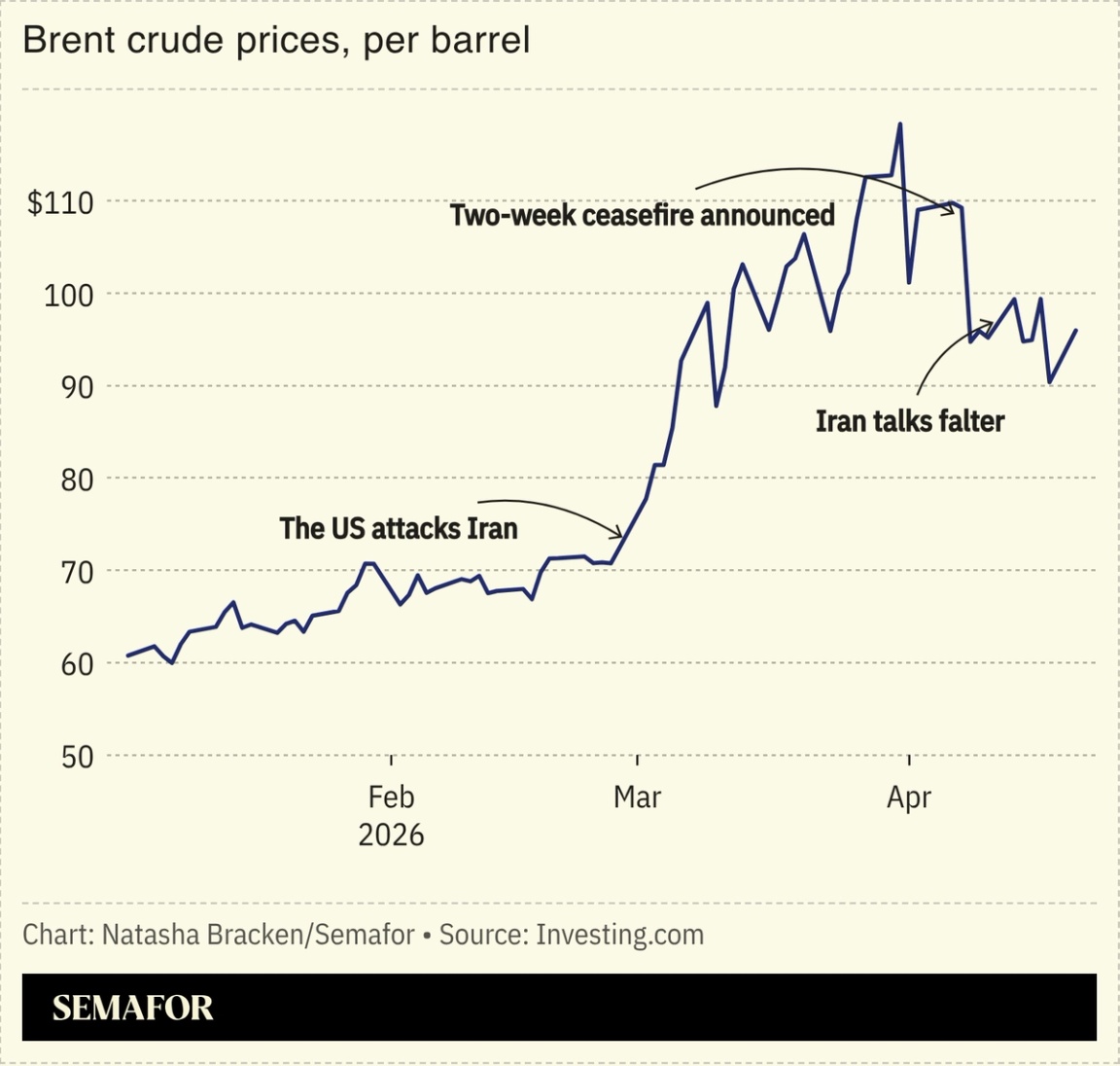 Oil prices surged on fears that the diplomatic thaw between the US and Iran may give way to renewed conflict. Uncertainty over whether Tehran will take part in scheduled peace talks this week has intensified concern that the Strait of Hormuz will remain closed; crude prices have whipsawed on news about the negotiations, and will likely remain volatile in the months ahead, the boss of a major commodities trading firm told the Financial Times. Remarkably, prices remain below their highs since the war began and are likely lower than they should be, the International Energy Agency’s head said at Semafor World Economy. One possible reason — at least in Europe, according to JPMorgan’s head of global commodities strategy — is “demand destruction.” |
|
China revives some coal plants |
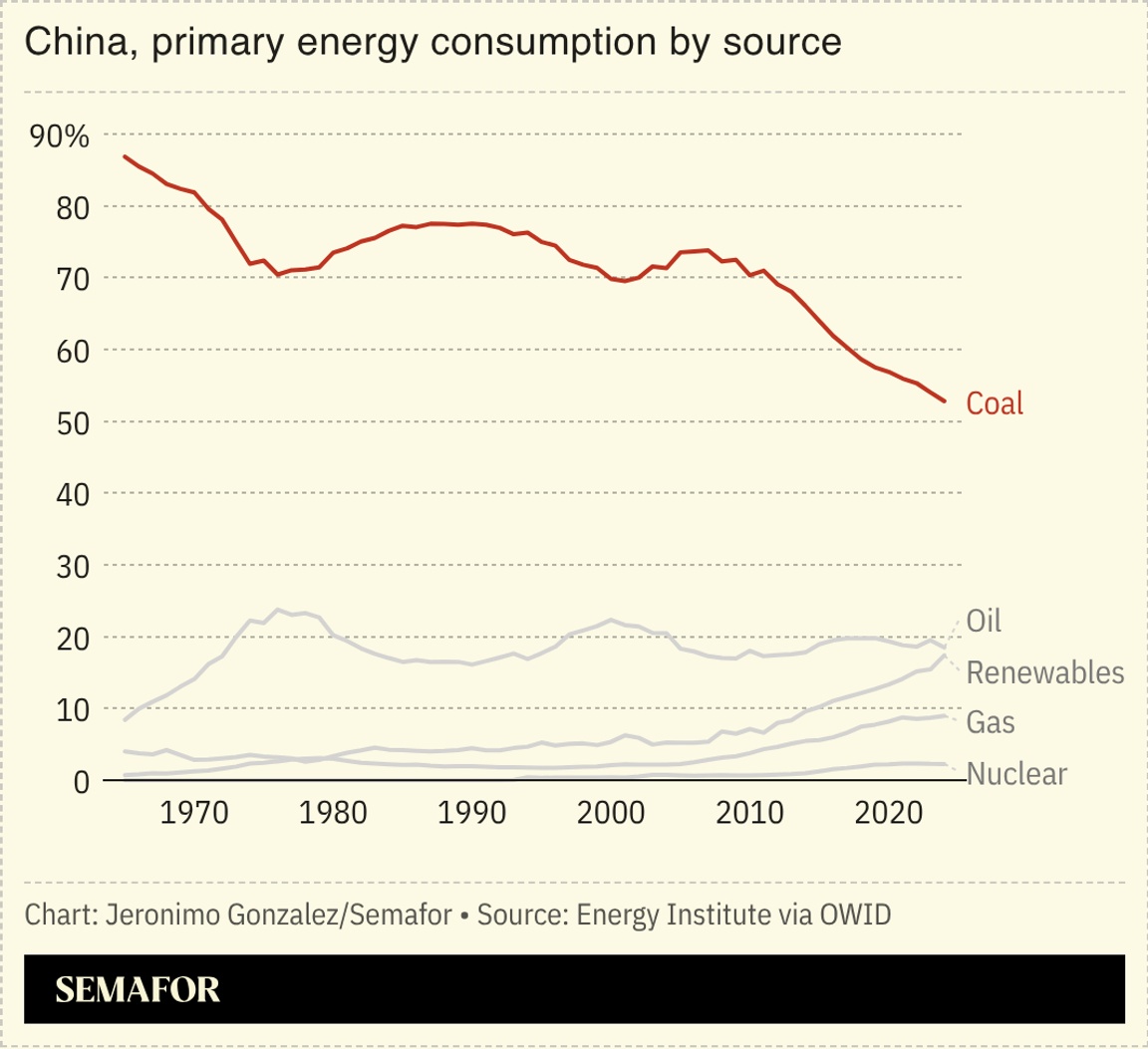 China is reviving some dormant coal plants as it looks to further boost its energy independence, a move that threatens to roll back some of the country’s progress in greening its grid. Though the world’s largest energy importer has largely withstood the worst of the global supply crunch sparked by the Iran war, the conflict has nonetheless exposed some vulnerabilities, leading Beijing to look at cheap domestic coal as an alternative to replace natural gas imports. At the same time, the conflict is also likely to bolster demand for China’s world-leading green energy manufacturers as countries push to wean themselves off fossil fuel dependency, potentially alleviating a downward price spiral that recently pushed Beijing to curb solar overcapacity. |
|
LatAm oil boom risks inequality |
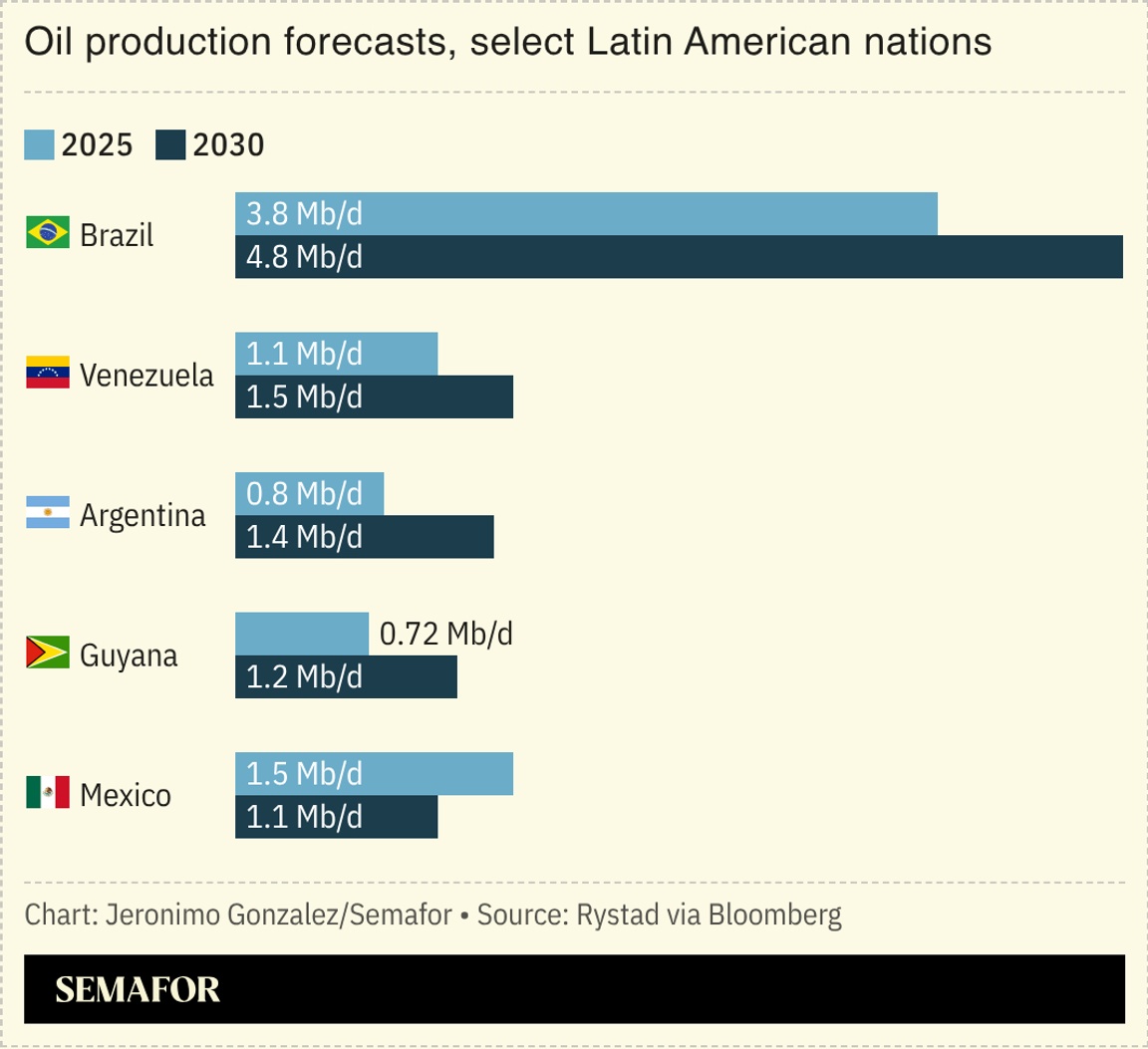 High oil prices sparked by the Iran war are accelerating Latin America’s oil boom, though the growth risks exacerbating economic inequality across the region, analysts said. Latin America is forecast to make up around 50% of global oil production growth through 2030, according to Rystad Energy, lifting the prospects of crude exporters such as Argentina, Brazil, and Guyana. While the region won’t “replace the Middle East,” it could “meaningfully” reduce concentration in the Gulf at a time when nations are looking to diversify energy purchases, Rystad said. However, the region’s net fuel importing nations — Chile, Colombia, and Mexico among them — and those that rely on tourism could be devastated by sustained high oil prices, compounding inflationary pressures, the IMF warned. |
|
Algeria welcomes gas exploration |
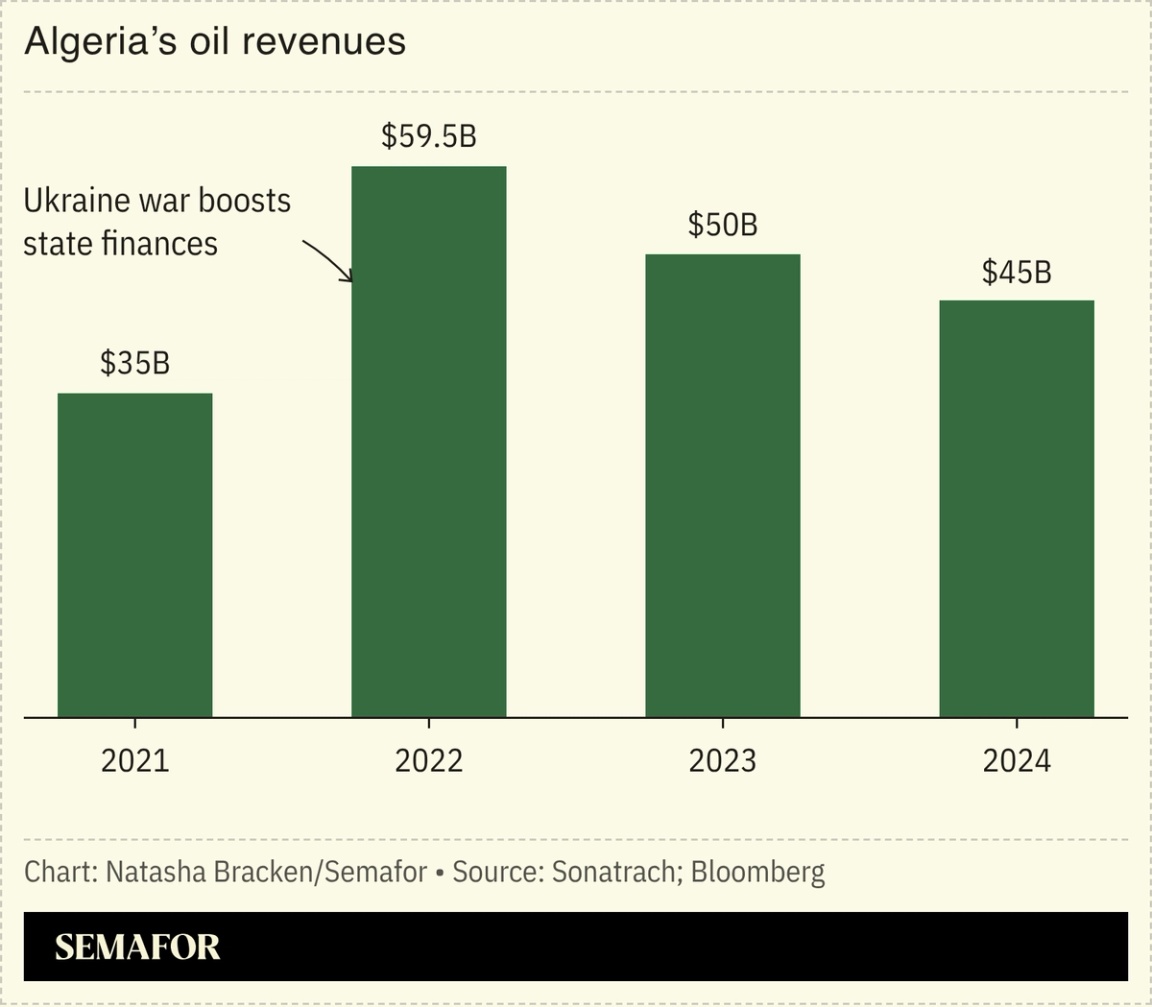 Algeria launched an oil and gas licensing round as it looks to boost output and attract investors amid the global energy crunch sparked by the war in the Middle East. The government said prospect sites are estimated to contain hundreds of millions of barrels of crude and vast amounts of natural gas, both of which Algeria’s hydrocarbons minister said “will help strengthen global energy security.” The tender comes just as Big Oil looks for new projects “far away from the perils of the war in the Middle East,” The Wall Street Journal reported: Exxon recently presented a $24 billion plan for deep-water crude production in Nigeria, while TotalEnergies signed an exploration deal with Türkiye. |
|
Iran war helps global EV sales |
 Rafael Martins/File Photo/Reuters Rafael Martins/File Photo/ReutersEV sales surged worldwide as consumers looked for alternatives to buffer from soaring global fuel prices. India saw purchases jump 87% year-on-year in March, the UK saw a record number of EVs sold the same month, and US used-EV sales grew by 17% year-on-year during the first quarter. While the sales increases in some cases were aided by tax incentives and new emissions rules, the figures point to how global fleets are rapidly electrifying in response to the war in Iran. Though analysts forecast the spike will cool, they argue the car market will nonetheless be permanently transformed: Electric car demand will settle at “a new, higher normal than we had before,” one expert told The Guardian. |
|
Japan joins South China Sea drills |
|
 Some positivity for your news diet. There’s good news out there, but sometimes it’s hard to find. Nice News does the digging for you, delivering uplifting stories to your inbox every morning. And it’s free: Join 1 million readers and subscribe to Nice News today. |
|
US businesses can reclaim tariffs |
|
AI compute boosts costs, dents supplies |
 Brendan McDermid/File Photo/Reuters Brendan McDermid/File Photo/ReutersConsumers are feeling the effects of the AI compute crunch, as supplies dwindle and prices rise. The Mac Mini computer, previously a niche product, is now all but out of stock, The Wall Street Journal reported, because the no-frills, high-powered machine is the most cost-effective way to run locally hosted AI agents, such as OpenClaw. And Anthropic will start charging some business customers directly for the computing power they use, on top of a flat fee per user, according to The Information; a spike in demand since the introduction of its coding agent has driven up the AI company’s costs. The resulting increase could mean some of Anthropic’s heaviest users see their bills triple. |
|
|


