| | Tim Cook is stepping down as Apple CEO, Asia deepens its energy self-sufficiency push, and ByteDance͏ ͏ ͏ ͏ ͏ ͏ |
| |  | Flagship |  |
| |
|
The World Today | 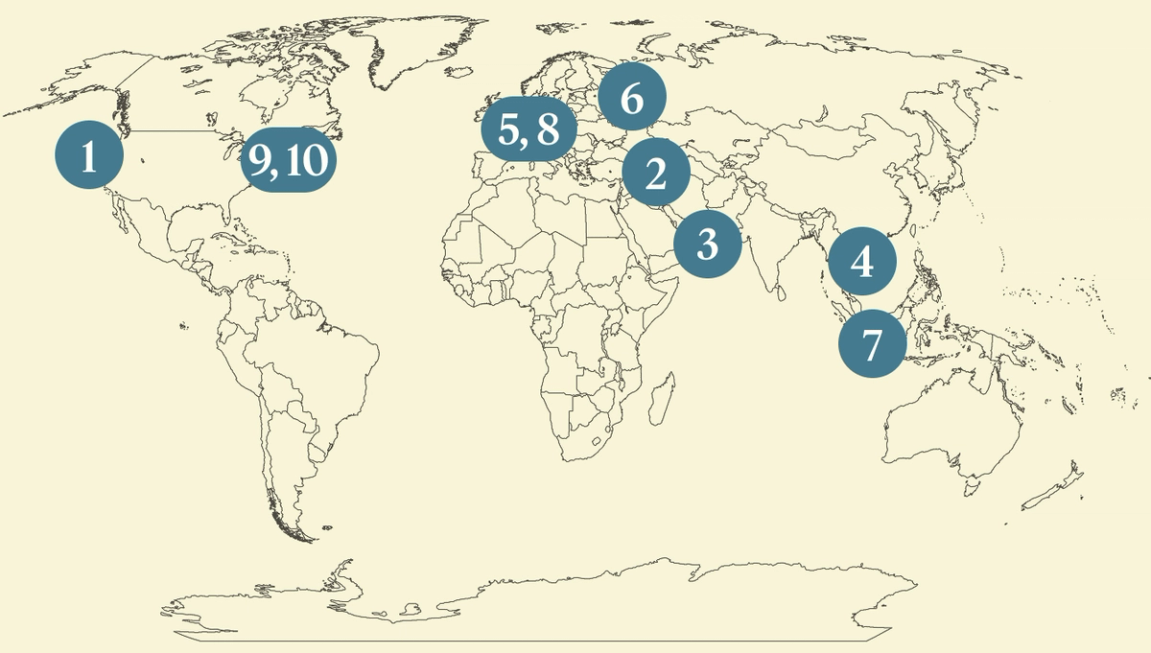 - Apple names new CEO
- US-Iran talks back on
- War reshapes oil industry
- Asia’s energy security push
- Germany privatizing Sefe
- Russia’s economic pressure
- ByteDance profits fall
- Hybrid industrial heating
- World Cup price shock
- Pancreatic cancer vaccine
 Demystifying the allure of hoaxes. |
|
Apple names Tim Cook’s successor |
 Stephen Lam/Reuters Stephen Lam/ReutersApple named John Ternus as its new CEO effective Sept. 1, replacing Tim Cook, who led the US tech giant for 15 years. Ternus, 50, currently leads Apple’s hardware engineering, and had been the clear frontrunner given his expanding portfolio, Bloomberg reported last month, describing him as a “nice guy” with a “Cookian eye for cost-cutting.” Ternus, though, will take the helm of a company widely seen as behind the curve on AI. As Apple hunts for its next generation-defining product, Ternus has been leading projects on developing AI-powered home devices, along with wearable, camera-equipped gadgets. Another open question is how Ternus will approach China, as Apple looks to “reduce geopolitical concentration without denting margins,” CNBC wrote. |
|
US, Iran talks appear to be back on |
 Chip Somodevilla/Pool via Reuters Chip Somodevilla/Pool via ReutersThe US and Iran appear poised to hold a second round of talks in Pakistan this week, following several days of confusion that suggested diplomacy had stalled. US Vice President JD Vance, who led the Washington delegation in earlier failed discussions, is expected to leave for Pakistan on Tuesday. Both sides have dug in on their hardened stances in the conflict; US President Donald Trump said Monday he is unlikely to extend Washington’s truce with Tehran, due to end Wednesday, putting pressure on negotiators to strike a deal to end hostilities. Trump “wants the war to end, now, on his terms,” Axios wrote, but with deep disagreements lingering, “the war may… be on the precipice of a massive expansion.” |
|
How war rewires energy markets |
 Jennifer Gauthier/Reuters Jennifer Gauthier/ReutersThe Iran war is fundamentally reshaping the oil industry, as geopolitical volatility rattles traders and derails expectations of a Middle East drilling boom. US President Donald Trump’s policy swings on the conflict, delivered via social media, have transformed the way oil markets behave, Citadel’s head of commodities told the Financial Times, adding that he has a screen devoted to monitoring the president’s posts. The war has also upended conventional wisdom on the Middle East; oilfield executives were recently bullish on a rebound in the region’s drilling and fracking orders, but their hopes — and fortunes — have since dimmed, Bloomberg wrote. Analysts expect profits for some of the world’s largest oil contractors to fall this year. |
|
Asia puts focus on energy security |
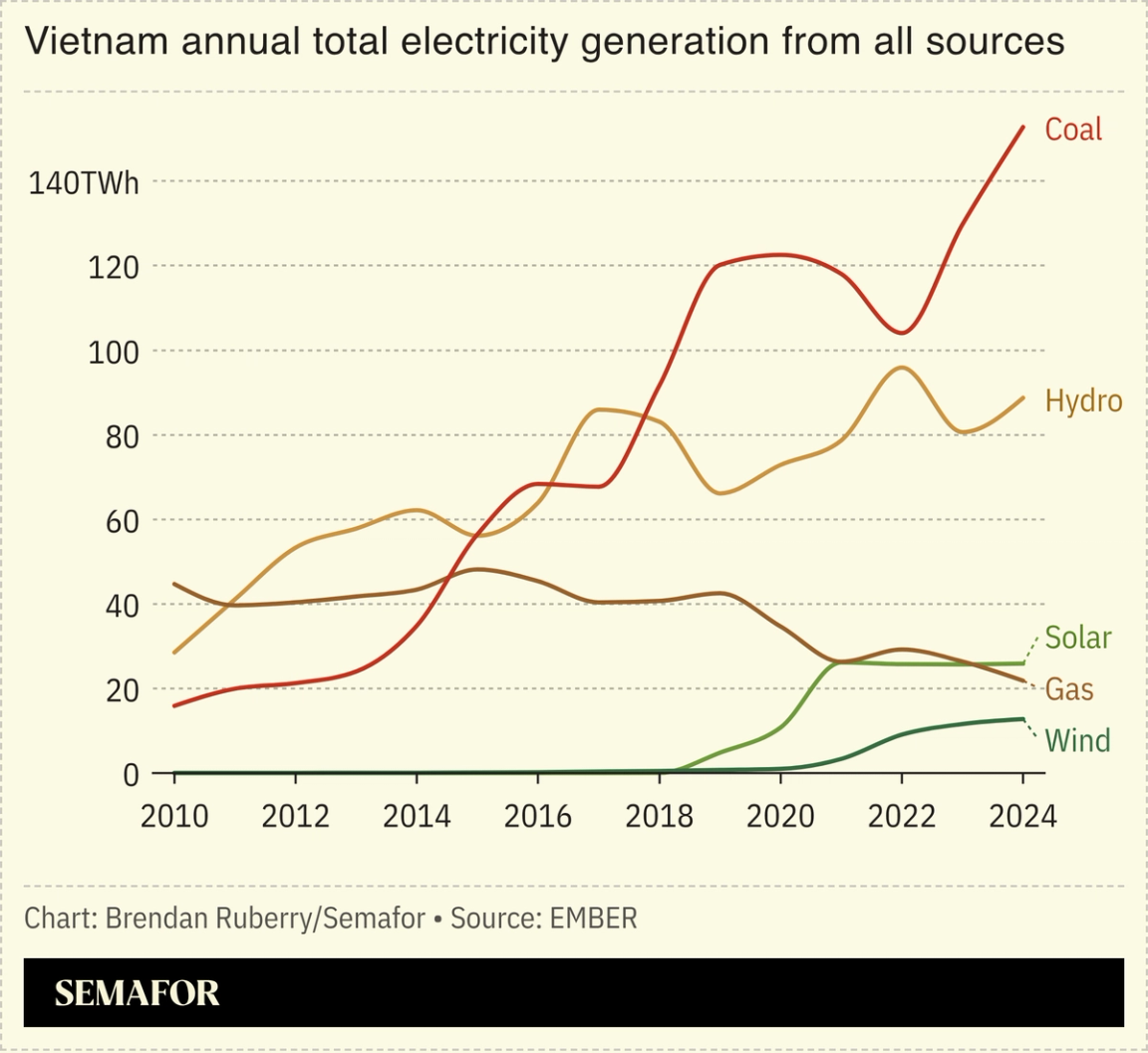 Supply disruptions from the Middle East are forcing Asia to put a greater focus on energy self-sufficiency. Mitsubishi recently began operating a power plant in Vietnam that only sources coal from nearby countries, helping Hanoi — which gets 80% of its crude oil imports from Kuwait — reduce dependence on the Gulf. Indonesia’s president is using diplomacy and state visits to find “more options [and] more partners” in an attempt to rewrite the country’s energy playbook, The Diplomat wrote. The rest of the world may soon follow suit: While Asia has been the hardest hit so far, the pain of resource scarcity could soon spread to other regions, The New York Times reported. “You’ve seen tsunamis — they go across the ocean very, very fast,” an Atlantic Council expert said. |
|
Gazprom’s German unit eyes privatization |
 Fabrizio Bensch/Reuters Fabrizio Bensch/ReutersGermany is taking steps to privatize the division of Russian gas supplier Gazprom that was seized by Berlin in 2022. The company, now called Sefe, was nationalized in response to Russia’s invasion of Ukraine, and has played a central role in Germany’s energy transition away from Russian gas. Its CEO told the Financial Times that the Iran war has accelerated the plans to privatize via a capital raise, as supply disruptions put a greater global focus on energy security and push gas prices up. Despite the crunch, the natural gas supply in Europe remains healthy, a Kpler analyst said, but the continent will get through the crisis “at a much higher price than previously anticipated.” |
|
Moscow cash-strapped despite oil windfall |
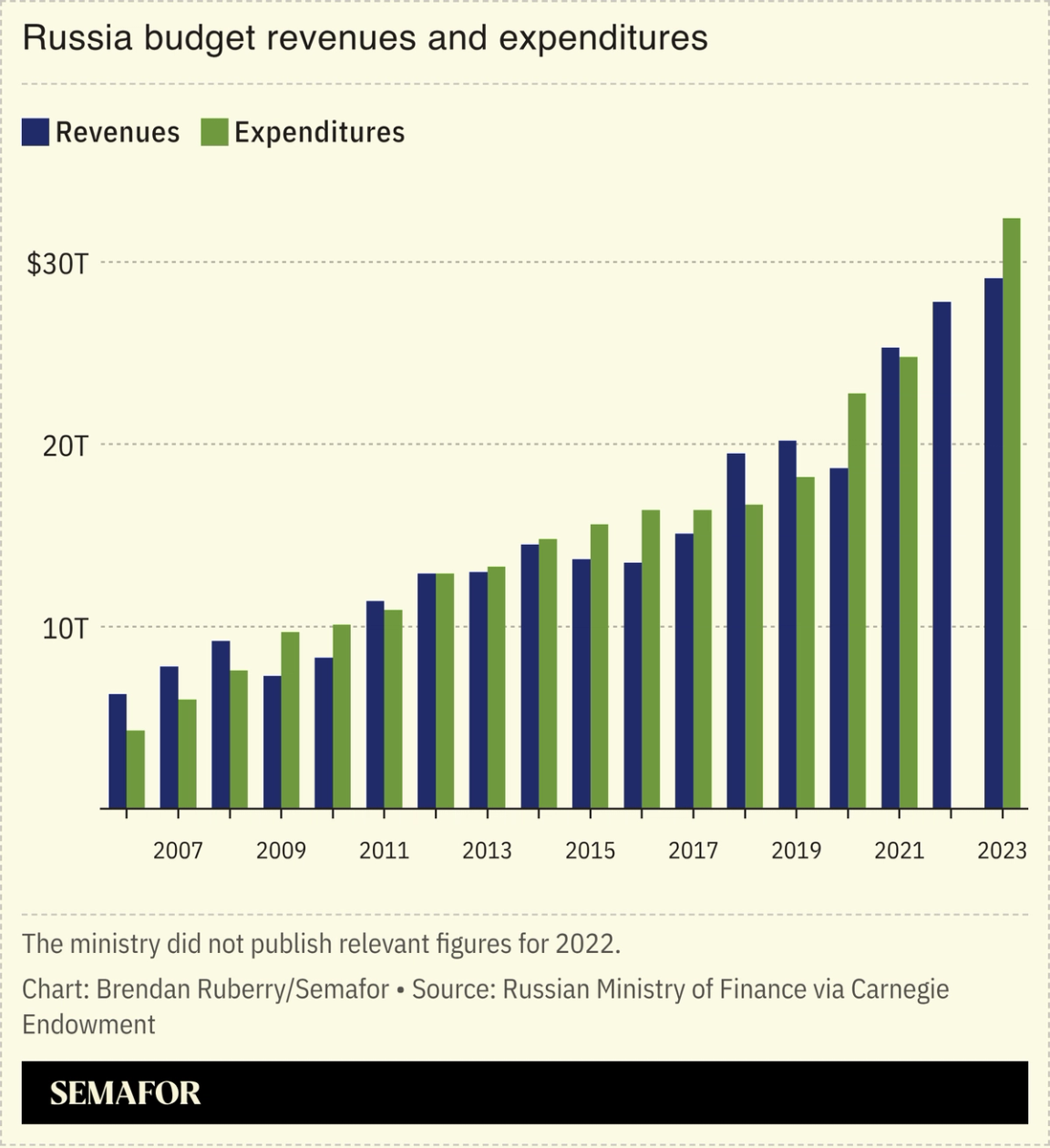 Russia may sacrifice a crucial spending rule as the Ukraine war puts the economy under pressure, The Bell reported. The budget rule dictates that when oil goes above a certain price, excess revenues are saved in a rainy-day fund for use in leaner times, to smooth out volatility. The Iran conflict has driven prices well above that mark, but Russia’s war spending and Ukraine’s attacks on its oil infrastructure mean Moscow is still cash-strapped. Sweden’s intelligence chief said Russia would struggle to continue the war, especially if a US-Iran truce brought oil prices down. Russian President Vladimir Putin recently admitted the economy was performing below his expectations, and urged his top economic officials to activate growth. |
|
ByteDance profit falls on AI spend |
 Tingshu Wang/Reuters Tingshu Wang/ReutersChinese tech giant ByteDance’s profit fell more than 70% as the company leaned aggressively into AI, underscoring the financial challenges facing the country’s tech scene amid intensifying domestic competition. ByteDance, which owns TikTok and its Chinese counterpart Douyin, spent much more on computing power, AI infrastructure, and research, according to Chinese media reports. The country’s tech players have put a greater emphasis on increasing user numbers rather than making money, a strategy recently illustrated by AI firms promoting hefty Lunar New Year giveaways as incentives to sign up. Still, ByteDance celebrated a nearly 50% surge in total overseas revenue last year, thanks to the strength of its TikTok Shop operations across a host of new markets. |
|
Manufacturers eye hybrid facilities |
 Denis Balibouse/Reuters Denis Balibouse/ReutersHybrid industrial processes, which like hybrid cars use a mix of electricity and combustion, are taking off. Industrial heating accounts for 20% of global energy demand — cement, steel, and glass are particularly heat-hungry — and is overwhelmingly fossil fuel-driven. Decarbonization efforts have made little progress. Some startups have focused on a mixed approach. French firm NOC uses a form of electrical heating that can be bolted onto existing facilities, while the world’s largest “heat battery,” which stores solar energy as heat for use in industrial processes, went online in the US last year. “Being hybrid allows [manufacturers] to derisk the future,” NOC’s CEO told TechCrunch. “Given the geopolitical problems today, it’s very attractive.” |
|
Largest World Cup might also be priciest |
 Tasos Katopodis/Getty Images for Semafor Tasos Katopodis/Getty Images for SemaforThe upcoming FIFA World Cup in the US is the largest ever with 48 nations, but it may earn another, more dubious superlative: the priciest. FIFA said last week that New Jersey’s plan to charge $150 for a train ticket that is usually $13 would create a “chilling effect,” but the state, citing $48 million in additional public transit costs caused by the tournament, is merely emulating FIFA, a Wall Street Journal columnist argued: The soccer body is charging up to $39,000 for ticket packages, and expects to clear $11 billion during the tournament. FIFA’s president defended the prices, telling Semafor World Economy it was a “very special market” and that “nobody complains” about ticket prices for concerts or NFL games. |
|
More hope in treating pancreatic cancer |
Seven out of eight early-stage pancreatic cancer patients who responded to a new immunotherapy treatment are still alive six years later. That’s unusual: Most patients die within months. Sixteen patients were given an mRNA vaccine that trains the immune system to attack cancer cells. Half of them saw an immune response, and of those that did, most lived; all but two of the other eight died. Given the small trial, experts cautioned that more research was needed, but the results hold promise. Pancreatic cancer is highly resistant to treatment, including immunotherapy, and little progress has been made even as other cancers have become treatable. It follows reports of another drug extending the life of pancreatic cancer patients by several months. |
|
|


