Hello!
Today’s newsletter focuses on debunking claims from U.S. President Donald Trump’s administration as the White House seeks to kill the World Bank’s climate financing plans while world leaders fight to keep it alive.
World Bank shareholders have been looking for ways to keep the development lender's climate change financing strategy going in some form after its official expiration at the end of June, France's development minister Eleonore Caroit said.
This comes as Turkey’s Environment and Climate Change Minister Murat Kurum told Reuters that the focus of this year’s COP31 would be climate financing and action. Before we get into climate financing, here are some interesting mining stories that I’ve been keeping my eye on this week, while today’s ‘Talking Points’ focuses on key stories around women's and children’s rights: |
|
|
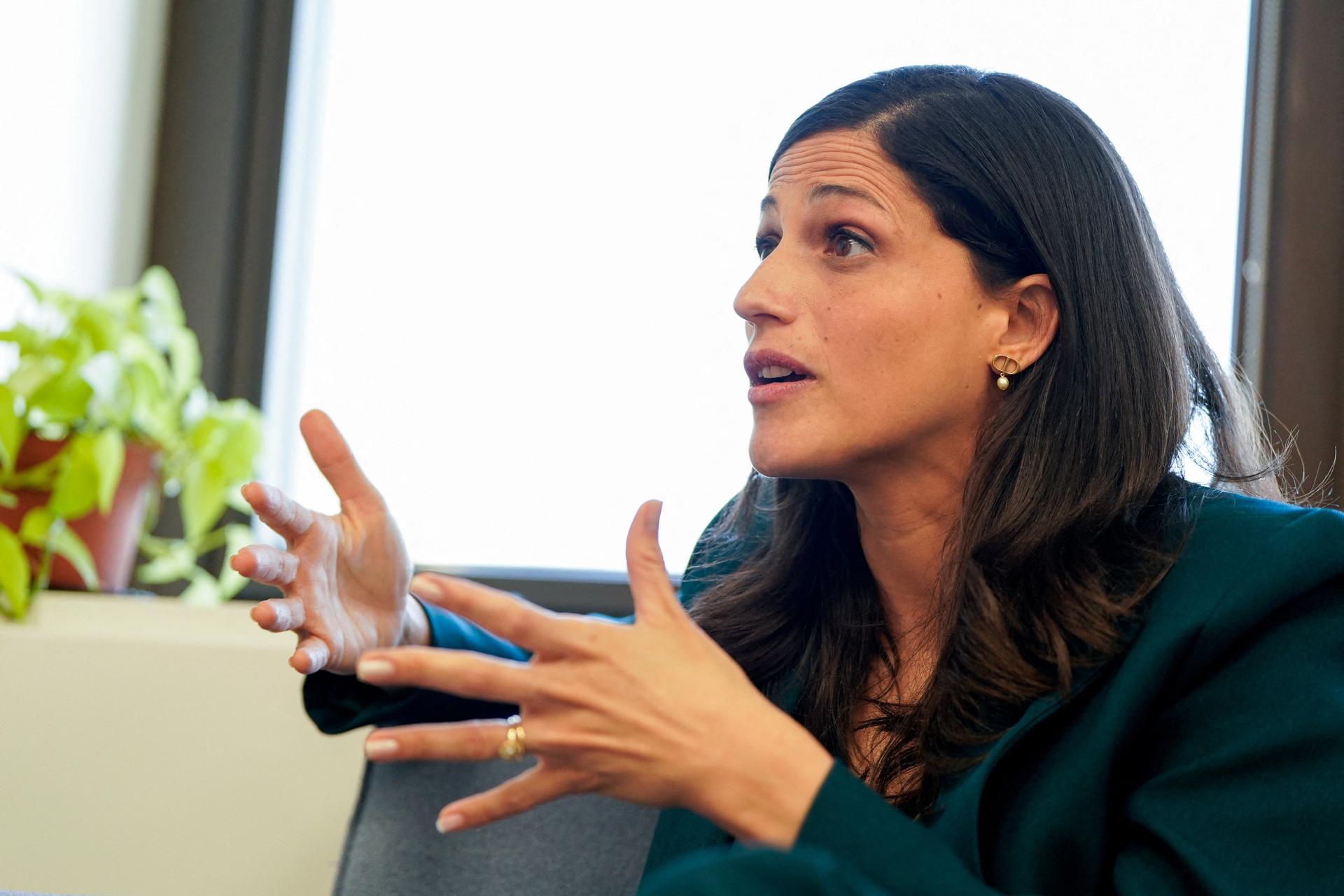
French Minister Eleonore Caroit speaks with Reuters on the sidelines of the IMF/World Bank 2026 Spring Meetings in Washington, D.C., U.S. REUTERS/Elizabeth Frantz |
Bessent calls climate targets "distortionary" and "nonsensical" |
U.S. President Donald Trump's administration is demanding that the World Bank abandon its Climate Change Action Plan (CCAP) target to devote 45% of its annual lending resources to climate-related projects and focus instead on core development lending, including a return to fossil-fuel energy projects.
U.S. Treasury Secretary Scott Bessent this week welcomed the expiration of the Climate Change Action Plan, calling the World Bank's climate targets "distortionary" and "nonsensical." Caroit told Reuters she has been discussing plans to keep the basic benefits of CCAP intact at last week's International Monetary Fund and World Bank spring meetings in Washington.
"We don't find it acceptable that there is the expiry of this current action plan, and we want to find a solution so that we can find a way to continue acting in this field," said Caroit. |
|
|
Debunking Bessent’s claims |
Claims that the World Bank’s CCAP targets are “distortionary” are not supported by evidence showing that they undermine poverty reduction or economic growth.
The World Bank’s climate targets have not diverted the institution from its core development mission but have reshaped how development is delivered, according to World Bank data and shareholder briefings.
Since the CCAP was introduced in 2021, climate‑related financing nearly doubled while overall lending continued to rise, with projects ranging from energy access and transport to water and disaster resilience. Claims that the targets are “nonsensical” contradict the evidence, which shows that the targets are meant to reduce economic risk and make development investments last longer, not to impose ideology. Extreme weather has already cost over $2 trillion in the past decade globally, according to the International Chamber of Commerce research.
In fact, a Reuters special report found that increasingly severe weather linked to climate change has more than doubled power outages in parts of the U.S. in recent years, causing billions of dollars in economic losses, disrupting businesses, raising costs, and exposing infrastructure vulnerabilities.
Plus, insurance losses from climate disasters are rising and are on track to reach $145 billion globally in 2025, according to Swiss Re. |
The world is still carrying on despite the U.S. pulling away from climate change initiatives.
This year’s Conference of the Parties (COP31) climate change conference is taking place in Turkey, and its minister, Murat Kurum, said financing was the most important task, with nearly $1 trillion needed to help developing countries meet climate change targets.
Kurum said that raising public awareness about climate policies was essential at a time when wars and security crises dominate the global agenda. He said that while wars were inevitable, Turkey would call on every nation to focus on the "big picture" and see the imminent threats posed by climate change.
And this week, Germany said it would contribute around 700 million euros ($824.74 million) to projects related to climate change and sustainable mobility in Brazil, Brazil's state development bank BNDES said.
President Luiz Inacio Lula da Silva earlier announced a tranche of 500 million euros from Germany to a climate fund managed by BNDES. |
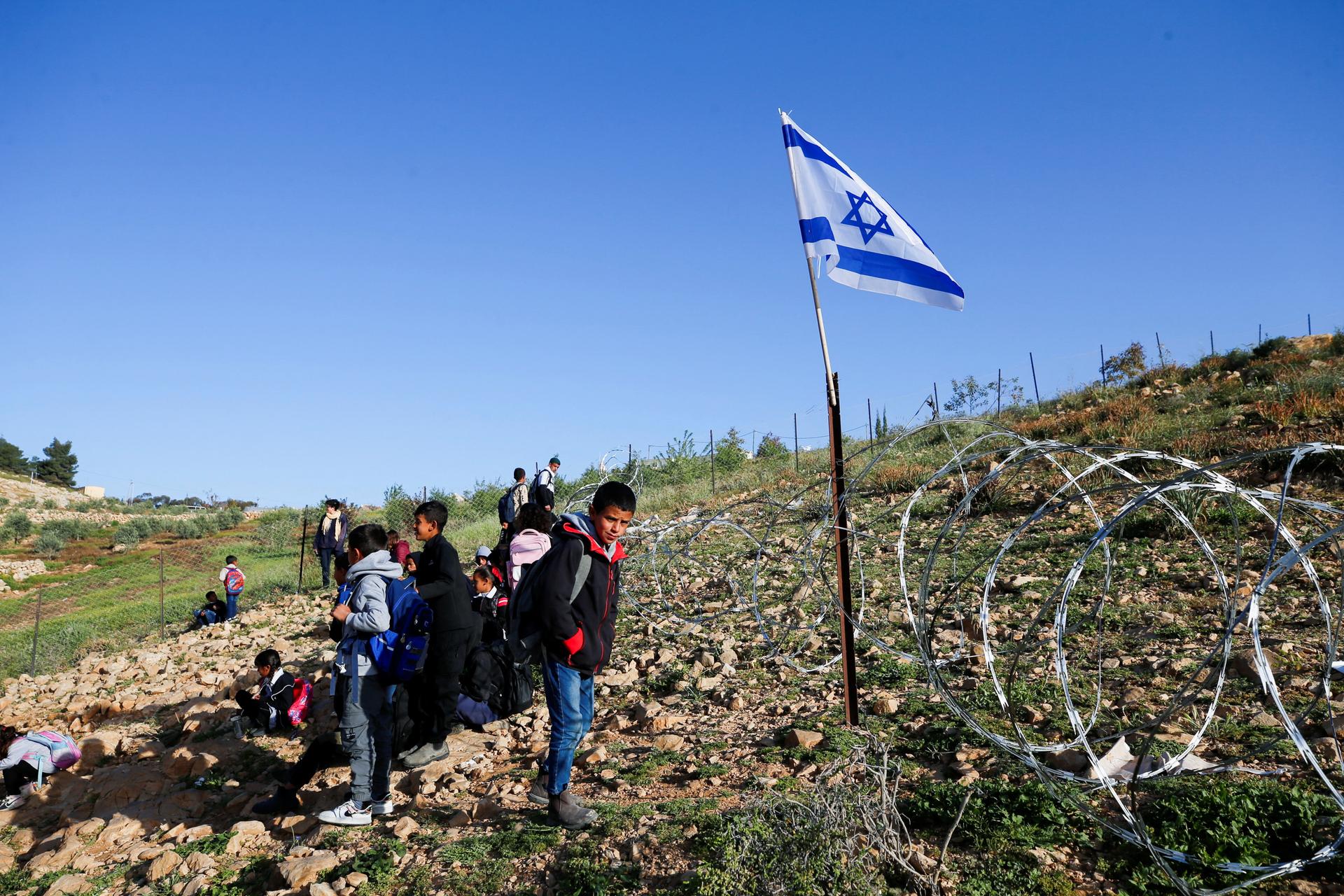
Palestinian students gather near a fence installed by Israeli settlers on their way to school. Umm al-Khair village, Masafer Yatta, Israeli-occupied West Bank. REUTERS/Yosri Aljamal |
-
West Bank children: Dozens of Palestinian children near the city of Hebron have been unable to go to school in the Israeli-occupied West Bank because of barbed wire erected by Jewish settlers blocking their path. Israeli human rights group B'Tselem said the barbed wire was part of a coordinated campaign by settlers and the Israeli military to intimidate Palestinians and drive them from their land in the West Bank, which it said amounted to "ethnic cleansing".
-
Women in Gaza: An average of at least 47 women and girls were killed each day during the war in Gaza, according to a report published by U.N. Women, an agency that focuses on gender equality. The agency warned that the deaths have continued six months into a fragile ceasefire. More than 38,000 women and girls were killed in Gaza between October 2023 and December 2025, according to the report.
-
Indian women lawmakers: An Indian government bill aimed at reserving a third of the seats for women did not get enough votes to pass in parliament. About 10% of the lawmakers in the country's state legislatures are women. Opposition groups favour quotas for female legislators, but said it was linked to a mass redrawing of constituency boundaries as part of a government attempt to manipulate the system and get more votes.
-
Poisoned baby food: Five "manipulated" jars of baby food were deliberately tainted with rat poison in Austria, the Czech Republic, and Slovakia, which formed part of an attempt to extort their manufacturer, but were retrieved safely in those countries before they were consumed. However, one jar could still be unaccounted for, the company and German police said on Monday.
-
Gender identity in US schools: The U.S. Supreme Court declined to hear an appeal from parents of a Massachusetts middle school student who had identified as "genderqueer", leaving in place lower court rulings that allowed school officials to support students’ gender identities without informing parents of name or pronoun changes unless the student consented.
|
|
|
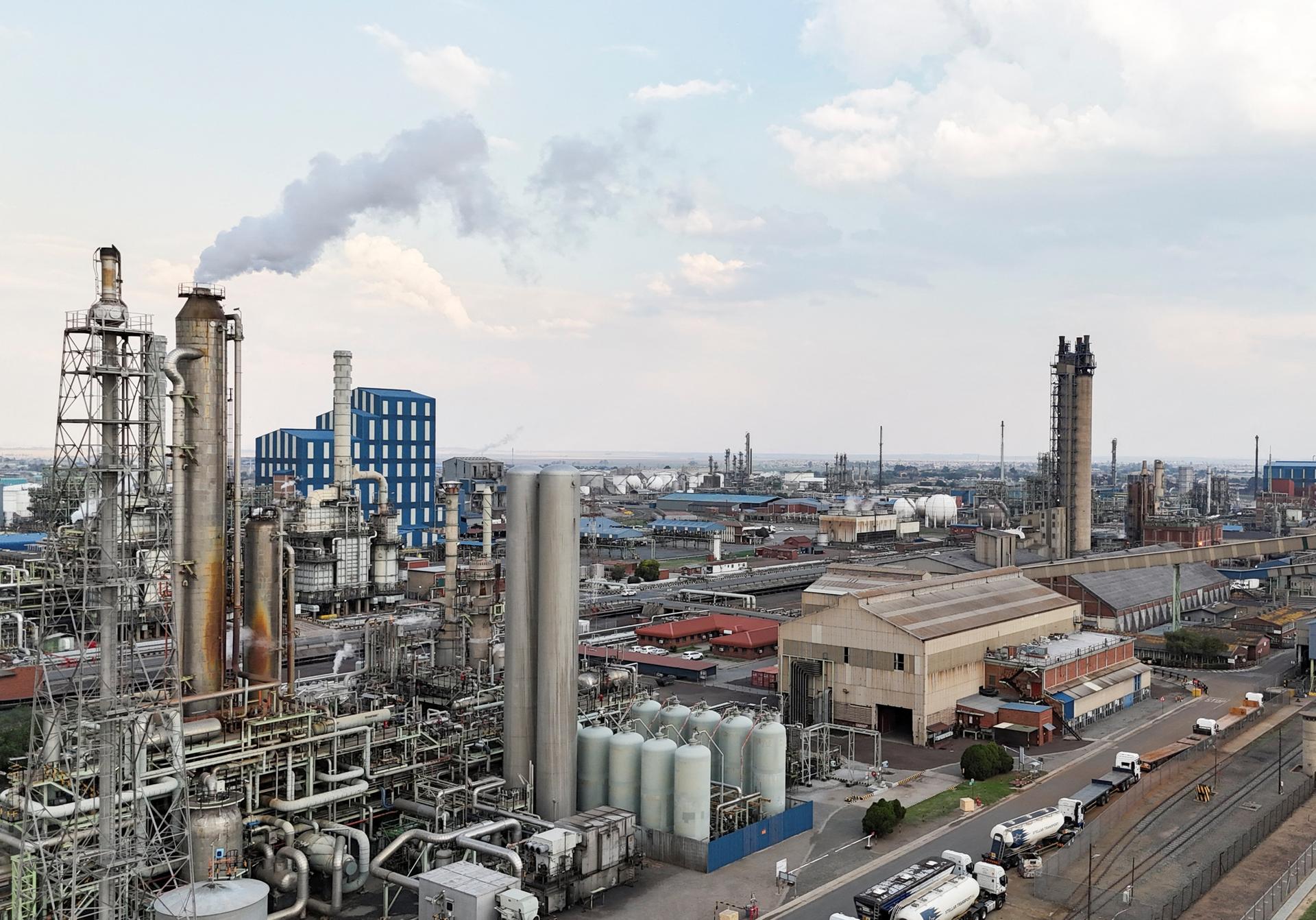
A drone view shows South Africa's Sasol petrochemical refinery in Sasolburg, southwest of Johannesburg, South Africa. REUTERS/Thando Hlophe |
Here’s a solutions-based story for today’s spotlight about scientists at the University of the Witwatersrand who have designed South Africa's first app to warn residents about pollution levels.
Johannesburg has suffered from a spike in coal emissions in recent weeks, causing breathing problems and other health issues. Environment Minister Willie Aucamp blamed those on hydrogen sulphide emissions from mining and industrial operations as far as 400 km (248 miles) east.
The app, launching later this year, uses data from hundreds of air-monitoring systems, sends out notifications, and advises residents on protective measures, such as wearing a mask during pollution surges. |
|
|
Sustainable Switch was edited by Tomasz Janowski. |
|
|
|