Thanks for reading The Briefing, our nightly column where we break down the day’s news. If you like what you see, I encourage you to subscribe to our reporting here.
Greetings!
Elon Musk’s marketing pitch for the SpaceX IPO just got a bit more complicated. SpaceX’s revelation Tuesday afternoon that it was working closely with Cursor, the once-dominant coding firm, and might buy it for $60 billion, raises new questions about the health of xAI, Musk’s AI startup that SpaceX acquired for $250 billion in stock in early February. What did SpaceX—and indirectly its shareholders—pay for?
The main reason Musk would consider buying Cursor is because his own startup can’t catch up to industry leaders in coding. Cursor, it’s no secret, grew very quickly in the coding business but lately has faced much tougher competition from Anthropic and OpenAI. Meanwhile, Musk recently shook up xAI, triggering mass departures, and stated a month ago that the AI startup hadn’t been “built right first time around” and had to be “rebuilt from the foundations up.”
Around that time, xAI hired two senior people from Cursor to help it catch up in coding. Now SpaceX says it is “working closely together” with Cursor to “create the world’s best coding and knowledge work AI.” If xAI couldn’t do that on its own, you could argue that SpaceX overpaid for the startup.
Musk’s Incentive
On a related note, Musk doesn’t need more of an incentive to work hard for shareholders—but investors need an incentive to believe in his vision. That’s likely the subtext of SpaceX’s decision last month to approve a plan awarding Musk 60 million extra shares if the company’s market capitalization reaches $6.6 trillion in the coming years. It’s expected to go public this summer at a valuation as high as $1.5 trillion.
SpaceX would be massively overvalued even at $1.5 trillion, to be sure. Consider that in 2022, it was valued at $125 billion. In 2022, as we outlined here, the biggest question mark hanging over the company was when it would overcome years of delays and get Starship into service. That continues to be the question for SpaceX! One way to persuade public market investors to buy the stock at current valuations is to demonstrate Musk’s belief in a world in which the valuation could get several times higher from here.
In other words, the big inducement likely has little to do with motivating Musk himself, who already has a large stake in SpaceX. In that way, the new SpaceX stock grant is similar to the Tesla stock grant Musk got late last year, which could be worth up to $1 trillion to him if Tesla’s market capitalization rises to $8.5 trillion from around $1 trillion, what the company was worth at the time of the grant. That’s a big bet, given that Musk is pivoting the electric vehicle maker into robotaxis and robots, where success is far from assured. (Tesla reports first-quarter earnings on Wednesday, by the way.)
Musk has plenty of fans, to be sure, and they’d probably follow him anywhere. But knowing he has concrete goals that reward him if the market capitalization reaches those fantastical levels might keep them believing in his vision along what could be a bumpy journey. Chances are both Tesla and SpaceX will fall short of their market capitalization goals. But these incentives are helping Musk’s fans believe.
Pressure on Ternus
Shares of Apple fell about 2.5% on Tuesday as investors digested the news that CEO Tim Cook would step down, to be succeeded by hardware executive John Ternus. For the year so far, Apple stock has dropped just over 2%, making it the second worst performer among the big tech names after Microsoft.
And yet, on several metrics, Apple shares are still more expensive than other big tech stocks. As a multiple of future expected earnings, for instance, Apple closed at 30.9 times, above Google parent Alphabet (28.3), Nvidia (24.0), Microsoft (24.1) and Meta Platforms (22.2), according to Koyfin data. Adjust that metric for expected growth in earnings per share—known as the price-earnings to growth ratio—and the difference is even starker. Apple has a PEG ratio of 2.63, compared with 0.63 for Nvidia, 1.81 for Google, 1.53 for Microsoft, 1.67 for Amazon and 1.02 for Meta.
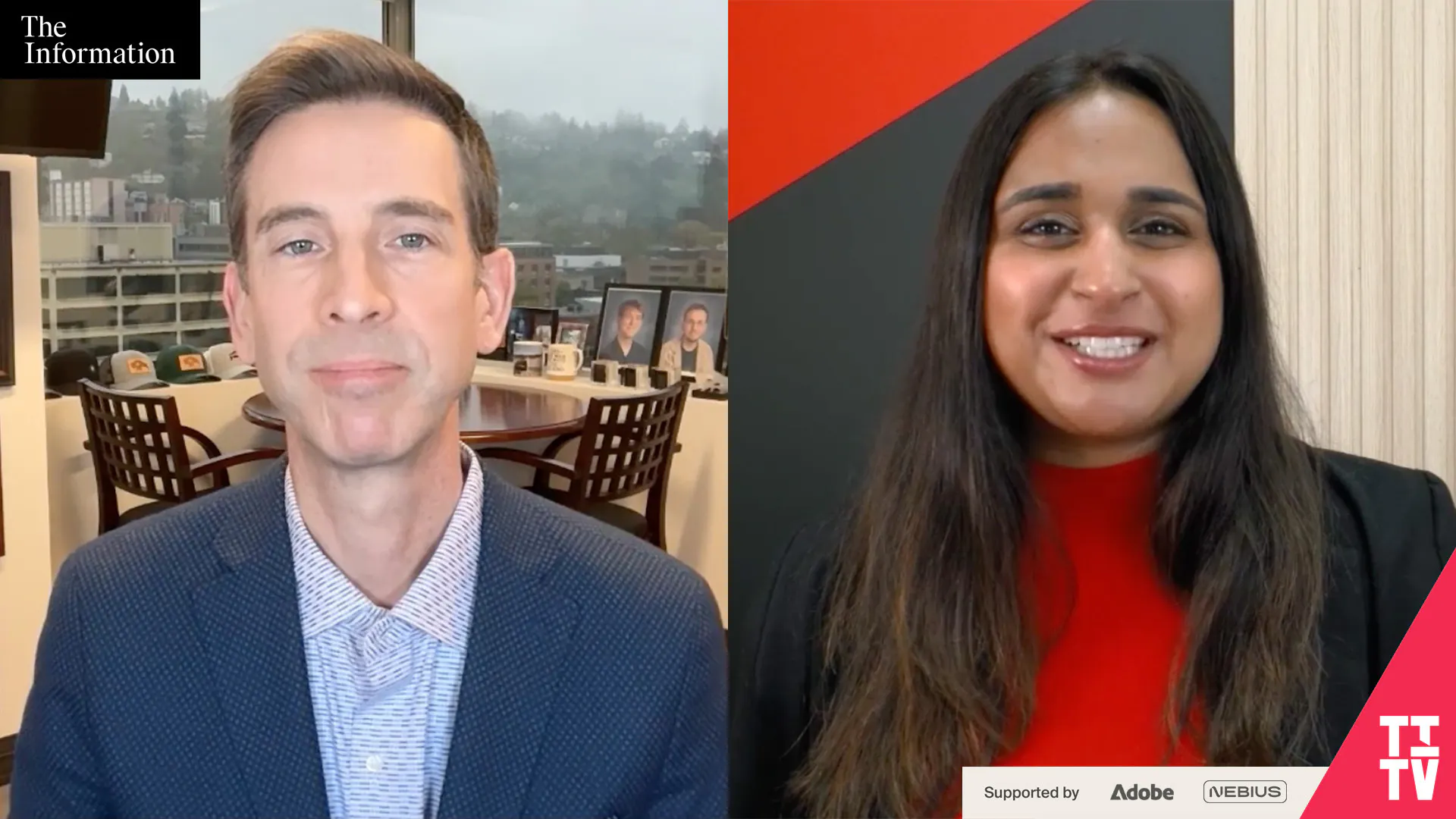
That premium valuation puts a lot of pressure on the incoming CEO. As D.A. Davidson analyst Gil Luria said on The Information’s TITV on Tuesday, “The stock is more expensive than any of the other megacaps, so they better continue to grow. Investors will have very little patience for a new CEO if they see a decline in revenue next year.”
In Other News
• OpenAI has started to offer ChatGPT ad campaigns that charge advertisers based on how many people click on the ads, screenshots of the company’s ad manager show, confirming The Information’s report last week about the plans.
• Prediction market Kalshi plans to offer crypto trading in the U.S., according to people familiar with the matter, putting it in direct competition with crypto exchanges such as Coinbase.
• Microsoft on Tuesday cut the price of its Xbox Game Pass subscription, which gives people access to hundreds of videogames, by as much as 23% in hopes of boosting demand for the service.
• Snap’s chief financial officer, Derek Andersen, is leaving the company early next month, Snap said late Monday, for a “new professional opportunity.”
• Adobe announced a new $25 billion stock buyback, the latest such move by an enterprise software firm whose stock has been hit by anxieties about the impact of AI on the industry.
Today on The Information’s TITV
Check out today’s episode of TITV in which we cover Apple’s decision to appoint John Ternus as CEO.
Recommended Newsletter
Start your day with Applied AI, the newsletter from The Information that uncovers how leading businesses are leveraging AI to automate tasks across the board. Subscribe now for free to get it delivered straight to your inbox twice a week.
The Information returns to the New York Stock Exchange on Monday, April 27 to hear from top executives and investors on how the rapid buildout of AI is reshaping tech, finance, and capital markets.
The Information and Aily Labs are convening an intimate group of pharma, CPG, beauty, luxury, and retail executives in Los Angeles to explore the real-world performance of autonomous systems and the trust required to transition from disconnected AI tools to real-time decision intelligence. Request an invite.
Save the date for The Information’s annual AI Agenda Live in San Francisco, where top AI researchers, founders, investors and executives come together for a day of conversations about the breakthroughs and applications shaping the future of AI.