| | | | Szabolcs Panyi
Central Europe investigative editor | | | The name VSquare comes from V4, an abbreviation of the Visegrád countries group. Over the years, VSquare has become the leading regional voice of investigative journalism in Central Europe. We are non-profit, independent, and driven by a passion for journalism.
Support our investigations: donate today, keep our stories flowing.
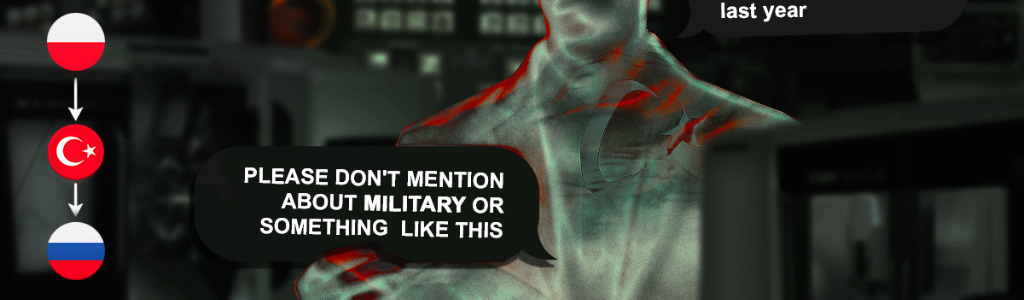
Help us spread the word by sharing this newsletter’s online version. | | | | | Frontstory.pl and Ukraine's TRAP Aggressor reveal how CNC machine tools manufactured in Pleszew, Poland are reaching Russian defense factories via Turkish intermediaries despite EU sanctions. Posing as a fake Russian military supplier, the journalists were promptly offered FAMOT-branded machines from a Turkish broker's catalog, with ruble payments and no questions asked. Customs data shows Polish-made machine tools reached Russia from Turkey at least 48 times since the invasion — including to companies supplying components for Kalibr cruise missiles, Kh-101 missiles, and Orlan-10 drones. Read the investigation here. | | | Átlátszó reveals that, since 2020, Samsung SDI's factory in Göd, Hungary been reclassifying defective hazardous batteries as normal products, shipping them without hazard markings to unlicensed warehouses, and trucking them to a processing plant in Poland — where they are quietly reclassified as hazardous waste again upon arrival. In Q1 2024 alone, nearly 1,000 tons were transported this way. Read it here. | | | The Reckoning Project's Viktoria Novikova reconstructs the March 2022 evacuation of a psychoneurological care home in Popasna, Luhansk — where 127 elderly and disabled residents, unable to evacuate themselves, found themselves trapped between Ukrainian and Russian positions as the town ceased to exist. With no state transport available and shells hitting the building daily, the institution's director and deputy organized the evacuation themselves, loading residents onto buses in pajamas and robes, under fire, with no time for belongings or wheelchairs. Read it here. | | | | SPICY SCOOPS There is always a lot of information that we hear and find interesting and newsworthy but don’t publish as part of our investigative reporting—and share instead in this newsletter. ORBÁN'S MAN IN BRUSSELS IS IN REAL DANGER OF LOSING HIS JOB Viktor Orbán's defeat has set off a quiet but intense scramble in Brussels over what to do about Olivér Várhelyi, Hungary's EU Commissioner for health and animal welfare and one of the most unpopular members of the current Commission. According to multiple Brussels insiders, virtually every mainstream EU party as well as many of those officials and politicians Várhelyi offended or snubbed during his tenure are quietly banding together against him. With Orbán gone and Péter Magyar's Tisza government incoming in May, the political logic for keeping Várhelyi in place has evaporated — but replacing him is more complicated than it sounds. Technically, Ursula von der Leyen could sack Várhelyi and allow Magyar to nominate a replacement both the Commission and Budapest could trust. My sources say there is minimal appetite for such a straightforward procedure. Instead, the preferred approach is to pile pressure on him and force a voluntary departure. Ongoing or future investigations — including one into Várhelyi's alleged role in the Orbán government's intelligence operations in Brussels — could help, too. The deeper issue, according to one source, is precedent. The main parties are acutely aware that forcing out a commissioner because the government that nominated them lost an election could open a door they very much do not want opened. If Spain's current government falls, an incoming right-wing and far-right coalition could use the same logic to replace Commission Executive Vice President for a Clean, Just and Competitive Transition Teresa Ribera. In France, a future Jordan Bardella administration could do the same to Stéphane Séjourné, the French Commissioner responsible for prosperity and industrial strategy. The challenge Brussels faces is surgical: get Várhelyi out in a way that is specific enough to his circumstances — alleged misconduct, political toxicity, ongoing investigations, you name it — that it cannot serve as a template for the next government that wants to swap out a commissioner it didn't appoint. OLIGARCH WEALTH FLIGHT UPDATE: FOREIGN BANKS ARE FREEZING HUNGARIAN TRANSFERS Two weeks ago I reported that Orbán regime oligarchs and stooges were scrambling to spirit their wealth abroad before the incoming Magyar government could freeze or seize it. Since then, according to multiple banking and business sources, a significant number of those attempts have been stopped in their tracks by the banks themselves. Péter Magyar publicly called on authorities and banks to halt suspicious transfers, and foreign-owned Hungarian banks, my sources tell me, are gladly cooperating. I have received information from multiple banks that are actively stopping and flagging suspicious transfers to the anti-money laundering department of Hungary's tax authority NAV. One foreign-owned bank, for example, froze approximately €30 million (HUF 11 billion) belonging to a well-known Hungarian company involved in financing the Orbán regime's media operations. The company protested heavily and threatened legal action; the bank's senior lawyer was flown to Budapest to manage the client. A few days ago, Magyar himself stated publicly that NAV "has suspended several high-value transfers linked to the circle of Fidesz politician Antal Rogán, based on bank alerts, on suspicion of money laundering." Based on what my sources have told me, he may have been referring at least in part to the case described above. Another bank, according to a source, stopped all transfers above a certain value wired to Singapore, the UAE, Oman, Bahrain, Saudi Arabia, Uruguay, Nicaragua, Switzerland — or to a private bank in Vienna. Some of the individual transfer series involved sums of between $10 and $20 million. Those attempting to move the money included one of the most well-known stooges of the Orbán regime; a stooge of that stooge; and members of a well-known oligarch circle with real estate interests and close ties to the outgoing prime minister. The picture, however, is not entirely rosy: "It's not these foreign-owned banks through which they evacuate the money, but through the Orbán regime-linked Hungarian banks, Swiss, Austrian and UAE banks and currency exchanges," one source cautioned. The foreign banks may be plugging some holes — but the real pipeline, it seems, runs elsewhere. | | | | | | | DESSERT AND FURTHER READINGS
| For those still hungry for more, we’re finishing today’s menu with a couple of recommendations from our friends and colleagues. THE 2026 RSF WORLD PRESS FREEDOM INDEX: A 25-YEAR LOW. Reporters Without Borders' annual index finds press freedom at its lowest point in the index's 25-year history. For the first time, more than half of the world's 180 countries fall into the "difficult" or "very serious" categories, while less than 1% of the global population now lives in a country rated "good" for press freedom, down from 20% in 2002. The legal environment has seen the sharpest decline, with journalism increasingly criminalized through national security laws, defamation statutes, and emergency legislation. In the list of best to worst, Czechia (11 from 10 last year) and Hungary (74 from 68) have been in decline, while Poland (27 from 31) and Slovakia (37 from 38) improved. Read the full report here. THE EPP SPENT €100K A MONTH ON TWO CONSULTANTS — WITH LITTLE TO SHOW FOR IT. Follow the Money and Greece's Inside Story reveal how EPP President Manfred Weber's new Secretary General — a close ally of Greek PM Mitsotakis — hired two consultancies connected to Greece's ruling party and paid them over half a million euros in six months, draining nearly half the EPP's reserves. The European Parliament forced the contracts to be terminated and refused to reimburse most of the costs, but never reported the matter to prosecutors — and the affair never appeared in the EPP's official audit report. Read the investigation here. BABIŠ WANTS CZECHS TO GO NUCLEAR — AND BULGARIA MAY HAVE JUST ELECTED ANOTHER TROJAN HORSE. How We Cee It's latest edition covers Czech PM Babiš's surprise move to join Macron's European nuclear deterrence initiative — a sharp U-turn from his 2023 pacifist campaign platform — alongside a sober assessment of Bulgaria's newly elected PM Rumen Radev, who has previously described Crimea as Russian and opposed military aid to Ukraine. Also: a Czech cloud provider launching a European alternative to US hyperscalers, citing American spy laws that allow customer data to be handed over to Washington. Read it here. RUSSIA'S VULNERABILITIES — AND HOW THE WEST CAN EXPLOIT THEM. Poland's Centre for Eastern Studies (OSW) has published a comprehensive report cataloguing Russia's political, social and economic pressure points — from the FSB's deepening dysfunction and elite asset redistribution wars to crumbling municipal infrastructure, war fatigue among 61 percent of the population, and a budget deficit that grew fivefold in 2025 as oil revenues collapsed. The report also offers a detailed menu of Western policy recommendations: tighten sanctions, phase out Russian energy fully ahead of the 2028 deadline, weaponize Russia's China dependence in information campaigns, and use frozen Russian assets as collateral for Ukraine. Download the full report here. HORIZON OF AMBITION: THE MILITARY STRATEGY AND CAPABILITY PROFILE OF THE BUNDESWEHR. OSW analyzes Germany's first-ever Military Strategy and Bundeswehr Capability Profile, which set the ambitious goal of building Europe's strongest conventional army by 2035 — growing to 260,000 personnel with long-range precision strike and full multi-domain capability. The caveat: almost nothing changes until after the 2029 elections, and delivery falls on future governments. Read it here. MOLDOVA: STORM DAMAGE, A SPY SWAP, AND SHOIGU'S THREATS. David Smith's Moldova Matters newsletter covers a packed week: Sergei Shoigu threatening Moldova over alleged mistreatment of Russian citizens in Transnistria; a Russian drone crashing in Galați and a second found on a Chișinău rooftop; and a quietly complex prisoner exchange in which Moldova pardoned a former intelligence official convicted of passing secrets to Belarusian KGB — in exchange for two Moldovan SIS officers held by Russia, with the operation coordinated with US, Polish and Romanian support. Read it here. | | | |
|