| | Energy shortfalls drive inflation spikes worldwide, the US considers vetting new AI models, and Lati͏ ͏ ͏ ͏ ͏ ͏ |
| |  New Delhi New Delhi |  Brussels Brussels | Lusaka |
 | Flagship |  |
| |
|
The World Today |  - Inflation concerns spike
- US-EU trade tensions
- EU’s hawkish China line
- Beijing boosts chip target
- Chinese solar prices rise
- US may vet AI models
- Modi wins big in key vote
- Zambia rejects US deal
- LatAm’s cash problem
- China dominates snooker
 Poetry that celebrates ‘simply being alive.’ |
|
Inflation concerns spike globally |
|
EU, US seek to ease trade tensions |
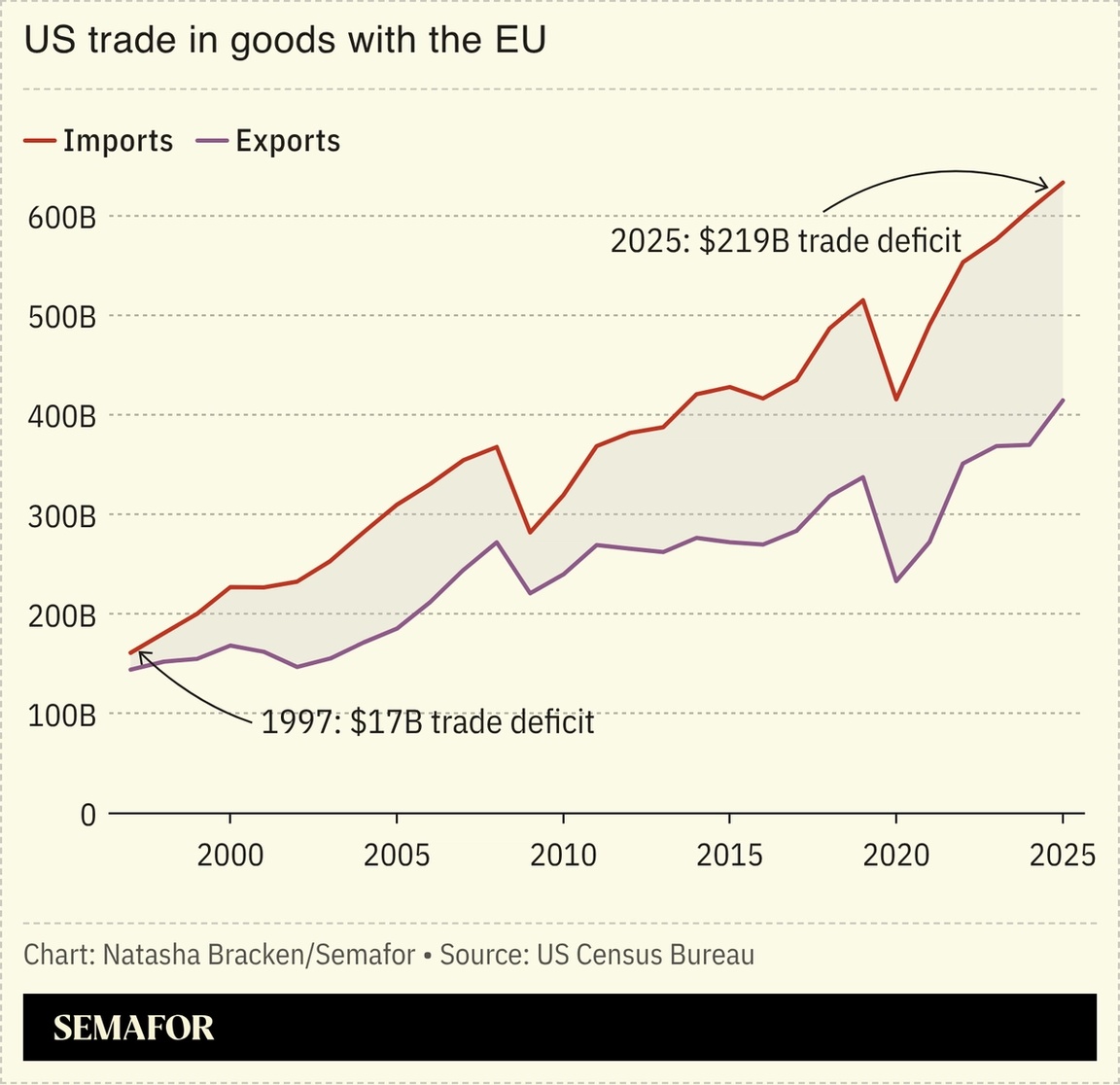 EU and US trade negotiators will meet today in the hope of staving off US President Donald Trump’s latest tariff threats. Brussels and Washington reached a trade deal last year, but Trump said Friday that the EU was not complying and vowed to raise duties on cars from 15% to 25%. An EU official told Euractiv that the bloc was committed to the relationship but prepared to protect its own interests if Trump followed through. Transatlantic tensions are high after German Chancellor Friedrich Merz criticized the Iran war last week, spurring Trump to move to withdraw American troops from Germany, triggering renewed worries over defense ties. Merz has since taken a more emollient tone. |
|
The EU’s uneasy China ties |
 Maja Smiejkowska/Reuters Maja Smiejkowska/ReutersThe EU is taking a more hawkish stance toward China. The European Commission said it would ban some Chinese components in EU-funded energy projects over concern that Beijing could subvert them and cause major power outages, euronews reported. Meanwhile the bloc is also investigating whether money from its $300 billion global infrastructure drive, a rival to China’s Belt and Road Initiative, is being funneled into Chinese state-run companies. Brussels is also pushing a buy-European line, in which homegrown firms are preferred over cheaper Chinese rivals in procurement markets. The EU is torn between two imperatives; it wants to boost energy independence and economic growth, where Chinese trade is key, but remains concerned about security risks. |
|
China boosts silicon wafer targets |
 Piroschka van de Wouw/Reuters Piroschka van de Wouw/ReutersChina reportedly wants more than 70% of advanced silicon wafers in its semiconductor industry to be manufactured domestically, as the country looks to boost self-sufficiency amid a global chip race. China’s manufacturing capacity in the sector has increased steadily since the start of the decade, from a negligible share of global output to more than 25% last year. However, most advanced semiconductors still rely on foreign-made chips, Nikkei reported, and Beijing is now setting its sights on producing world-leading wafers. The US, meanwhile, plans to announce Norway as the 15th member of its Pax Silica consortium aimed at building supply chains that don’t rely on China, including for high-end technology such as semiconductors, a Trump administration official told Semafor. |
|
Chinese solar prices rise |
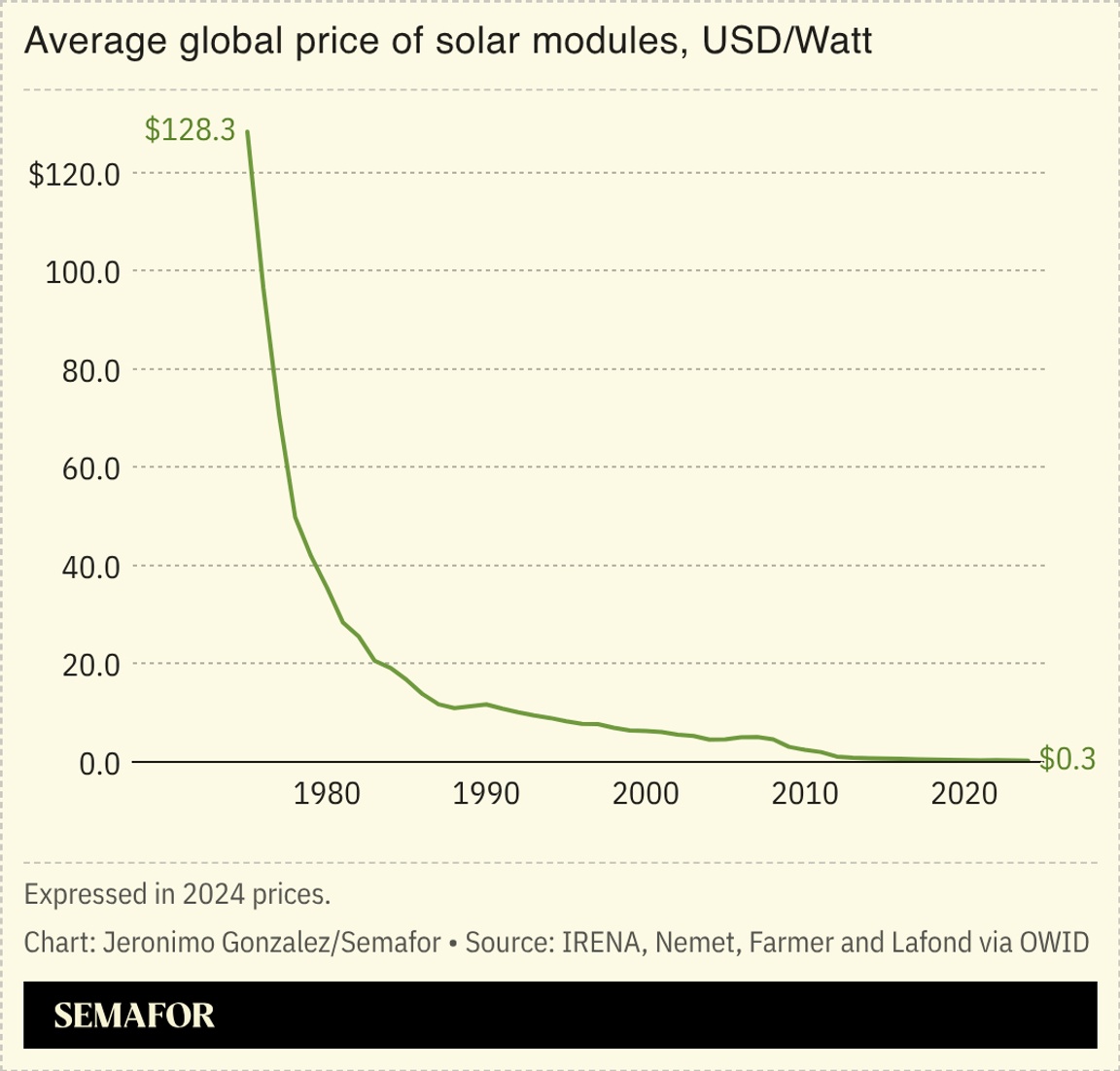 Chinese solar panel prices ticked up, hinting that Beijing’s efforts to turn around a damaging domestic price war are having an effect, helped by an Iran-war-driven spike in demand. Module prices hit just 9¢/watt in December, a staggering fall from $2/watt in 2010, but are now rising. Chinese manufacturers account for 80% of global production, and — spurred by subsidies and competition — have raced to lower prices, leading to huge losses; Western governments have complained that Beijing has encouraged overcapacity, while Chinese authorities have warned of involution. In part, the rising price is driven by government efforts to cut tax breaks and encourage consolidation, but the closure of the Strait of Hormuz has also driven up demand for renewables. |
|
White House may vet AI models |
 Donald Trump and Sam Altman. Carlos Barria/Reuters Donald Trump and Sam Altman. Carlos Barria/ReutersThe White House is reportedly considering vetting frontier AI models before release in response to growing security risks. The Trump administration has been non-interventionist on AI, but Anthropic’s new system Mythos proved capable of finding security flaws in almost all websites, and the firm has held back its public release as a result: The EU said it was in contact with Anthropic to get the region’s banks tested for security vulnerabilities. Other models will soon be similarly capable, and their developers may not be so cautious. The White House plan, modeled after Britain’s approach, would have officials review new releases to ensure they meet safety standards, The New York Times reported. |
|
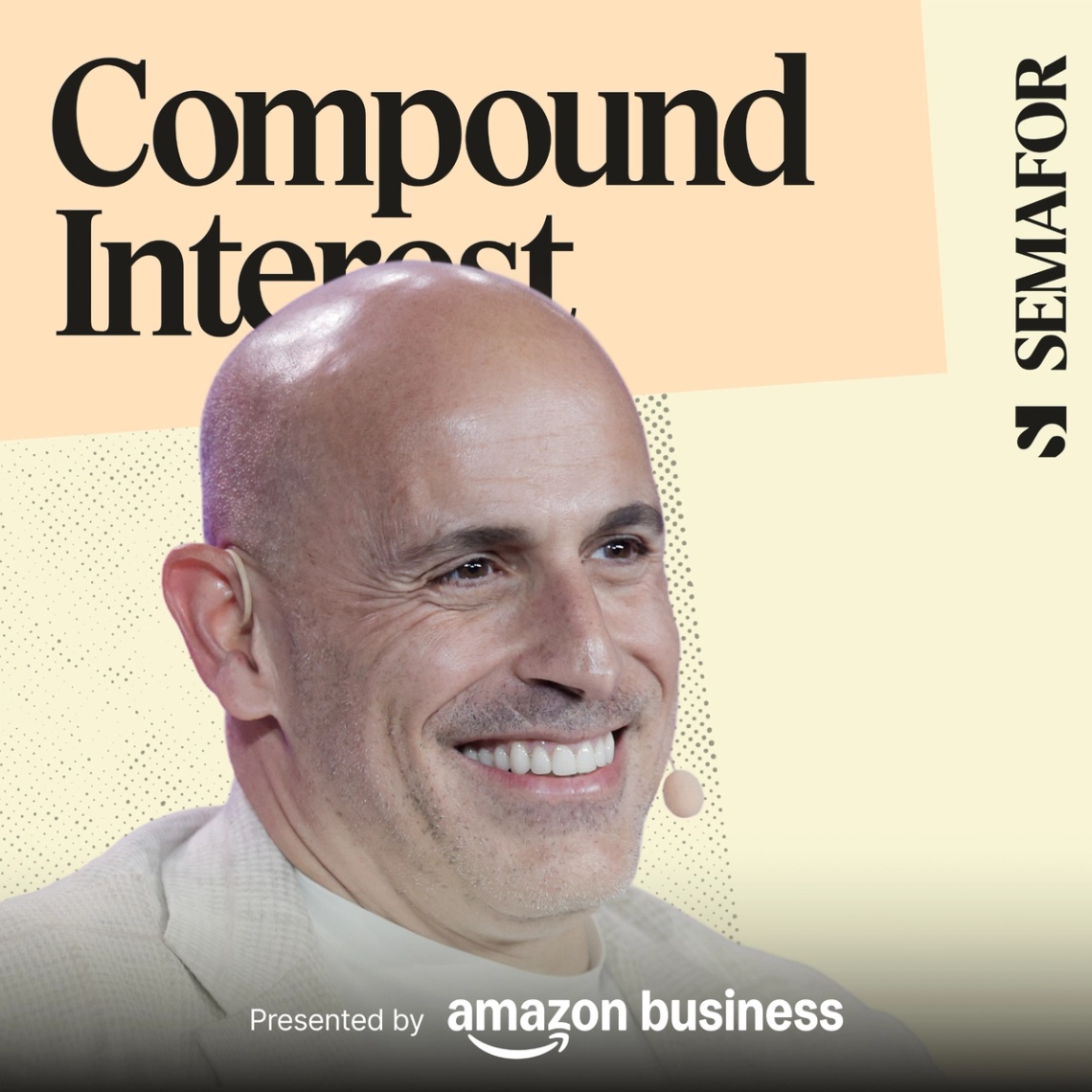 Marc Lore built Diapers.com and sold it to Amazon. Then he built Jet.com and sold it to Walmart. Now he’s trying something different: Taking Wonder — his vertically integrated food-delivery startup — all the way to a public offering. On this week’s Compound Interest, presented by Amazon Business, he joins Liz and Semafor’s Deputy Editor-in-Chief Shelly Banjo to talk about why he’s betting that robots, influencers, and AI-directed meal plans can finally crack the code on profitable food delivery and what e-commerce taught him about attacking fat margins with automation. Plus, why he’s quietly searching for desert land to build a city from scratch. Listen to the latest episode of Compound Interest now. |
|
Modi wins big in key vote |
 Adnan Abidi/Reuters Adnan Abidi/ReutersIndian Prime Minister Narendra Modi won a thumping victory in state elections, cementing a hold on power that some experts had started to doubt. Modi’s disappointing showing in nationwide polls two years ago had seemingly signaled the beginning of the end of his rule. But his BJP’s overwhelming win in a key eastern state, one it had never secured, represents “a political earthquake” which “extends the hegemonic power of the party,” analysts said. Yet some critics argued that Modi unfairly leveraged the power of the federal government in the polls and opponents took relief from the BJP’s failure to win concurrent state elections in southern India, which remains “beyond its reach.” |
|
Zambia resists US trade approach |
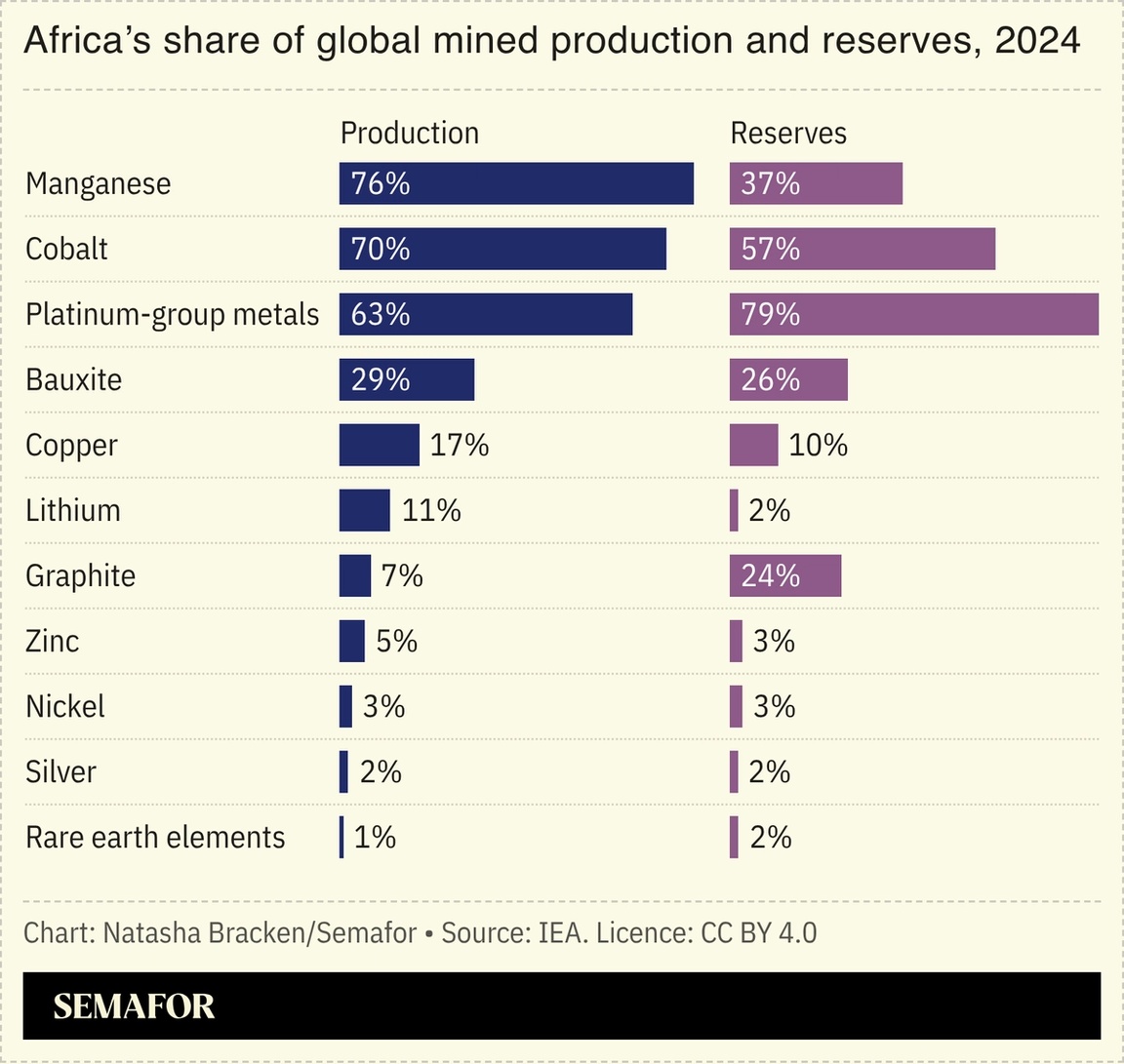 Zambia said it opposed US attempts to tie a $2 billion healthcare deal to access to the country’s minerals, becoming the latest African nation to hit back at Washington’s new approach toward the continent. Since the start of US President Donald Trump’s second term, Washington’s Africa strategy has shifted radically, slashing aid in favor of trade deals that serve US interests. The agreements have raised issues over privacy — Zambia’s foreign minister said his country was against handing over data — prompting “huge concerns” from a leading African health organization along with other nations, including Ghana and Zimbabwe. The new US approach, as well as Trump’s tariffs, has pushed some countries closer to China, which last week slashed levies on virtually all African imports. |
|
 Financial headlines can feel overwhelming. Get calm, clear insights — without the fear — from The Daily Upside. Some call it the closest thing to earning your MBA in Cambridge. Join 1 million subscribers who trust The Daily Upside. Subscribe for free today. |
|
|


