|
Dear all,
Please find below your weekly update from the UK Health Security Agency (UKHSA).
If you have any questions please get in touch by emailing externalaffairs@ukhsa.gov.uk
As always, you can also follow UKHSA on X, on Instagram, on BlueSky, and on LinkedIn for all the latest updates. You can also find the latest news from UKHSA on our news page on GOV.UK.
Best wishes,
UKHSA External Affairs Team
New stories
- Precautionary medical evacuation following a potential healthcare related exposure to Ebola
- Now published: MenB vaccine communications toolkit
- UKHSA's Chief Scientist reminds families how to Beat the Heat as schools break for summer
- New UKHSA blog post: Why do you need more than one dose of some vaccines?
- 'It looks done': Common BBQ blunders and how to avoid them
- UKHSA research spotlight: improving vaccine uptake in prison populations
Ongoing issues
- Next phase of Government childhood immunisations campaign launched
- Measles continues to circulate
- New NHS catch-up vaccination push to protect young children against measles
- New toolkit to help partners understand and address immunisation inequities
- Travellers reminded to take precautions to avoid infections abroad this summer
- Staying well during the 2026 festival season
- Secure your place at the UKHSA Conference 2026
- 'Be tick aware' this summer
UKHSA communications toolkits
- Information on how to access UKHSA communications toolkits
UKHSA data, analytics and surveillance
- Statistics at UKHSA
- UKHSA data dashboard
- Notification of Infectious Diseases report
On Tuesday, UKHSA confirmed that medical evacuation has been arranged as a highly precautionary measure following a potential healthcare related exposure to Ebola.
UKHSA works with international partners to ensure that any British residents who may be at risk can be safely returned home and given the treatment and care required. The individual is a UK resident who has been working with a humanitarian organisation in DRC supporting the Ebola outbreak response.
The individual is not currently displaying any symptoms and remains well, but as a precautionary measure they have been evacuated on a flight chartered solely for the evacuation. They are now being assessed and monitored in isolation by infectious disease specialists at a London hospital. The incubation period of Ebola ranges from 2 to 21 days and the individual will be closely monitored and required to isolate throughout this period.
There are currently no confirmed cases of Ebola in the UK and the risk to the general public remains low. UKHSA will provide further updates if there is any change to the current situation.
|
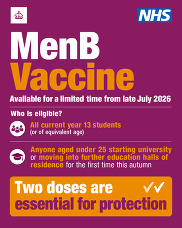
The first vaccines offered as part of the the limited time MenB vaccine offer were delivered on Monday (20 July). A reminder that the one-off vaccination programme is being offered to:
- Everyone born between 01/09/2007 and 31/08/2008
- Young people under 25 (born on or after 21/07/2001) who will be starting higher education for the first time, or who will be starting further education for the first time as a residential student, in autumn 2026
- International students under 25 entering their first year of university should receive their first dose in their home country where possible to give the best chance of protection ahead of the start of the autumn term
Two doses of the vaccine are needed for protection at least 28 days apart.
17 and 18-year-olds can book via the NHS National Booking Service for appointments at community pharmacies. Other eligible people can contact a participating pharmacy to book an appointment.
We recently published the first version of our all-partner MenB vaccination communications toolkit. This contains background information, FAQs, health publication resources and other useful information to help support stakeholders promote the offer to eligible young people across the summer. The toolkit will be updated in the next few days to contain evergreen eligibility assets that can be used by partners on social media over the next few months.
|
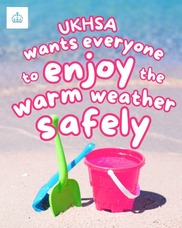
Ahead of the summer holidays, UKHSA has joined forces with leading water safety charities to support them in warning young adults of the dangers of cooling off in open water. The advice comes ahead of World Drowning Prevention Day on 25 July, which aims to raise awareness of measures that can help prevent drowning and save lives. The press release also includes advice on following UKHSA's Beat the Heat guidance.
There are currently no heat-health alerts in place. Individuals and organisations that wish to receive the heat-health alerts must register to receive the alerts where users will be able to specify which regions they wish to receive alerts for. The alert status is also publicly available on the UKHSA Data Dashboard.
To support stakeholders with their communications during periods of hot weather, we have a communications toolkit available. The material in this toolkit is intended to provide basic health information that can be communicated during hot spells so that the right messages reach the right people at the right time. This week it has been updated to include some key messages on staying safe around water and resources from the RNLI and RLSS that stakeholders can use on their own channels.
There are also a series of blog posts which your audiences may find useful:
|
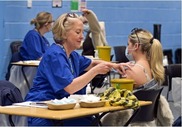
Our new blog post explains why multiple doses are needed for some vaccines, and how following recommended schedules helps ensure lasting protection.
The blog outlines how different vaccine types work — live-attenuated vaccines often provide strong, long-lasting immunity with fewer doses, while non-live vaccines typically require more doses spaced over time to build effective protection.
It also explains the difference between primary courses and booster doses, why some vaccines like seasonal flu need to be taken annually as viruses evolve, and what to do if doses are missed.
|
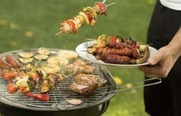
Confirmed cases of Salmonella in England reached their highest level in ten years in 2024 according to UKHSA data, with both Salmonella and Campylobacter remaining elevated in 2025. Cases rise during summer months, often linked to undercooked or mishandled meat, poultry and eggs.
With BBQ season underway, the Food Standards Agency (FSA) is urging people to avoid common food safety mistakes. Key advice includes always cooking meat all the way through — checking juices run clear and that a thermometer reads at least 75°C — using separate utensils for raw and cooked food, keeping food chilled and out of direct sunlight and taking extra care with high-risk dishes like cooked chicken, egg dishes and prepared salads.
On 7 June, the FSA launched its latest consumer-focused campaign, called ‘Stop. Think. Serve’. It focuses on the everyday kitchen habits that can put people at risk, particularly those who are more vulnerable to foodborne illness including young children, older adults, pregnant women and immunocompromised individuals.
|
UKHSA has worked as part of the international research consortium, RISE-VAC, to evaluate multiple vaccination strategies in prison settings across Europe and integrate these findings with data on vaccine knowledge, attitudes and uptake among both staff and prison residents. You can read about this work on our latest Research Spotlight.
For more information, including e-learning courses, awareness-raising brochures, educational animations, publications and guidance visit the RISE-Vac website.
If you have any questions about this Spotlight, please email ukhsa.research.website@ukhsa.gov.uk
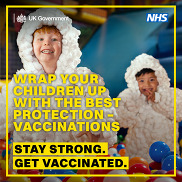
Another phase of Department of Health & Social Care, UKHSA & NHS England's ‘Stay Strong. Get Vaccinated’ childhood immunisations campaign launched last week. This phase will run until the end of August.
The campaign aims to encourage parents to check that their child has received their routine childhood vaccinations.
|
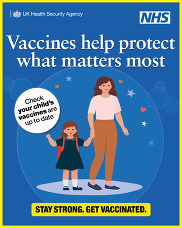
Our latest measles data shows that measles continues to circulate in many parts of the country.
Between 1 January 2026 and 6 July 2026 there have been 883 laboratory confirmed measles cases reported in England, an increase of 82 cases since the last report on 22 June 2026.
The majority (61%) of these cases were in children aged 10 years and under, and 33% were in young people and adults aged 15 years and over. 52% of these cases have been in London, 17% in the West Midlands, and 10% in the North West. However, all regions have reported at least one confirmed case with symptom onset since January 2026.
This data includes the confirmation that, sadly, to date in 2026, there have been three measles deaths in England (two children and one adult). Our thoughts and condolences are with their loved ones.
We continue to work with partners to urge parents to check their children are up top date with their MMR or MMRV vaccines to give them the best and safest protection against measles.
Further resources
- We have a measles communications toolkit which brings together a range of resources which partners can use to raise awareness of measles, its signs and symptoms, and the MMR/MMRV vaccination offer. This is available on our Google Drive.
- We also have a measles communications toolkit which brings together a range of resources which partners can use to raise awareness of measles, its signs and symptoms, and the MMR/MMRV vaccination offer. This is available on our Google Drive.
|
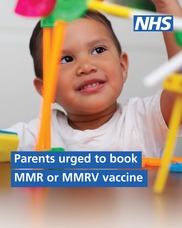
NHS England has launched a 2026/27 national vaccines and immunisations catch-up campaign focussing on on the measles, mumps, rubella (and varicella) (MMR/V) vaccination. The focus is due to recent measles outbreaks and the removal of England’s elimination status earlier this year.
The campaign will run from July 2026 to March 2027. GPs will be required to undertake local call and recall for eligible individuals aged 12 months to less than 6 years who are missing 1 or 2 doses of MMR/V. Families with children aged between 6 and 11 will be invited to book any missed MMR vaccines at their GP surgery by the NHS App, SMS, email or letter.
There is separately a selective catch-up of varicella vaccination that was agreed as part of the MMRV roll out in January 2026. The selective catch-up will be for those eligible individuals who have not yet had a chickenpox infection or 2 doses of varicella vaccination. The catch-up will run from Sunday 1 November 2026 to Friday 31 March 2028.
|
|