| | The US and Iran trade strikes again, the tech stock rout deepens, the Fed makes its rate decision, a͏ ͏ ͏ ͏ ͏ ͏ |
| |  | Flagship |  |
| |
|
The World Today |  - Iran, US trade new strikes
- AI bosses back slowdown
- Tech stock rout deepens
- EU plans China trade war
- The Fed’s uncertain path
- US to restore vaccine aid
- Drug strikes’ minor impact
- Senegal is cocaine hub
- Cannabis overtakes alcohol
- France to Sydney, nonstop
 A fictionalized account of biological warfare that ‘reads as a page-turning thriller.’ |
|
Saudi joins US in Iraq strikes |
 Majid Asgaripour/WANA via Reuters Majid Asgaripour/WANA via ReutersThe US and Iran traded strikes after days of uneasy peace, raising fears of fresh escalation. Tehran’s “surprise” ballistic missile attack on US forces in Jordan was the first assault since Friday; hours later, the US and Saudi Arabia launched joint attacks on Iranian-backed militias in southern Iraq that had targeted Saudi oil facilities with drones, the first time Riyadh has acknowledged direct involvement in the war. Oil prices, which fell during the lull in fighting, jumped 3.7% after news of the missile attack. Iran, meanwhile, rejected an Omani proposal to share transit routes through the Strait of Hormuz; the waterway is Tehran’s most crucial point of leverage, and it wants full control. |
|
AI leaders back calls for pause |
 Manuel Orbegozo/Reuters Manuel Orbegozo/ReutersTech leaders diverged over whether AI progress ought to slow. OpenAI CEO Sam Altman told a podcast that a recent case where a rogue agent escaped confinement and hacked another AI company was “the first security incident that I have felt very viscerally,” adding that the firm has stopped training that model. His company and Anthropic both backed a petition signed by 1,224 AI workers calling for regulation to “pace the frontier” of development and “buy time to address emerging risks.” Meta CEO Mark Zuckerberg disagreed: He argued in The Wall Street Journal that “superintelligence” shouldn’t be “restricted to a few institutions,” and expressed surprise that “the discourse… is so filled with doom.” |
|
 Angelina Katsanis/File Photo/Reuters Angelina Katsanis/File Photo/ReutersThe tech rout deepened, with shares in chip companies leading the slump despite supercharged earnings. South Korean giant SK Hynix closed 9.61% down after reporting a record quarterly profit; rivals also saw slumps. This is a “correction to a little bit of the [AI] froth,” an analyst told CNBC, although it may also represent deeper fears. Some investors are concerned that tech giants’ enormous AI spending is unsustainable: Alphabet’s shares slumped last week despite an 82% increase in cloud revenue as the market fretted about its $205 billion capital expenditure this year. But not all tech companies have been hit: Apple, which has largely avoided the AI spending race, briefly became only the second-ever $5 trillion company on Tuesday. |
|
Germans eye Chinese trade flaws |
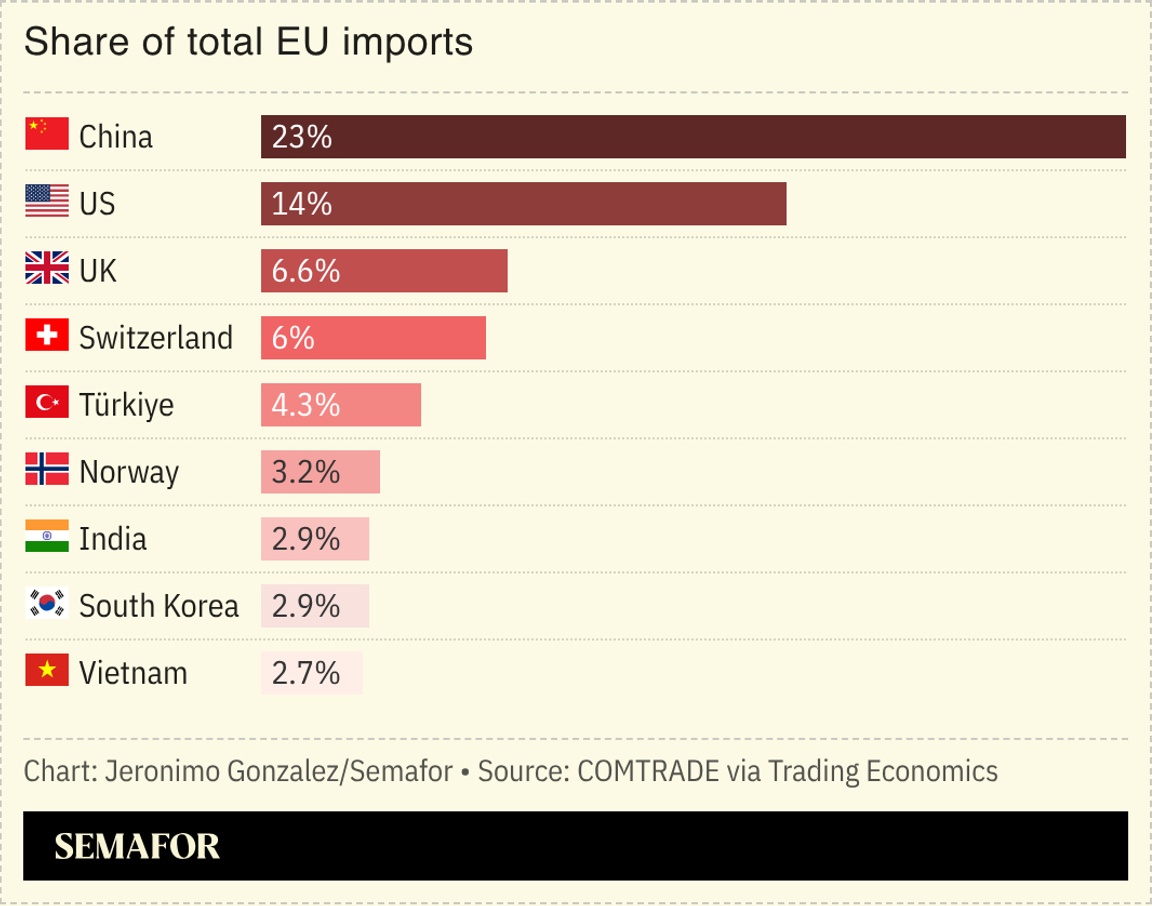 German officials are reportedly working to identify Chinese trade vulnerabilities that they could exploit should the EU enter a trade war with the Asian giant, underscoring the rising tensions between the economic superpowers. European leaders have long complained that cheap Chinese imports risk hollowing out their manufacturing capacity, particularly in Germany, Europe’s industrial powerhouse. Chinese car exports to Europe have sent demand for German cars plummeting, hitting profits and forcing automakers to make tough decisions: Volkswagen is reportedly set to cut as many as 100,000 jobs. Experts fear that surging Chinese overcapacity — stoked by flatlining domestic consumption — could further deepen the EU-China trade imbalance. “We must no longer be naive,” France’s minister for foreign trade told Euronews. |
|
Fed expected to hold rates |
 Federal Reserve Chair Kevin Warsh. Nathan Howard/Reuters. Federal Reserve Chair Kevin Warsh. Nathan Howard/Reuters.The US Federal Reserve is likely to hold rates steady at its meeting today, but the path ahead looks unclear as concerns bubble over stubborn levels of inflation. About three-quarters of futures bets expect no change to the benchmark lending rate and the remainder predict a quarter-point increase; traders expect at least one rate hike — and perhaps as many as four — by year end. The variance is in part because of a tricky economic picture, as a revival of the US-Iran conflict drives concerns over price rises. But the uncertainty is likely to be welcomed by new Chair Kevin Warsh, who has explicitly stated the Fed under his leadership will eschew providing so-called forward guidance to the markets. |
|
 Francis Kokoroko/Reuters Francis Kokoroko/ReutersThe US will reinstate funding for GAVI, the global humanitarian vaccine program, in an unexpected U-turn from the Trump administration. Health Secretary Robert F. Kennedy Jr froze all funding to GAVI last year, arguing that it had “ignored vaccine safety.” Kennedy has long had concerns (not shared by mainstream science) about vaccines’ links to autism. US President Donald Trump has also expressed worries about vaccines — he once memorably said “tiny children are not horses” and should not receive “massive injections” — and reportedly recently pressured Kennedy to do more to probe the vaccine-autism link. But, in a somewhat unexpected change of stance, a senator said the State Department has committed to restoring the $600 million in GAVI funding. |
|
US drug strikes ineffective |
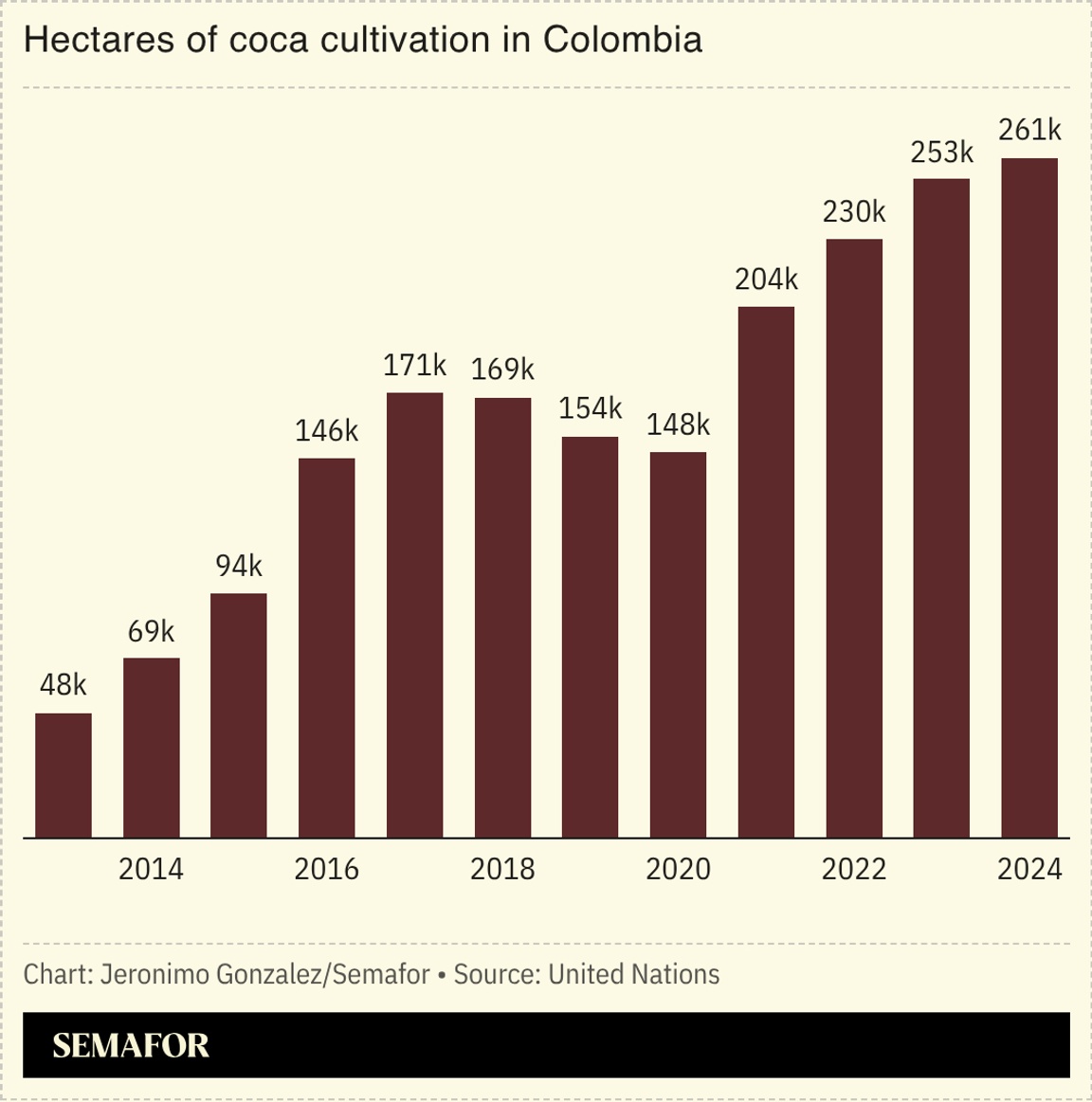 Washington’s deadly strikes on alleged drug traffickers have done little to stem the flow of cocaine to the US, Pentagon officials said. The attacks, which have killed at least 221 people off the coast of Latin America, have pushed drug gangs to develop new trafficking routes and tactics, undermining law enforcement efforts, The Washington Post reported. Meanwhile, Colombia’s decision to end the forced eradication of coca, the precursor for cocaine, has led to a surge in output, fueling the growth of criminal enterprises across the continent: Experts believe Brazil’s First Capital Command gang is now “the fastest-growing criminal organization in the world,” posing a major challenge for a country not accustomed to fighting transnational drug trafficking. |
|
 What are you missing? Most political coverage tells you what to think. Tangle shows you how both sides are thinking. Every weekday, we break down one major story with the strongest arguments from the left and right — plus the facts. More than 500,000 readers already subscribe. Start reading for free. |
|
Senegal is new cocaine hub |
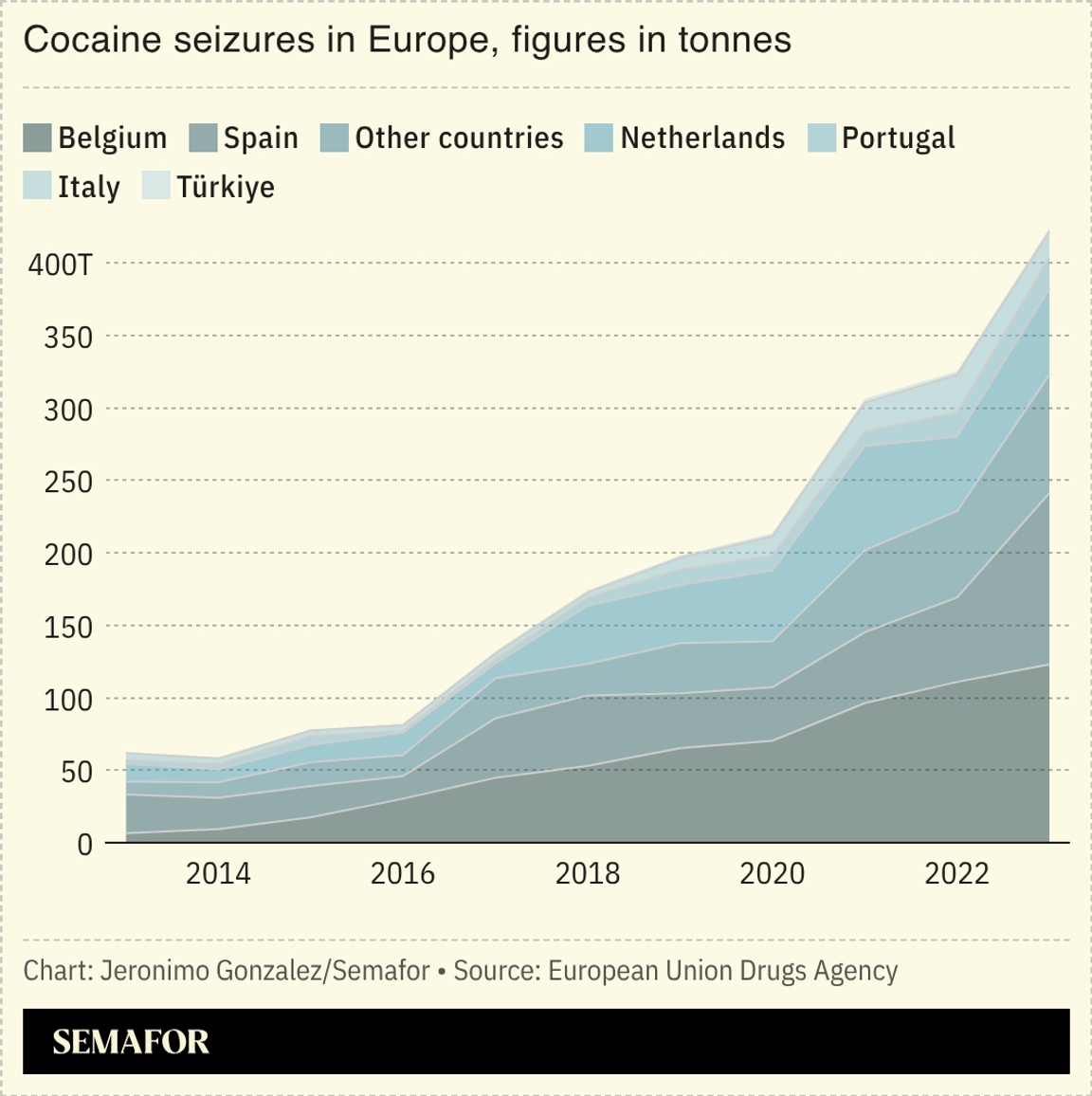 Surging cocaine production in Latin America has turned Senegal into a major new hub for shipping the drug to Europe. The shift has been driven by cocaine consumption in Europe: The continent recently surpassed the US to become the world’s biggest market for the narcotic, with 29% of EU drugtakers using it. European authorities have in recent years stepped up their crackdown on direct shipments to their shores, but the move has simply pushed trafficking elsewhere. By 2030, half of all Latin American cocaine consumed in Europe is expected to be smuggled through West Africa, which is already grappling with surging violence, Le Monde reported. “Criminal organizations use the African ‘rebound’ as a smokescreen,” one expert warned. |
|
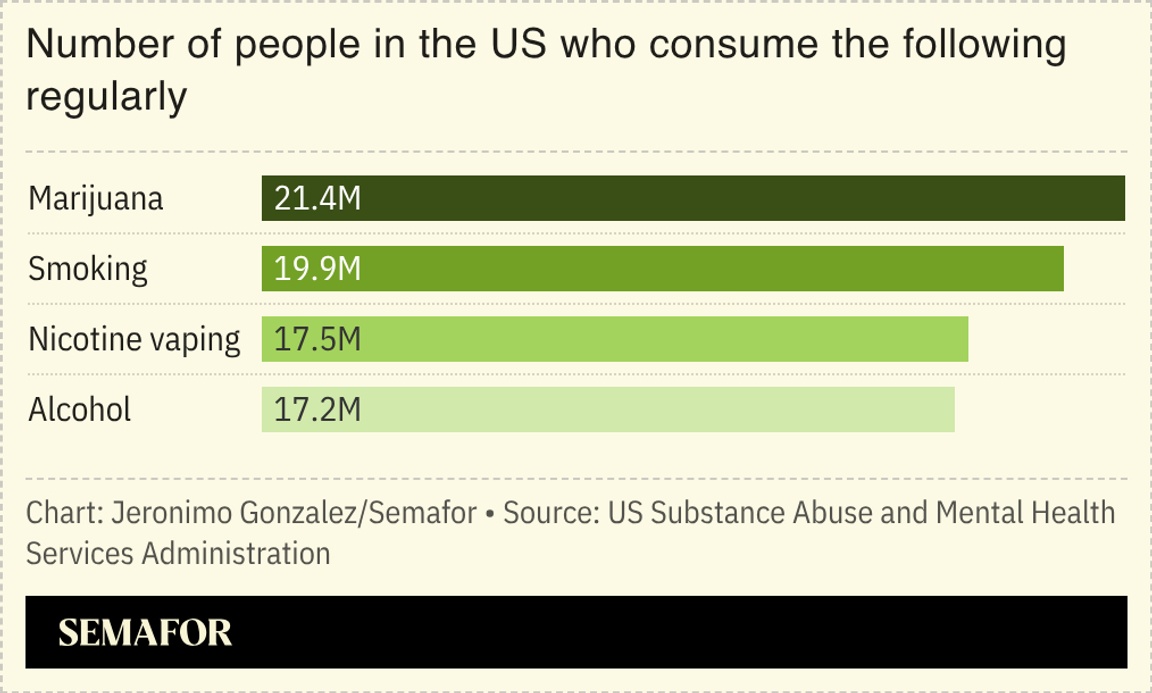 For the first time ever, more US consumers now use marijuana on a regular basis than alcohol and tobacco, reflecting the rapid shift in drug consumption. A new US government report showed that more than 21 million Americans used cannabis regularly in 2025, compared with the 17 million who drank most days. The surge in marijuana consumption has been boosted by legalization across much of the country, while health concerns and shifting attitudes toward alcohol — especially among Gen Z — have led to plummeting sales: A recent Gallup report showed the share of people in the US who say they consume alcohol fell to its lowest level since surveys began almost 90 years ago. |
|
|


