| | A $5 billion Gulf refinery moves forward, Chinese crude exports tick up, and US emissions reductions͏ ͏ ͏ ͏ ͏ ͏ |
| |  | Energy |  |
| |
|
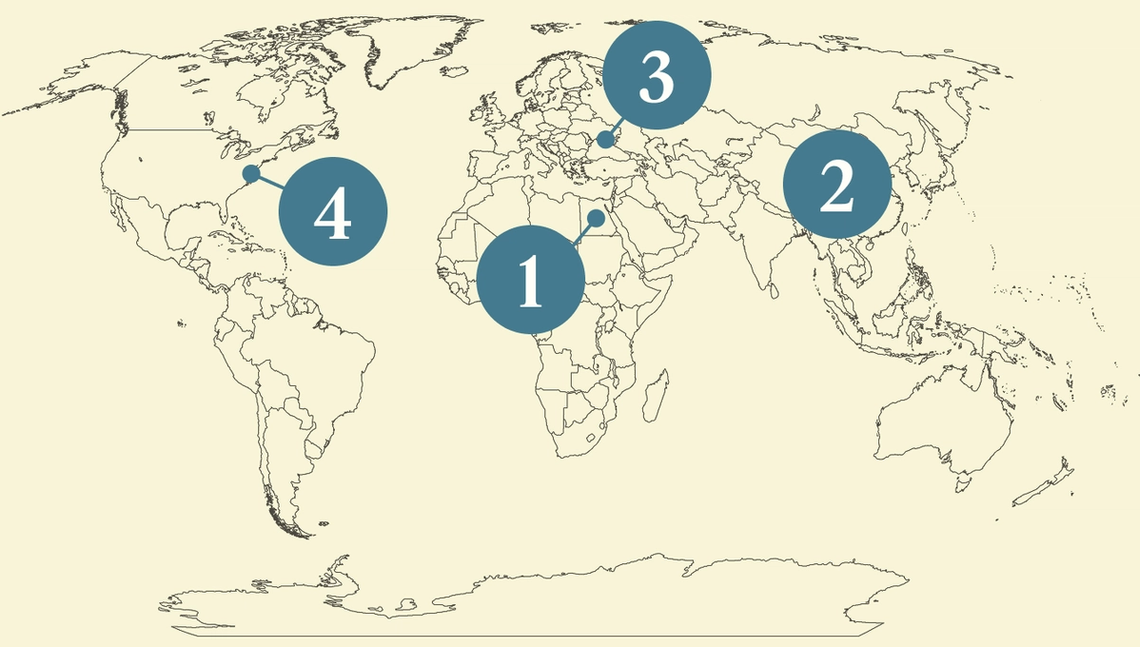 - Egypt LNG roped in
- China’s crude dilemma
- Russia sanctions and tariffs
- US emissions off-track
 Shell’s profits spike, and Chevron struggles in Venezuela. |
|
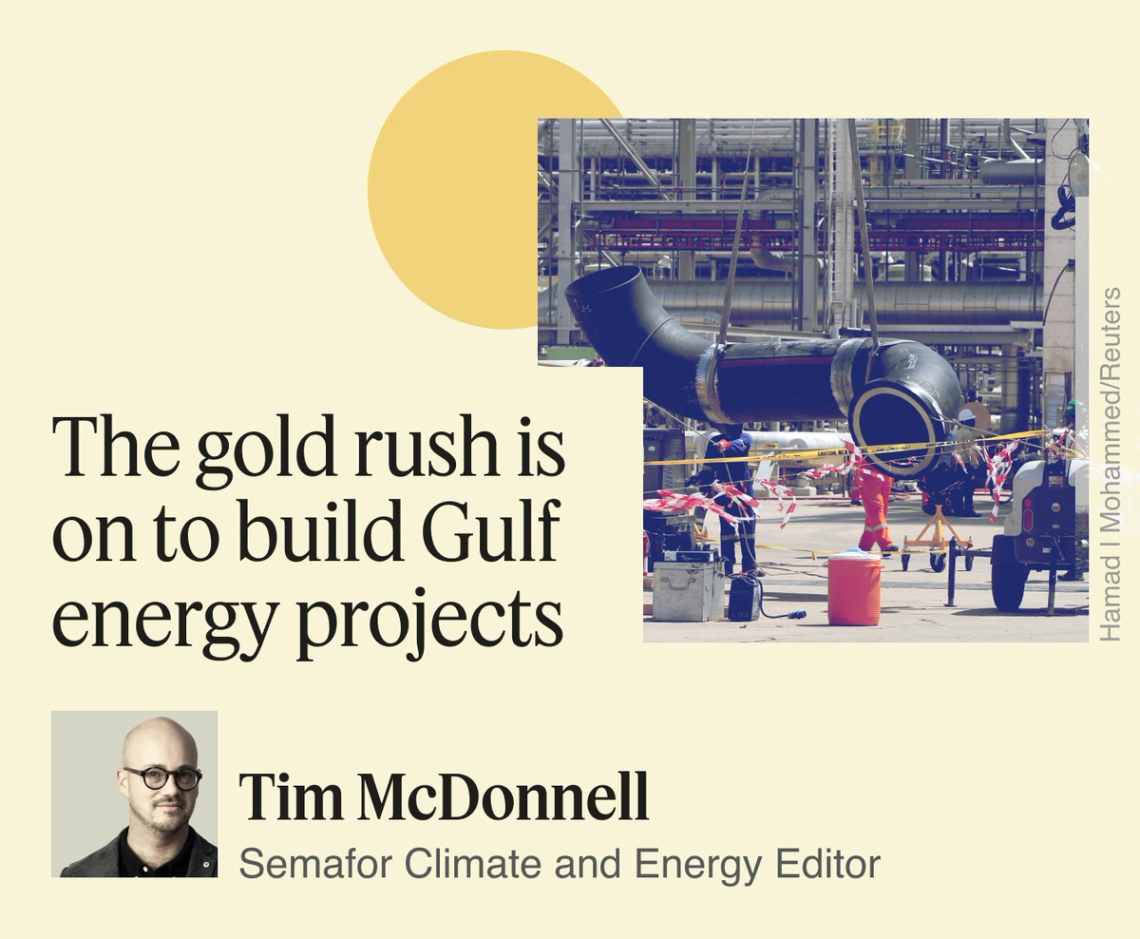 With the number of drones and missiles flying toward energy infrastructure in the Gulf these days, it might seem like a strange time to pour capital into that sector, in that region. But a gold rush is shaping up to profit from new workarounds to the Strait of Hormuz. A group of US and Saudi investors said Wednesday they’re closing in on a site for a $5 billion oil refining complex. It will be somewhere in the Gulf region, but outside the Strait, the project’s organizers told me. With the aim to process up to 200,000 barrels of crude oil daily, it would be smaller than the major Gulf refineries. But the idea is to set up a port-connected “energy corridor” for producing and exporting not just staples like gasoline but also plastics, fertilizers, and just about anything else one can squeeze out of a hydrocarbon. The idea was born before the war broke out, Mark Gunderson, a Texas oil developer whose MWG Enterprises is a partner in the project, told me. But now its logic is especially clear: Given the security and infrastructure limits on how much crude can flow out of the region, turning the oil into something else first can make it accessible to a broader range of traders and export vessels. “What can you do to make the oil move faster?” he said. “It doesn’t necessarily have to be different or bigger pipes. It has to be technical solutions, and products that flow easier.” The project, whose other backers include the Patel Family Office and Saudi’s AHQ Group, is part of a larger tide of capital flowing into Gulf oil infrastructure. Chevron is doubling down in Iraq. The UAE is building new pipelines and ports. On Monday, private equity giants Blackstone and KKR signed a $16 billion lease on Kuwait’s national pipeline network. “Security risks may be encouraging investment in more resilient infrastructure, rather than deterring it,” said Salih Yilmaz, senior oil analyst at Bloomberg Intelligence. The refinery project has plenty of hurdles ahead. But as refinery construction stalls out in the US and Europe, and a wider variety of crudes from Africa and elsewhere flow into the Gulf, now is a good time to take the risk, Lakshmi Narayanan, Patel’s vice-chair, told me: “Pre-conflict and post-conflict, Gulf countries have always been open [for energy investment], but now the market’s sentiments are different.” |
|
Oil prices hold as Iran war expands |
 A banner in Iran. Majid Asgaripour/WANA via Reuters. A banner in Iran. Majid Asgaripour/WANA via Reuters.Oil prices held steady on Thursday, despite renewed attacks between the US and Iran and the first drone strike of the war in Egypt. The suspected drone attack led two ships — a US-owned gas storage tanker and a Greek-operated LNG carrier — to catch fire at Egypt’s Mediterranean port of Damietta on Wednesday. Two Iranians told The New York Times the strike was designed to show how much further global shipping and energy supplies could be disrupted. Ship traffic through the Strait of Hormuz remains below a tenth of pre-war levels. Qatar, as a result, is scrambling to buy LNG cargoes from the US it can resell to its customers in Asia, and US crude oil stockpiles are hitting new lows. Riyadh, meanwhile, is trying to assemble an international coalition to protect Red Sea shipping, with dozens of countries said to be involved in under discussions. The Houthis — who declared a maritime blockade on Saudi Arabia on July 20 and began attacking Saudi vessels — are reportedly weighing transit fees on most Bab el-Mandeb traffic, a plan Iranian advisers travelled to Yemen to help shape and from which Chinese ships would be exempt. Traffic through Bab el-Mandeb is down a fifth in the past 10 days. |
|
Chinese crude imports surge |
 China Daily via Reuters China Daily via ReutersChina’s crude imports have ticked up, but analysts said the rebound was unlikely to signal a return to pre-war levels. The increase reflects stranded cargoes clearing the Strait of Hormuz and more purchases of Russian oil, “rather than a meaningful improvement in refinery demand,” a Kpler analyst said. Experts predict only a modest recovery in China’s near-term crude demand, as its buyers historically only replenish stocks when oil is cheap, as well as an electrification push. Higher fuel prices have prompted motorists to drive less or switch to EVs, while high-speed rail curbed jet fuel demand. “A doomsday scenario” in which Beijing aggressively restores imports, pushing prices higher, “is far from the only endgame,” a Reuters columnist wrote. This item originally appeared in Semafor’s weekly China briefing. Subscribe here. → |
|
|
US eyes tariffs on Russian oil buyers |
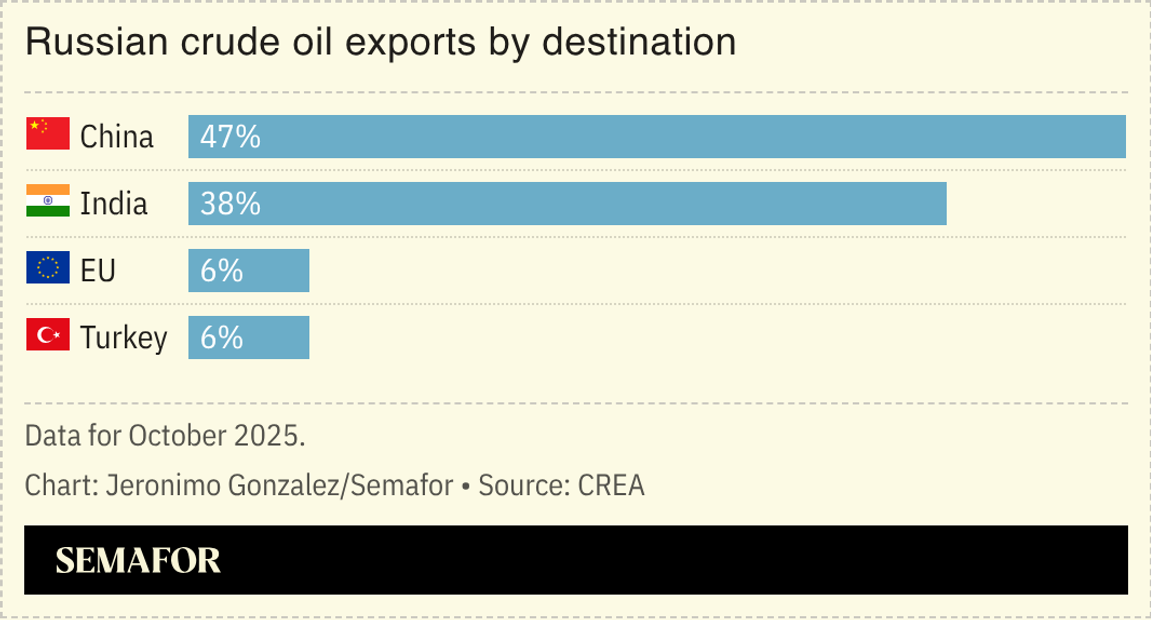 The US Senate voted to advance a bill to ramp up economic penalties on Russia and countries that buy its fossil fuels, but the proposal will face tough questions about whether it really helps Ukraine or merely empowers President Donald Trump’s global tariff war. The bill won an uncommonly strong bipartisan majority that mirrors the more bullish posture toward the Kremlin that Trump took during his meeting with Ukrainian President Volodymyr Zelenskyy in Washington this week. The problem, however, is that the legislation would allow the president to impose tariffs of up to 100% on the top buyers of Russian oil and gas, and on countries that facilitate Russian sanctions evasion. Edward Fishman, a senior fellow at the Council on Foreign Relations and former State Department sanctions official, said he was “skeptical this bill will make a difference with respect to Russia” because tariffs haven’t proven an effective means to deter Russia’s trading partners. “But it gives Trump the flexible tariff authority that the Supreme Court shot down earlier this year.” The energy war between Russia and Ukraine, meanwhile, continues to escalate. Ukrainian drone commanders are honing their targeting of Russian refineries and leaving swaths of Crimea with no fuel or power, while Russia ramps up attacks on Ukraine’s gas stations. In his meeting with Trump, Zelenskyy asked for a “winter package” of Patriot missile interceptors to defend against likely Russian attacks on heating systems later this year, Axios reported. |
|
US emissions reductions falter |
 The US is on track to reduce its greenhouse gas emissions by between 27-41% below 2005 levels by 2040, falling far short of Biden-era emissions goals, a new Rhodium Group report found. Emissions fell across all scenarios the researchers mapped, despite a boom in electricity demand sparked by AI data center buildout. But changes to climate policies during US President Donald Trump’s second term mean that natural gas and renewable power will compete for dominance through the 2030s, potentially leading to only a 24% drop in emissions in the power sector by 2040, compared with last year, the report found. A separate analysis by Columbia University found that Trump’s One Big Beautiful Bill Act still preserved 74% of planned new clean energy capacity compared to former President Joe Biden’s Inflation Reduction Act. But higher oil and gas production under Trump could see emissions in the sector increase by 15% to 2040. The Biden Administration had targeted a 61% to 66% cut in overall emissions by 2035. |
|
 New EnergyFossil FuelsTechPolitics & PolicyMinerals & Mining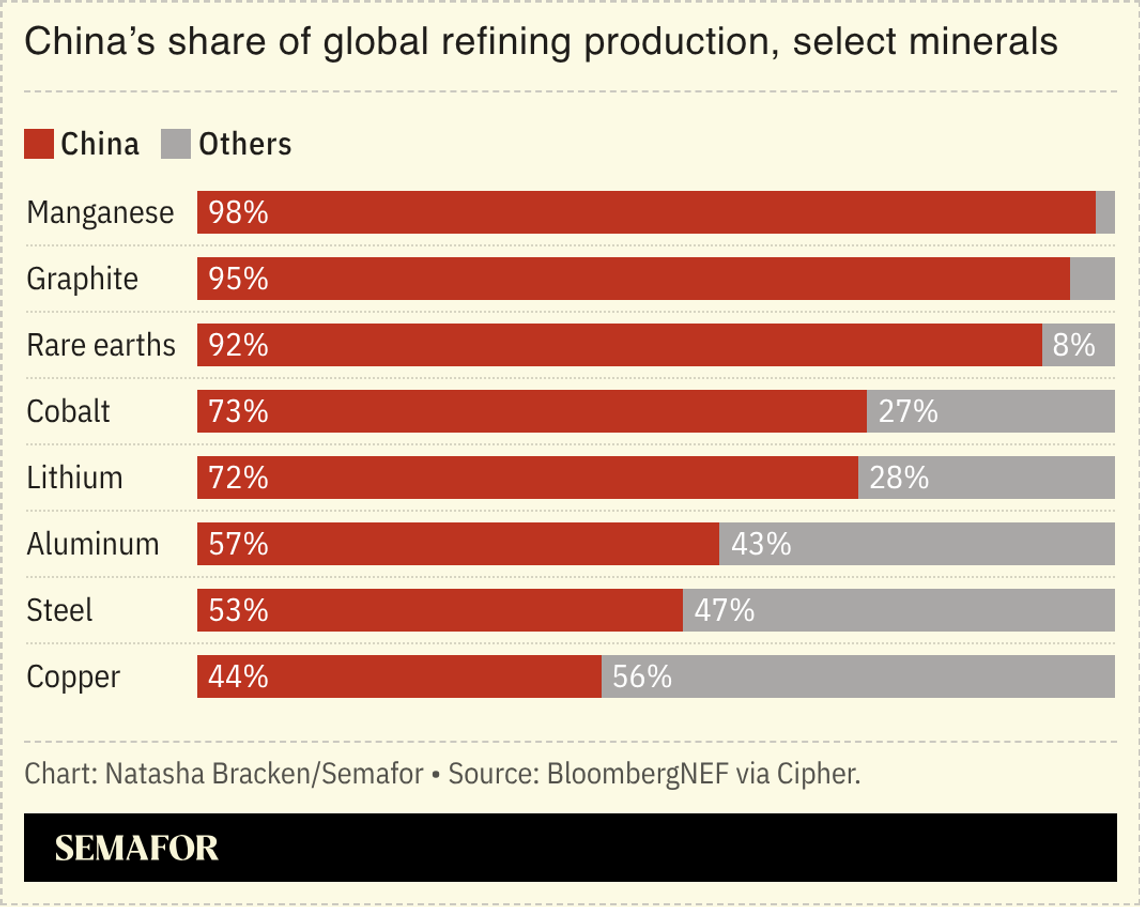 - Competing with China for dominance in critical minerals supply chains cannot be done at the level of a single government or institution, a new report by the SAFE Critical Minerals Center found. Bridging the vast financing gap will require effective international coordination and co-financing of strategic projects.
|
|
|


