News without an agenda. AP is a not-for-profit organization with no corporate parent, no shareholders and no government influence. Our mission is journalism, not profit margins. Your donation supports independent reporting that serves the public interest, not corporate shareholders. Donate today.
|
|
|
Good morning and welcome to the Sunday edition of Morning Wire, where we give you the weekend rundown to get ready for the week ahead. Today, we look at some of the consequences of the European heat wave that has brought drought and sparked devastating wildfires in France, Spain, Portugal, Crete and elsewhere; Iran’s leaders show a united front over the war but there is an open rivalry over their country’s postwar future; and a women’s professional baseball league makes its debut.
But first, more progressive Americans are swearing off traditional media, a shift that could impact Democratic primaries.
|
Ryan Grim, co-founder of Drop Site News, records a segment for the YouTube daily news show, Breaking Points, Monday, in Washington. (AP Photo/Jacquelyn Martin) |
A new media ecosystem is taking root on the left, reshaping Democratic politics |
Farah Berent, a physician assistant in Holland, Michigan, used to learn about politics from channels like ABC, CBS and CNN. But that changed as she decided that coverage of the war in Gaza was irreparably biased. “I couldn’t stand all the lies on the stations,″ said Berent, arguing that there wasn’t enough attention being paid to Palestinian suffering. “I started going to Instagram to get my news.” Berent is among many progressive-minded Americans who have sworn off legacy media institutions. They’re turning to a widening mix of independent podcasts, social media accounts and digital news sites, part of an increasingly influential ecosystem that has boosted this year’s wave of anti-establishment, left-leaning candidates. Liberals remain more likely than conservatives to trust mainstream outlets, but the splintering echoes how conservatives skeptical of their party created a collection of insurgent news sites years ago. Read more.
|
|
|
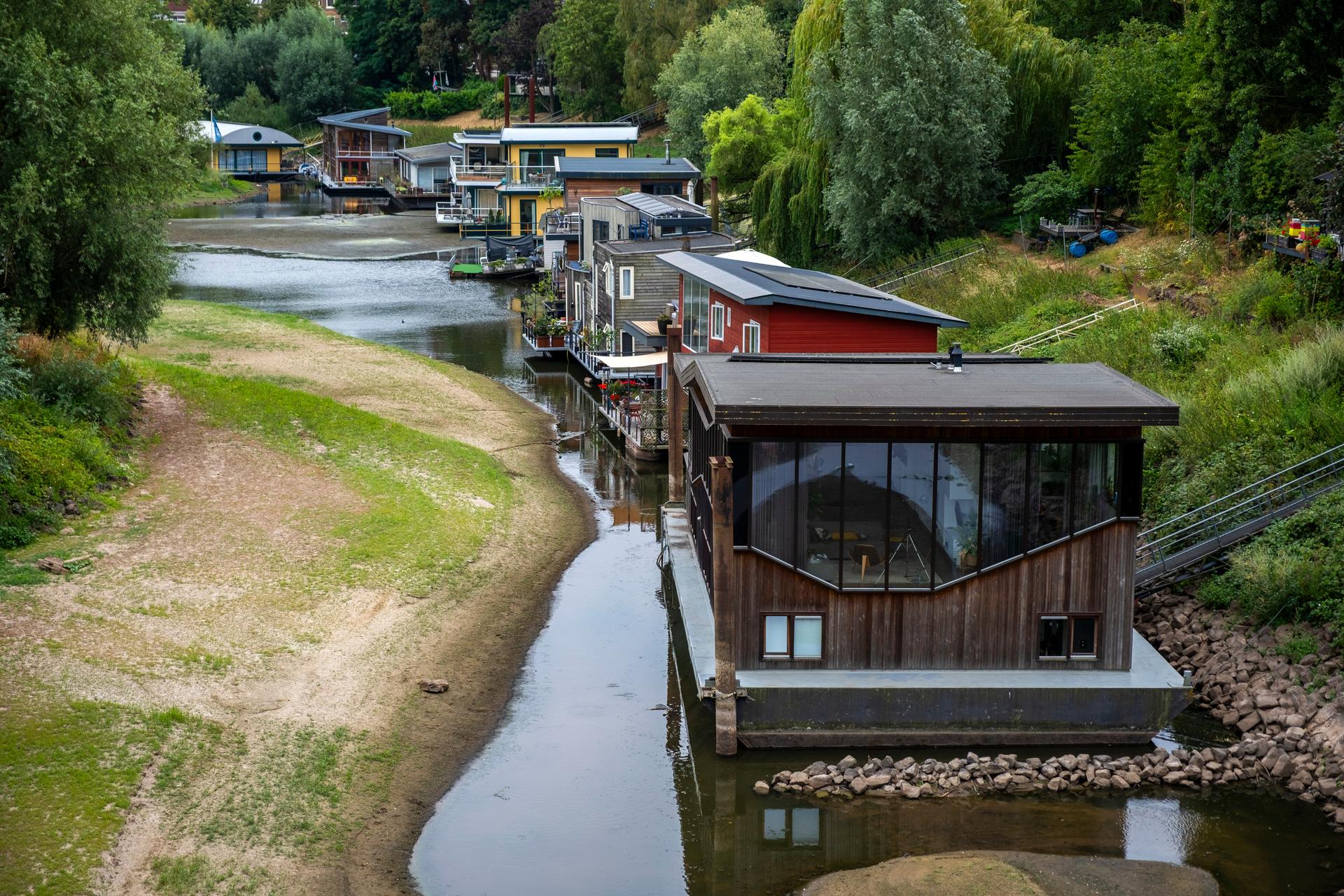
Houseboats sit in low water on the Waal river in Nijmegen, Netherlands, Thursday, due to drought conditions. (AP Photo/Patrick Post) |
Dry, hot summers are putting Dutch dikes at risk and threatening German river trade |
Jeroen Wouda and Dirk Boom walk slowly along a Dutch dike, prodding at the bone dry surface with metal rods and scanning the parched grass for patches of green that could give away the location of a leak. In a scene that brings to mind the fictional Dutch boy who heroically plugs a hole in a dike with his finger, the two men are hunting for cracks in the low-lying Netherlands’ famed water defenses caused by a drought that is gripping Europe and has fueled raging wildfires in France and Spain and sent the Danube and Rhine rivers to record low levels. In the Netherlands and neighboring Germany cargo ships have been forced to carry significantly less freight or risk running aground in shallow navigation channels. Farmers facing restrictions on irrigating their crops are warning of smaller fruit harvests and rising prices this season. Read more.
|
Iran’s leaders show a united front over the war but are divided over what the goal is |
With escalating attacks against U.S. bases and its allies over the past week, Iran’s leaders are showing considerable unity over their war strategy: hanging tough, determined to show Iran can endure more than America and its allies can. But within the leadership, there are sharp differences over what the endgame should be. The unusually open rivalry within the theocracy’s leadership points to a struggle for control over Iran’s postwar future. A huge question mark is where the new supreme leader, Ayatollah Mojtaba Khamenei, stands. Read more.
|
|
|
|