
|
 |



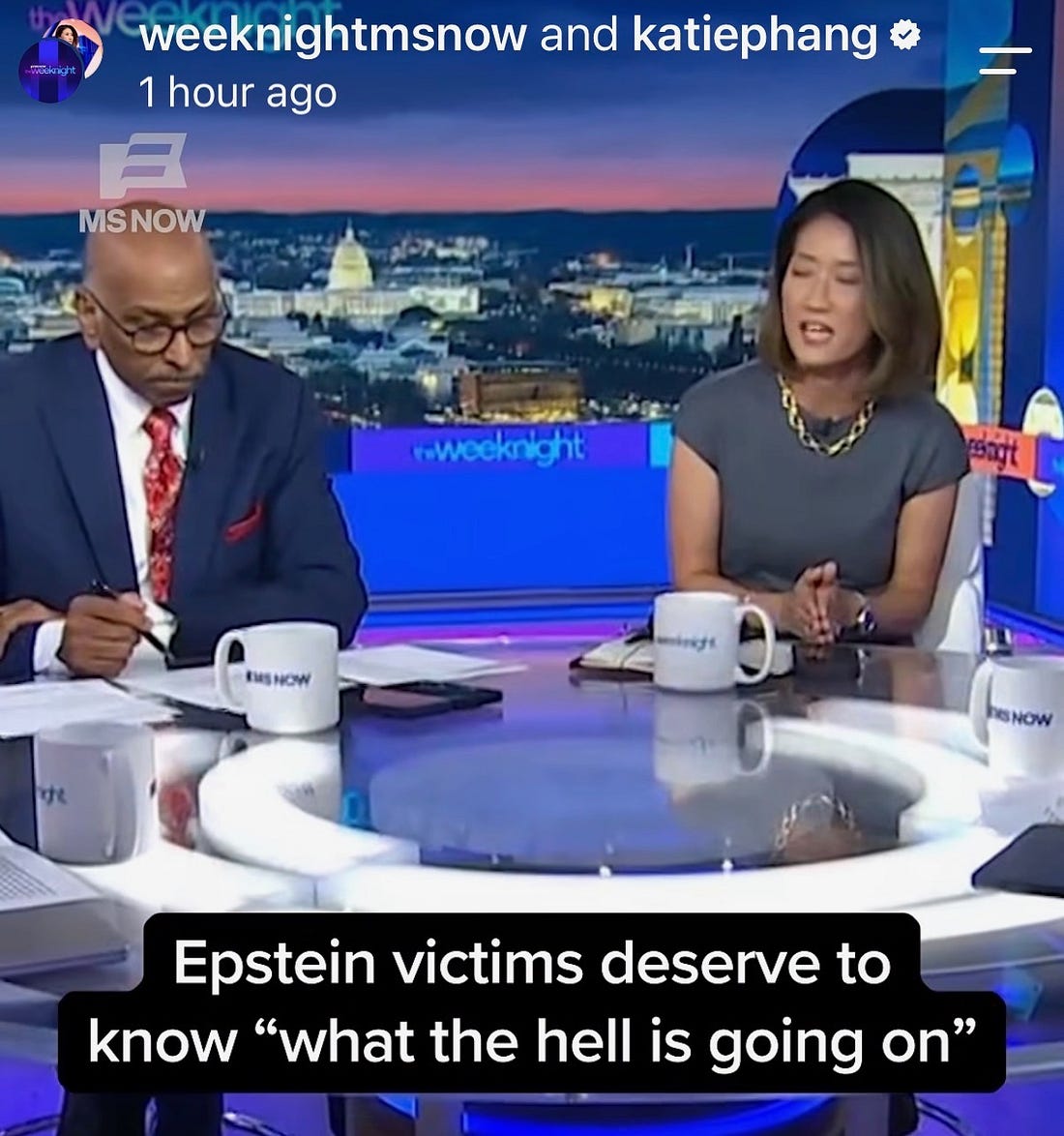
Today, Judge Emmett Sullivan in the District of Columbia held a status conference in Phang v. Blanche, the lawsuit Kate Phang filed to force the Justice Department to make public the trove of items it is wrongfully withholding from public view still, almost eight months after the date Congress set for DOJ to turn them over under the Epstein Files Transparency Act.
 |
The hearing was available to the public via a call-in line, but the quality of the sound was difficult at times, and it was hard to hear the Judge. I stuck it out, so I can share my impressions from the hearing with you tonight; my sense of what was actually happening in the hearing, despite the surface civility, as someone who represented the United States in court for decades.
Andrew Block, a newly minted Senior Counsel at DOJ, appeared for the government.
Emily Gilman, from the Public Integrity Project, was in court for Katie Phang.
The starting point is understanding why the hearing was taking place. As we’ve discussed, Judge Sullivan issued a preliminary injunction that, in essence, ordered the government to stop violating the Epstein Files Transparency Act as to specific categories of documents. Despite the injunction, the government continues to withhold items they’ve been ordered to turn over. In late July, the Judge ordered the government to turn over unredacted versions of specific documents so he could review them in camera (privately, with the plaintiff not included) to determine whether the government’s decision to withhold them was correct.
It speaks volumes that despite saying it had made “a good faith effort to comply” with the court’s order, DOJ showed up with “a second binder” of documents for the court in today’s hearing. It was a showy and theatrical move for a party that isn’t in compliance with the court’s prior orders.
The Judge had a lot of questions throughout the hearing for DOJ about why it couldn’t comply with disclosure orders. For instance, early on he asked why DOJ couldn’t release items that are “substantially similar” to other released items. He pointed out that the Transparency Act doesn’t create an exception for them. Similarly, he asked why DOJ couldn’t redact handwritten notes. DOJ couldn’t muster a direct answer in either case.
The Judge asked why DOJ had failed to publish its explanation in the Federal Register for why some documents were redacted, as the Act requires. The government told the judge that the process was “underway” and would be completed “shortly.” The Judge’s very reasonable request: “give me a date.” Block responded that he didn’t have a date and that it was out of his control. But the Judge continued to press, saying, “You knew it was going to be discussed today,” and asking for a timeframe for completion, if not the expected date. The best Block could do was, “I’ve been told it should be coming.”
That’s obviously unsatisfactory when the government is months late and in violation of the court’s order. The Judge suggested that Block “pass the microphone” to someone who could give him answers, reiterating, as he did throughout the hearing, “I’m willing to work with you.”
Block started the hearing by reminding the Judge that the presumption of regularity, the assumption that government lawyers are doing their best to fulfill their duties in an ethical way, applies in the D.C. Circuit. By the end of this exchange, one has to wonder why that’s still the case. At best, it’s a presumption that is only operative so long as there is no evidence to suggest the government isn’t acting in good faith. The stonewall answers here suggest otherwise and that it’s time to set the presumption aside.
There was a similarly painful exchange about the government’s failure to provide translations of foreign language documents. The government didn’t offer any legal support for its position that it wasn’t practical to do so. Seeming to run low on patience, although it’s hard to tell when you’re getting audio but no video, the Judge responded, “So the government’s position is it won’t comply with that section? I mean, I just need to know.”
Judge Sullivan: “So you’re saying I’ve learned everything I’m going to learn from the government?”
Block: “That’s right.”
In other words, there is no explanation for why the government can’t do the things it’s been ordered to do. As Phang’s lawyer put it: “They just don’t want to do it.”
The Judge appeared to get frustrated, if not angry, at times, but also went to great pains to clarify that he wasn’t being unreasonable and was trying to work with the government. In other words, he was making a clear record. The kind of record a smart judge makes before imposing discipline on a party, knowing that an appellate court will look over his shoulder down the road and decide whether he got it right.
The Judge had an interesting monologue in that regard, referring to the government’s October 2008 Bush-era trial of Alaska Senator Ted Stevens, which Judge Sullivan handled. Stevens was convicted of making false statements on financial disclosure forms, but it subsequently came to light that the government withheld potentially exculpatory material in discovery. Judge Sullivan held prosecutors in contempt, subsequently throwing out the conviction.
He referenced all of that, saying that “no one was in trouble today” and that he wasn’t taking up the contempt issue. But he cautioned the prosecution that he was one of a very small number of judges to have held prosecutors in contempt and have been affirmed on appeal. He told them that although he didn’t want to end up there, he would protect the integrity of the courts as necessary.
The best the government had to offer was that it didn’t think it should have to comply with the court’s orders because it had pending jurisdictional motions on issues like Phang’s standing to sue, while the preliminary injunction ordered the government to do things it couldn’t take back later on if it prevailed on those motions. Although it wasn’t raised explicitly, it seems especially likely that the government doesn’t want to be in the position of turning over notes from FBI agents’ interviews with the witness who alleged she was assaulted by Trump when she was 13.
The government had a legitimate argument in this regard, saying it didn’t think it could appeal the Judge’s preliminary injunction for technical legal reasons, which fed its hesitancy to comply. The Judge said he would address those concerns in an order.
It’s easy to see the issue here. There could be extremely salacious material in agents’ rough notes. It might be true; it might be untrue. The notes simply record the witness’ words. Either way, it’s an issue for the president of the United States. But Congress has directed DOJ to turn over the material, whether Donald Trump wants them to or not. The Judge pointed out that it’s his job to enforce the law Congress passed. That’s true whether the government wants to comply or not.
The courtroom proceedings were especially striking because Blanche gave his first speech as Attorney General to DOJ employees today, promising to uphold the rule of law “without fear or favor.” Meanwhile, lawyers representing his Justice Department were in Judge Sullivan’s courtroom, unwilling or unable to answer basic questions about why they weren’t complying with the court’s orders.
Phang’s lawyers have ten days to provide the Judge with a proposed order to address Blanche’s failure to comply with the court’s orders. Judge Sullivan couldn’t have been clearer that he doesn’t want to consider contempt. But he asked, “When the govt says it won’t do anything else, how should the court interpret that, when it appears they haven’t complied. The court isn’t obligated to hold a hearing before imposing contempt sanctions.”
If you’re not already a subscriber, I hope you’ll sign up. A free subscription means Civil Discourse will arrive in your inbox so you don’t miss nights like this one. And if you value having someone sit through the hearing, read the filings, and use decades of experience inside the Justice Department to explain what it all means, you can become a paid subscriber. Paid subscribers make it possible for me to keep Civil Discourse available for everyone. Either way, I’m glad you’re here. We have work to do.
We’re in this together,
Joyce