
|
How one couple ditched their lawn and created a wildlife haven
Planting natives doesn’t have to be an all-or-nothing endeavor, and can be done without any horticultural training.
|

| |||||||||||||||


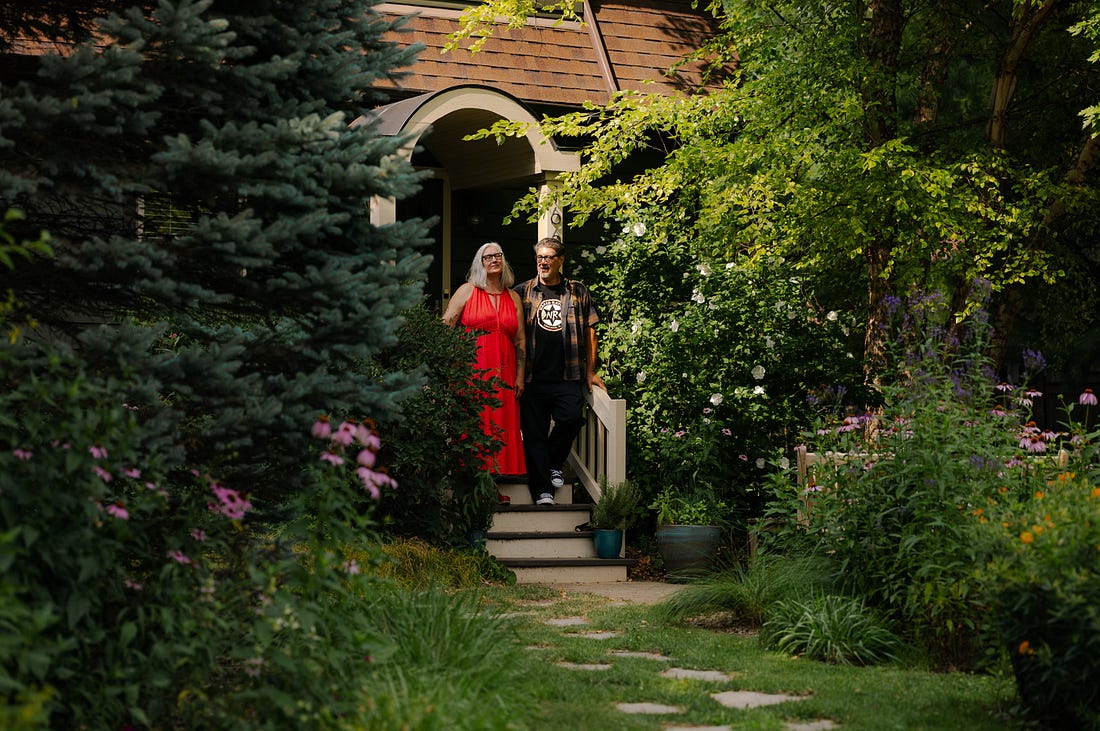 |
When James Reed McGuire and Crystal Fritz first decided to replace their lawn with native plants, they didn’t really know what they were doing. As former city-dwellers who had moved from Chicago out to the suburb of Highland Park, Illinois, they had never done much gardening together beyond growing some planters of herbs and flowers on their balcony.
But for McGuire, an avid birder who did not want to live with a sea of turf that does “absolutely nothing for the environment”, figuring out an alternative to the suburban status quo was imperative.
The couple’s early attempts to rewild their lawn were full of what they now deem missteps. But with each mistake, they learned. Despite having no horticultural training, they slowly figured out how to identify native plants for their region. Every year, they added a few more native plants and every year they watched as more pollinators and birds were drawn to the garden.
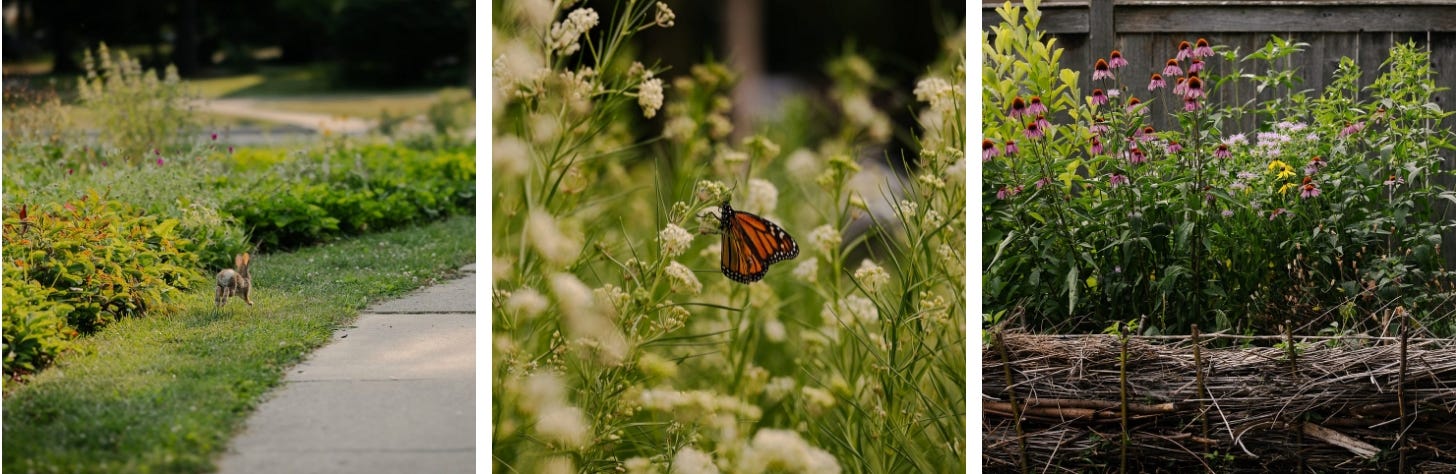
Today, McGuire and Fritz’s lawn has been transformed from a monoculture of turf to a thriving native ecosystem in the suburbs. The abundance of native plants provides food and habitat for a plethora of wild critters: sightings of birds, butterflies, bees, rabbits, bats and foxes are now common occurrences.
“It’s really a stunning environment,” says McGuire. “It brings us a lot of peace and tranquility in a very troubled world.”
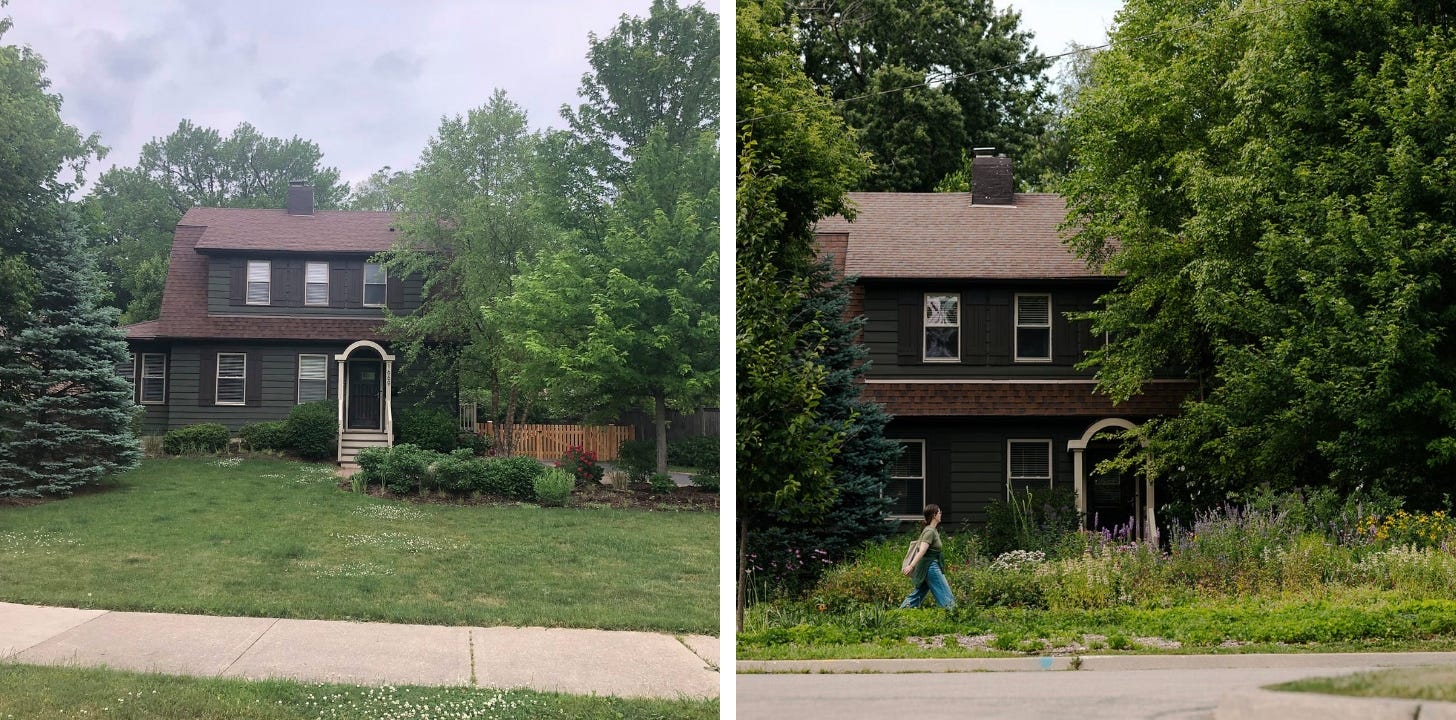
Fritz and McGuire might have been the first on their block to convert their lawn, but they are far from alone. All over the US, people are beginning to dig up pesticide- and fertiliser-hungry lawns in favour of planting that is more biodiverse and better suited to the local climate and needs of wildlife.
Turf grass lawns, which started out as a status symbol borrowed from Europe, cover an estimated 40 million acres of US land today. While it might seem better than concrete, grass lawns are environmentally problematic, says Doug Tallamy, an entomologist who has become one of the country’s biggest advocates for what he calls “conservation landscaping”.
First off, US lawns usually consist of European grass species with short roots, which do little to draw carbon and water deep into the soil. When it rains, water runs off the top of these lawns rather than being absorbed, taking pesticides and fertiliser with it and depositing the chemicals in nearby rivers and lakes, where they wreak havoc on watercourses. Second, non-native turf grasses do not support pollinators or a viable food web, which starts with insects.
Tallamy says: “We’ve got parks and we’ve got reserves, but we are headed towards a sixth extinction event, because those are too small, they’re too isolated and there’s too few of them. And the way we landscape in between the parks and reserves does not sustain biodiversity.”
The good news is that it does not take much to begin righting these environmental wrongs. From Tallamy’s perspective, it does not even necessarily mean eliminating lawns entirely – if short grass is useful in one part of your garden so your children can play, that’s great. For him, it is about shifting the balance so native plants become the norm and lawns are created specifically to serve a purpose.
If everybody in the country cut their lawn in half and planted the other half with native species, it would go a long way towards creating and connecting the kind of habitats that would allow wild species to survive today’s ecological crises, he says.
Plus, you might be surprised by just how gratifying it is. For all the very real good you can do by installing solar panels or switching to an electric vehicle, it can be hard to see the impact your good choices have had.
But when you rewild your lawn, “you get to see the results, and that empowers you”, Tallamy says. “You see the biodiversity come back to your yard, and even though you’re not saving the whole planet, you are saving the piece of the planet that you ‘own’ in a very functional way.”
The above is abridged excerpt from my latest for the Guardian. In the full story, you’ll learn more about how state governments are starting to reward people for rewilding their lawns, hear from poet and author Camille Dungy about how powerful converting even part of your yard into native habitat can be, and see the ways that this approach is becoming a selling point for prospective home buyers. Read the full piece here.