Plus: the authenticity of Dolly Parton |

US Edition - Today's top story: Narrow mail-in voting ruling by Supreme Court adds uncertainty to midterm elections without addressing constitutionality of Trump's executive order

August 26, 2026

US Edition

The Conversation
 

Top headlines

Lead story

President Donald Trump won a victory at the Supreme Court late Monday, according to headlines. But those headlines overstated what happened.

The case concerned Trump’s executive order from March that aimed to dramatically limit mail and absentee voting, and a lawsuit mounted by states against the order. Yet the conservative majority’s ruling was one that – while granting the president a win on procedure – did not in fact address the legality of his executive order. That is still to come.

Confused? So was I. So I asked Quinnipiac University election law expert John J. Martin to explain what was going on.

In my interview with Martin, he reviews the background of the case, the various players involved in challenging the order and what could happen next. As the 2026 midterms approach, says Martin, “Election officials need to know how they’re supposed to manage their elections, and they need to know this months in advance. They want to know: Are we actually able to implement mail voting, or absentee voting, the way that we’ve always done it?”

[ Science from the scientists themselves. Sign up for our weekly science email newsletter. ]

 

Naomi Schalit

Politics and Legal Affairs Editor

 
Mail voting is under assault by the Trump administration. Alfieri Getty Images

Narrow mail-in voting ruling by Supreme Court adds uncertainty to midterm elections without addressing constitutionality of Trump’s executive order

John J. Martin, Quinnipiac University

Will an Aug. 24, 2026, Supreme Court decision lead to chaos in the midterm elections? An election law scholar dissects the decision, its background and possible effects.

Environment + Energy

Disappearing lakes, old photos and AI are helping scientists map Arctic permafrost thaw in near-real time

Anna Liljedahl, University of Alaska Anchorage; Ingmar Nitze, Alfred Wegener Institute Helmholtz Centre for Polar and Marine Research

The abrupt disappearance of a lake is one clear sign that the ice below is melting, and a clue to wider permafrost changes.

Why Trump’s plan to rescind the Roadless Rule protecting national forests will struggle in court

Patrick Parenteau, Vermont Law & Graduate School

The courts have rejected similar arguments before. Meanwhile, maintenance costs are rising, and the Forest Service’s own data contradicts the administration’s wildfire claims.

Politics + Society

Tiny house villages are increasingly responding to the homeless crisis in America’s fast-growing cities

Yetimoni Kpeebi, University of North Carolina – Charlotte; Brandon Marc Finn, University of Michigan

As economic and demographic growth increasingly coexists with poverty and homelessness, resident-led alternatives to housing are supporting communities left behind.

Science + Technology

I’m part of the team writing the next bible of psychiatry – for the first time, the DSM will use biology to understand mental disorders

Anand Kumar, University of Illinois Chicago

Despite advances in neuroscience, the underlying biology of mental illness has remained elusive. The DSM-6 will attempt to integrate neurobiology into how clinicians diagnose and treat psychiatric conditions.

Arts + Culture

How the ‘backwoods Barbie’ Dolly Parton turned self-aware artifice into authentic artistry

Rosemary Overell, University of Otago

Dolly Parton’s first hit was titled ‘Dumb Blonde’. The country music legend, who has died at 80, was anything but that.

International

Crocodiles as prison guards: Israeli moat plan dehumanizes Palestinian prisoners

Irus Braverman, University at Buffalo

A court injunction has slowed plans to build a crocodile moat at a facility holding Palestinian prisoners. But Israeli government hard-liners are pushing ahead.

Ethics + Religion

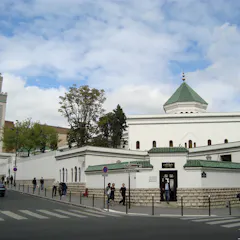
Why French officials placed a Muslim war memorial in the intellectual heart of Paris in the 20th century

Shannon Fogg, Missouri University of Science and Technology

The Grand Mosque of Paris has stood for a century as a memorial to Muslim soldiers and a nuanced symbol of French colonialism.

Health + Medicine

Stop trying to maintain constant productivity: Your ability to cope with stress changes with the seasons and your own biological clocks

Masha Remskar, Arizona State University

You can build resilience that will work with the changing rhythms in your life.

Trending on site