|
|
|
|
|
|
|
|
|
A Canadian study found a surge in emergency-room visits for gambling-related disorders among younger male patients after Ontario's launch of private online betting platforms. Ian Willms/The Globe and Mail
|
|
|
|
|
A new Canadian study has found that emergency-room visits for gambling-related disorders have almost doubled since Ontario opened the door to private online gambling and sports betting platforms. Men and boys between the ages of 10 and 29 account for the biggest increase, my colleague Jennifer Yang reported. |
|
|
|
|
Not many people end up in the ER for problem gambling. Those who do usually also have mental health or substance abuse diagnoses, or both. But the study finds a clear spike in those visits among younger male patients. For the 10 to 29-year-old cohort, they were up more than 150 per cent. |
|
|
|
|
The results are raising eyebrows among doctors because the trend is worrying, and this is rare, high-quality data about the impact that online gambling can have on someone’s health. |
|
|
|
|
And the question is, what does this surge in ER visits say about what online gambling is doing to the much, much larger number of people who have taken up betting on their phones? |
|
|
|
|
|
|
|
|
It’s a question I hope to never be able to answer from firsthand experience. |
|
|
|
|
As the parent of a 10-year-old boy, my battle against online gambling has already started. My kid does not have a smartphone, and we’ll delay him having one for as long as possible. |
|
|
|
|
But we watch Blue Jays games together as a family. At this point in the season, my kid has seen online sports-betting ads so often that he can recite one particular commercial word for word. |
|
|
|
|
My husband and I have talked to him about the risks and harms of online gambling, both financial and psychological. We’ve also discussed how live bets – placing wagers while a game is under way – can be even more dangerous and addictive. |
|
|
|
|
Every time a sports-betting ad comes up, we joke about how slick it is, how many times we’ve already seen it and how betting remains a very bad idea. |
|
|
|
|
We’ve also started to introduce my kid to the concept of investing. We’ve let him put some pretend money in a stock of his choosing (he picked Sony). Once in a while, we monitor the stock price and how his fake investment is doing. |
|
|
|
|
We’ll introduce the concept of portfolio diversification a little later. For now, I just want him to understand the difference between putting money in a stock and betting against the house. |
|
|
|
|
He’s following along so far. But one day we’ll have to get him a phone that connects to the internet. And it’s virtually guaranteed that some of his buddies at school will get into sports betting. |
|
|
|
|
Am I confident he won’t get sucked in? Absolutely not. |
|
|
|
|
I would love to hear how other parents are tackling this. If you’d like to reach out to share tips and strategies, you can reach me at: ealini@globeandmail.com |
|
|
|
|
I’d also love to know more about whether and how sports betting has affected you or your family. If you can spare a minute, please complete this short online survey – we’ll keep your answers anonymous. |
|
|
|
|
Subscribe to the On Money newsletter
Are you reading this newsletter on the web or did someone forward the e-mail version to you? If so, you can sign up for On Money here. |
|
|
|
|
|
|
|
|
|
|
|
|
|
|
|
| What the U.S. Fed rate hike means for your mortgage
The U.S. central bank, the Federal Reserve, just delivered its first interest rate hike in years. Here’s a good rundown of what that could mean for mortgage rates in Canada by mortgage finance company MCAP. | | |
|
The price of diesel and your grocery billThere’s nothing new with the wars in Ukraine and Iran keeping energy prices high. But the price of diesel, which powers trucks and trains, has gone through the rough lately, in part because of concurrent refinery bottlenecks. Those high prices could soon drive up the cost of groceries. | | |
|
‘Will you be my wedding guest?’ A guide to saying no (paywall)
With weddings becoming more and more extravagant – multiple events are now the norm, apparently – so is the cost of attending them. The Wall Street Journal has a handy guide to saying to what’s beyond your budget, without ruining the relationship. |
|
|
|
|
|
|
|
|
|
|
|
|
|
|
|
|
|
|
|
|
|
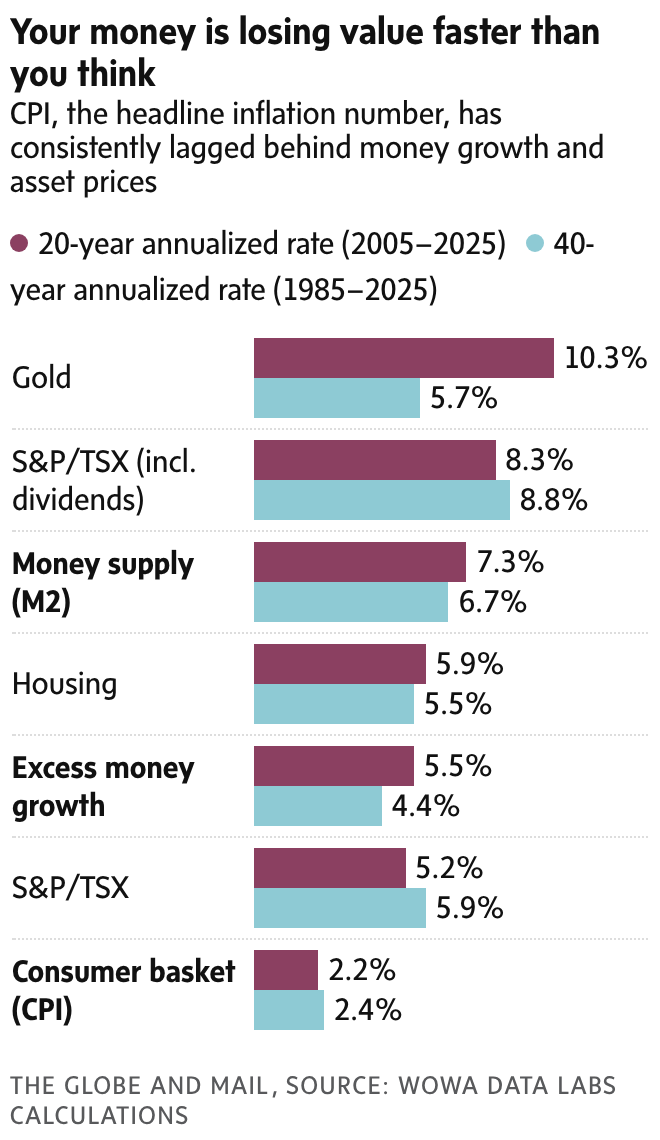
One big misconception in personal finance is how fast money actually loses purchasing power. CPI suggests your money loses half its value every 30 years, but this chart points to 13 years. |
|
|
|
|
|
|
|
|
|
|
|
|