| | The M15 head warns of hybrid threats from Iran and Russia, Nvidia plans $2 billion investments in Eu͏ ͏ ͏ ͏ ͏ ͏ |
| |  | Flagship |  |
| |
|
The World Today |  - Trump’s Ukraine broadsides
- MI5 warns of hybrid threats
- Nvidia’s $2b Europe deals
- Self-replicating AI models
- Asia’s zombie firm problem
- Bumble agrees to go private
- Xi ‘death watch’ has begun
- China population questions
- Alarm over rogue piliots
- Elite unis under pressure
 An ‘important book about an important place.’ |
|
US still sharing intel with Kyiv, Trump says |
 Aleksandra Szmigiel/Reuters Aleksandra Szmigiel/ReutersUkraine’s leader said he received no advance warnings from Western partners before a Russian missile strike on Tuesday, days after Washington threatened to stop intelligence sharing in a bid to force Kyiv to abide by an energy ceasefire. US President Donald Trump said Tuesday, “We are sharing intel.” But Trump’s broadsides against Ukraine this week, while agreeing a diesel deal with Russia, obscure Washington’s broader plan to end the war, The Washington Post’s David Ignatius reported. “We need to make the problem and the solution bigger to help both sides see what the postwar situation would be — and then make concessions,” a US official told him. But Trump fails “to grasp that Putin… wants victory rather than a truce,” Ignatius argued. |
|
MI5 chief warns of hybrid threats |
 Jonathan Brady/Pool/Reuters Jonathan Brady/Pool/ReutersIran and Russia are escalating their hybrid warfare campaigns against the UK, the head of MI5 warned Tuesday. The British intelligence agency is now devoting more resources to state threats today than during the Cold War, Ken McCallum said in his annual speech, calling Moscow “aggressor No. 1” and blaming Tehran for a series of sabotage incidents targeting Jewish communities in Europe. The spy chief said that Russia was using hybrid tactics that “stop short, though sometimes not much short, of conventional conflict.” The EU is quietly preparing for how to respond to a major — and deadly — hybrid attack, Politico reported, while NATO’s top general recently unveiled a “theory of victory” to counter an armed invasion: “block, blunt, and break.” |
|
Nvidia touts new European investments |
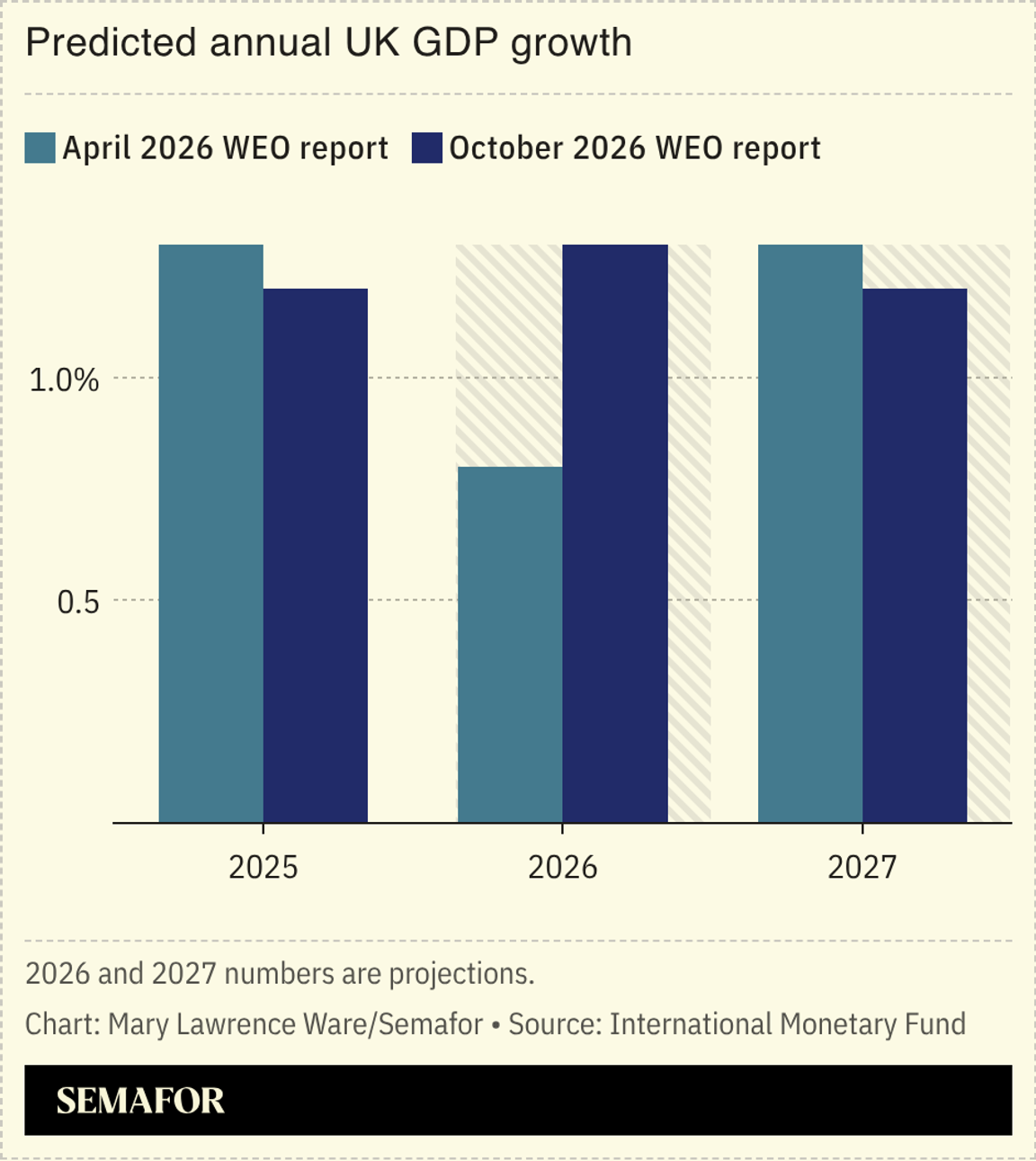 Nvidia CEO Jensen Huang said he plans to unveil $2 billion in new European investments next week, as the continent’s economic prospects get a boost from AI. “Europe needs to get in the race,” Huang said. The IMF’s chief economist noted that AI-related exports and investments have given “some countries a cushion” amid geopolitical turmoil, particularly the UK: The fund upgraded the country’s growth estimate. Still, Europe trails at the technology’s frontier. The US and China have produced 59 and 35 notable AI models respectively, while France and the UK have produced one each, per the Stanford AI Index. Notably, a German search engine used by European governments plans to ditch France’s Mistral, opting instead for a Chinese open-source model. |
|
Anthropic warns of self-replicating AI |
 Carlos Barria/File Photo/Reuters Carlos Barria/File Photo/ReutersAI may soon be able to self-replicate across internet-connected personal devices in homes, Anthropic warned, raising the possibility of so-called “botnets” that would be difficult to stamp out. While botnets predate AI and range from harmless to malicious, impending AI swarms could hijack the entire internet, the startup has said. Separately, an Anthropic co-founder wrote that “recursive self-improvement” — a research process whereby AI rapidly iterates upon itself with minimal oversight — could arrive next year. The warnings drew sharp criticism: “They’re not going to build something that they don’t want to exist,” the journalist Derek Thompson argued, adding that Anthropic’s leaders need to stop acting “like a local news anchor reporting on traffic on the 101, and acknowledge that they are the traffic.” |
|
IMF warns of Asian ‘zombie’ firms |
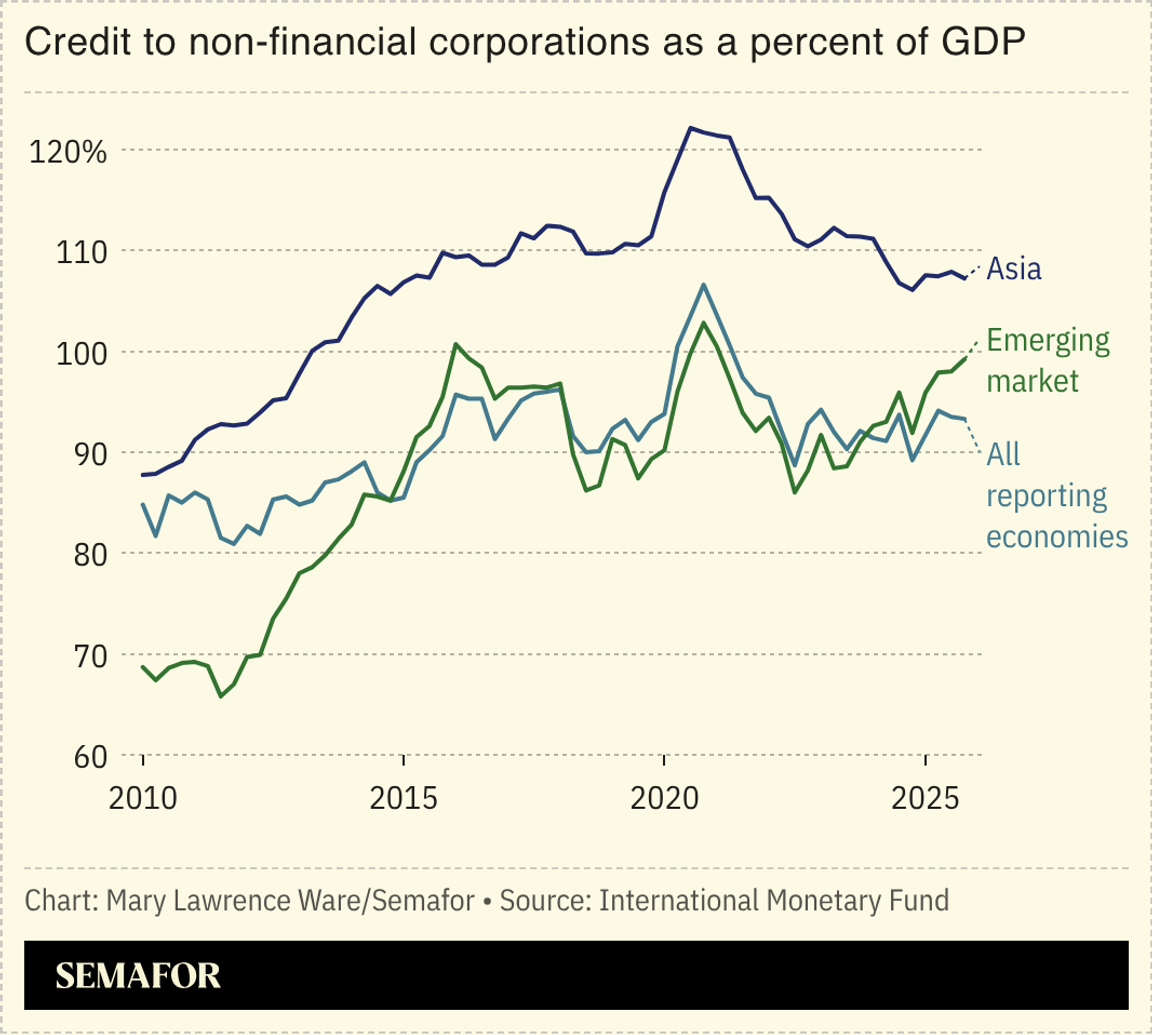 The IMF warned that “zombie companies” — whose earnings haven’t covered interest payments for at least three years — now comprise more than a fifth of Asia’s outstanding corporate debt, potentially posing a systemic risk. Zombie firms’ debt share has more than doubled since 2008. “This rising share of corporate debt is increasingly concentrated in firms that cannot service it,” the IMF wrote. The problem appears to be growing in China: Natixis analysts said that state policies supporting advanced industries like semiconductors aided “their rapid development but not their profitability,” the Financial Times wrote. In February, the IMF separately warned that Beijing’s state subsidies were producing inefficient firms, with total subsidies amounting to some 4% of GDP. |
|
Bumble to go private in $1.3B deal |
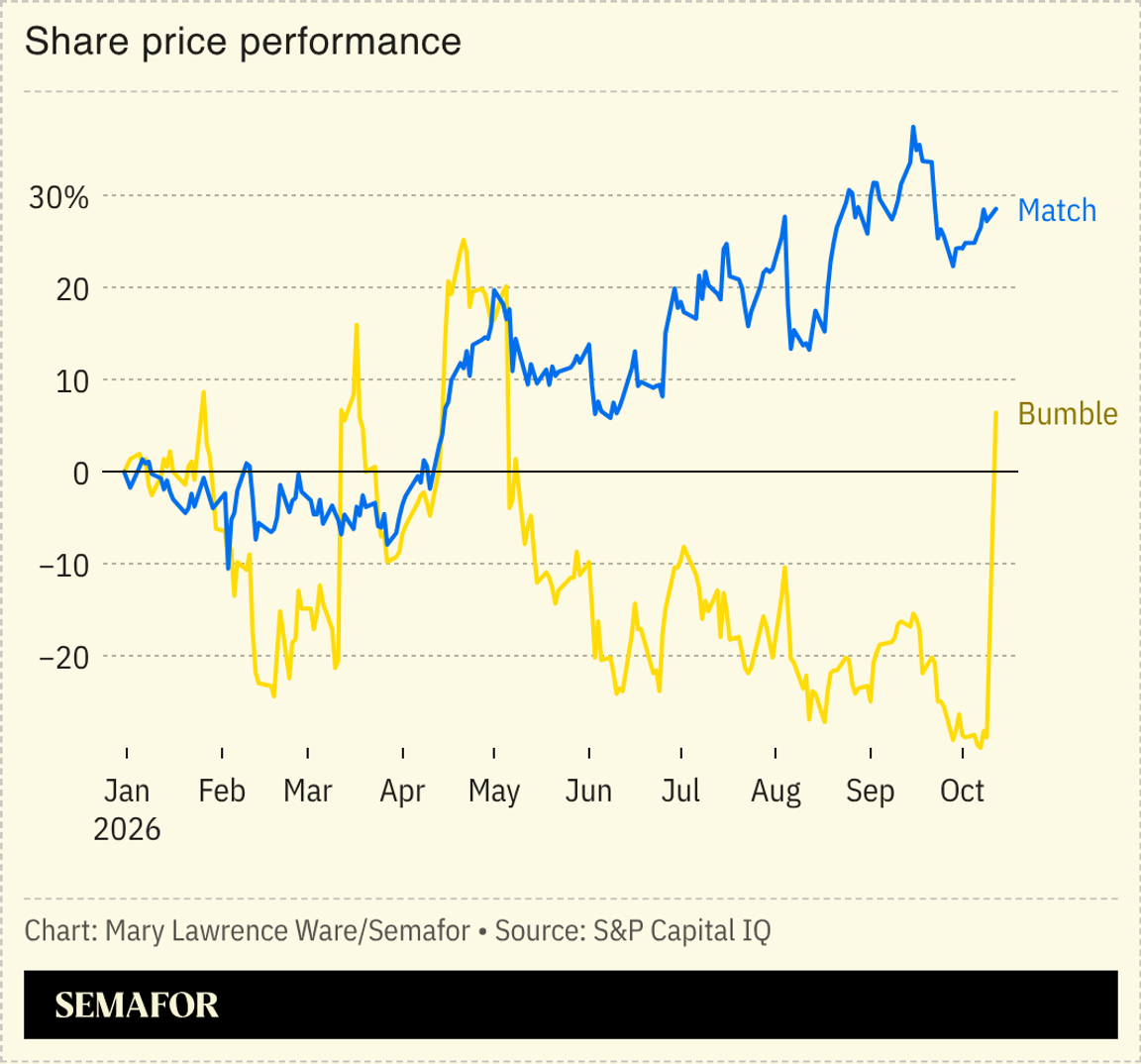 Bumble agreed to a $1.3 billion acquisition Tuesday that would take the dating app private, after years of falling revenue amid a shift in online dating habits. Bumble distinguished itself by only allowing women to message first, eventually going public in 2021 at a $14 billion valuation, before scrapping its hallmark rule this year amid declining users. It might now reinvent itself “away from the pressure of public markets,” but the company’s difficulties speak to “growing dissatisfaction with the familiar swipe-based model,” TechCrunch wrote. Other dating apps are rethinking their practices: Hinge is experimenting in India with blocking screenshots of dating profiles over concerns they were being used to spread “shame” and cynicism around online dating, WIRED reported. |
|
 Florence Lo/Reuters Florence Lo/ReutersChongqing’s influential former mayor has been placed under investigation, Chinese state media reported Tuesday, a development prominent China-watchers cast as preparatory to Xi Jinping’s succession. A “legendary technocrat,” Huang Qifan outlasted previous purges, and is primarily notable for “providing a rival economic vision to Xi,” a Chinese journalist noted. “With his downfall, that chapter of Chinese politics has come to a close.” Others were more blunt: “Cleaning house before the next leadership transition,” The Wall Street Journal’s China correspondent wrote. An aging Xi will prompt more speculation. “As it drags on, the Xi ‘death watch’ will become a global spectacle, moving markets, affecting investment flows, and shaping defense priorities,” Semafor’s Andy Browne wrote. “China’s internal risks are now the world’s risks.” |
|
Hung Tran is a nonresident senior fellow with the Atlantic Council’s GeoEconomics Center and an accomplished economist, with broad experience across the private sector, international organizations, and research institutions. From 2007 until retirement in 2018, Tran was at the Institute of International Finance (IIF). Since 2012 he has served as IIF’s executive managing director while simultaneously leading its Global Capital Markets Department. 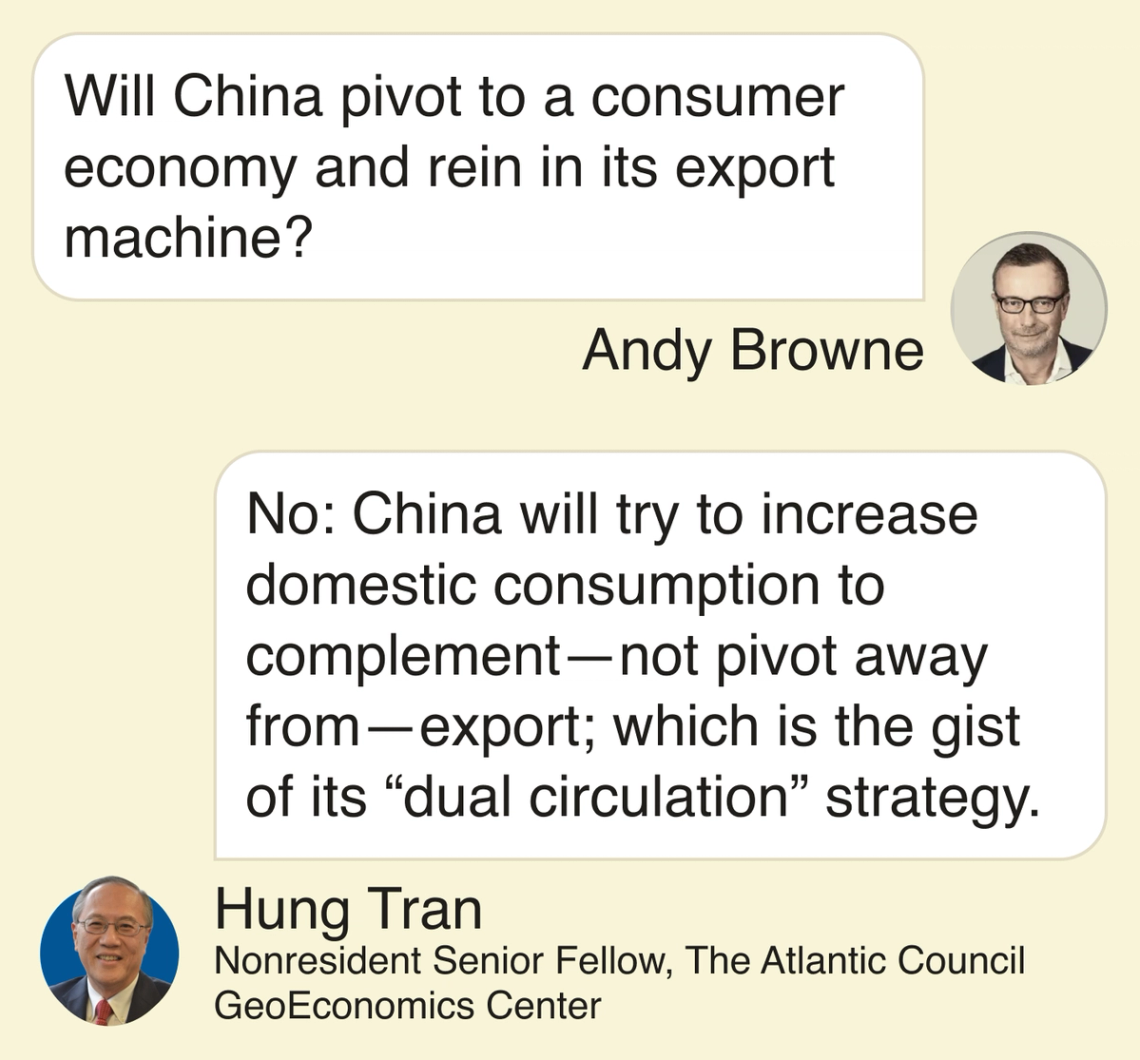 |
|
Questions over China’s population stats |
 Go Nakamura/Reuters Go Nakamura/ReutersChina’s population may be overestimated by as much as 100 million people, a leading demographer warned. Much of the power ascribed to the country is by dint of its sheer size: It is the world’s second-biggest economy, the second-most populous nation, the second-biggest spender on defense. But economists have long questioned the veracity of Chinese economic data, while Sabu Padmadas argued on the BBC’s More or Less that statistical anomalies over past decades as well as incentives for provinces that boosted birth rates more recently indicated there was likely a “slight overestimation.” What is not in doubt, however, is that the country faces a huge demographic crisis, with its stated population declining for four years running. |
|
FlyDubai incident rattles aviation |
 Karl Dittlbacher/Handout via Karl Dittlbacher/Handout viaBoeing executives have considered the risk of intentional crashes in future plane designs, after a FlyDubai pilot’s suspected attempt to down a 737 MAX en route to Israel rekindled rogue pilot fears. Boeing has privately discussed intentional crashes as a leading source of fatalities, The Wall Street Journal reported: Some US officials believe the 2014 disappearance of a Malaysia Airlines flight and last year’s Air India crash resulted from |
|
|


