| | Surging Chinese exports and sales of AI equipment, Saudi Arabia’s national oil giant is targeted by ͏ ͏ ͏ ͏ ͏ ͏ |
| |  Veldhoven Veldhoven |  Ceuta Ceuta | New Delhi |
 | Flagship |  |
| |
|
The World Today | 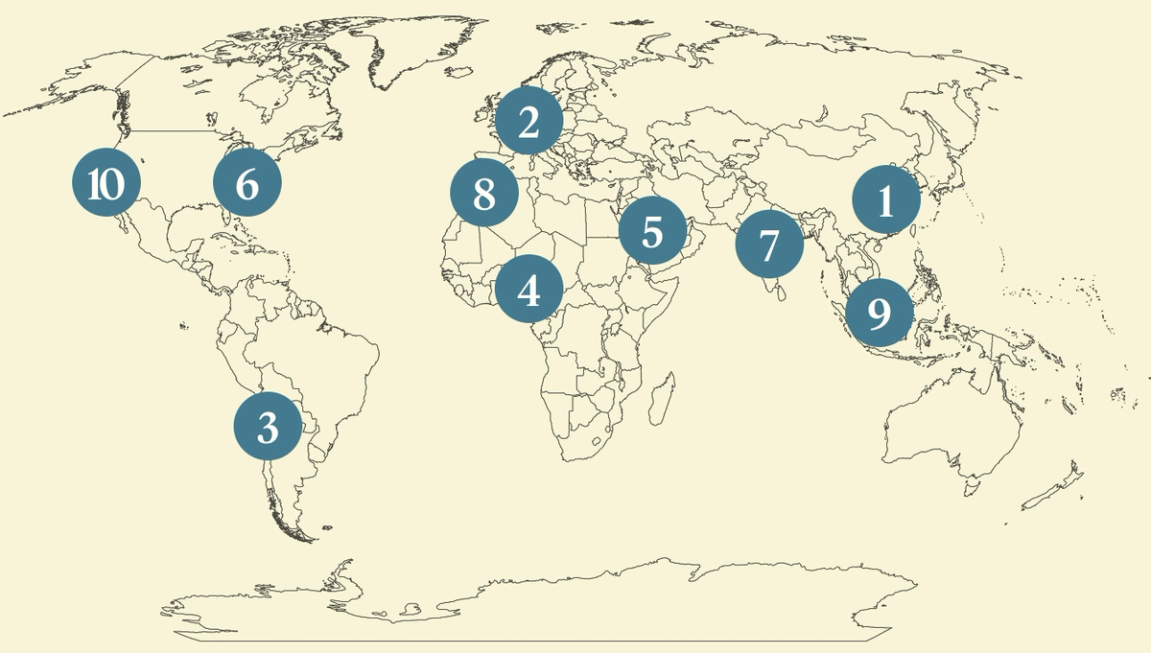 - China’s surging exports
- Bumper chipmaking sales
- Copper shortfalls mounting
- African refiner’s struggles
- Saudi oil giant targeted
- Huge US fine for BofA
- India’s protest crackdown
- Europe migrant showdown
- Leveraging deportations
- A case for tech deskilling
 A children’s classic marks the centenary of its debut. |
|
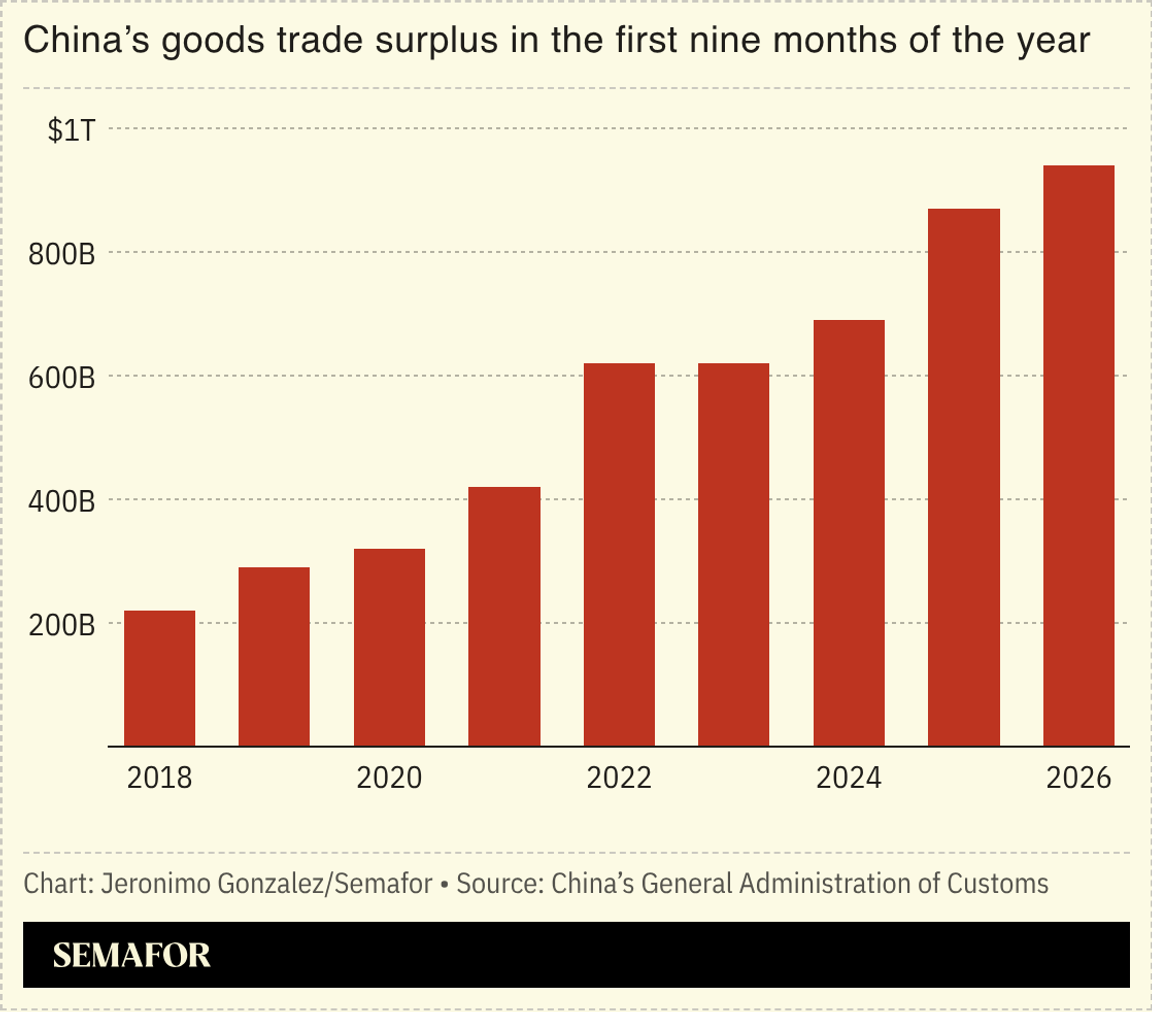 Chinese exports jumped 36% year-on-year in September, a bumper figure that is likely to vex the country’s trade partners, who have demanded Beijing address imbalances and alleged domestic overproduction. Faced with US and EU restrictions, which have dented Chinese imports in the West, Chinese companies have turned to other markets, sparking criticism from producers in Southeast Asia and Africa, who say their industries risk being hollowed out. The latest figures pushed China’s trade surplus in 2026 to almost $1 trillion, nearing the entire figure for last year, underlining the country’s continued reliance on exports, with domestic consumption weighed down by a long-running real estate crash and rising youth unemployment. Beijing has so far resisted calls for a significant stimulus package. |
|
ASML bullish on AI outlook |
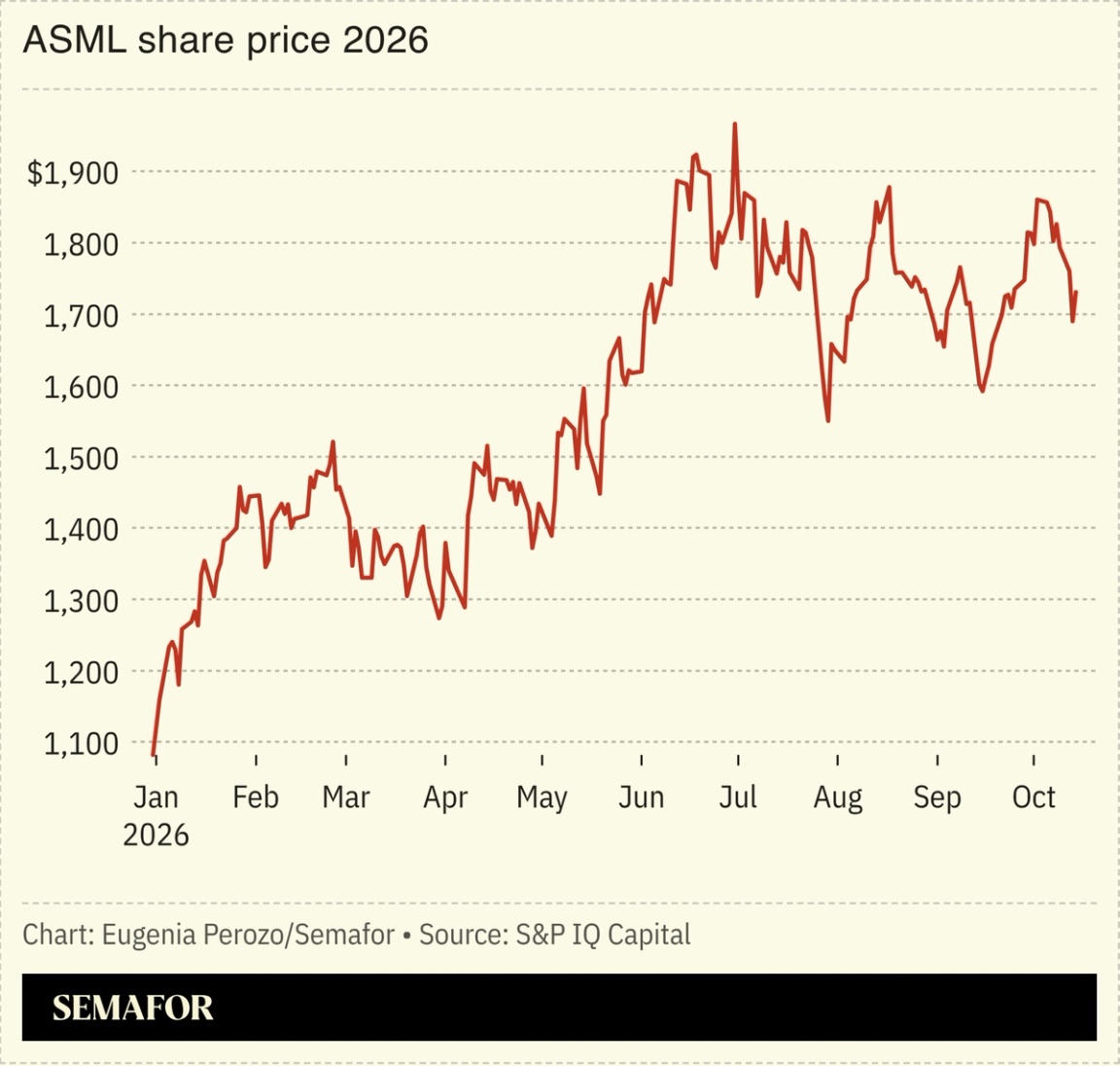 The CEO of ASML, the world’s only provider of the machines that make cutting-edge chips, said AI demand would outstrip supply for years to come, easing investors’ worries of a spending bubble. His comments come after Europe’s most valuable company reported bumper profits that far exceeded analyst expectations, boosting its share price. Investors globally have grown concerned that AI spending may be cresting as borrowing costs surge, with the International Monetary Fund warning that a market correction posed a threat to the global economy. But, for now, spending on the technology remains strong: Goldman Sachs expects AI infrastructure investment to drive a $7.6 trillion boom through 2031. |
|
Copper nears record highs |
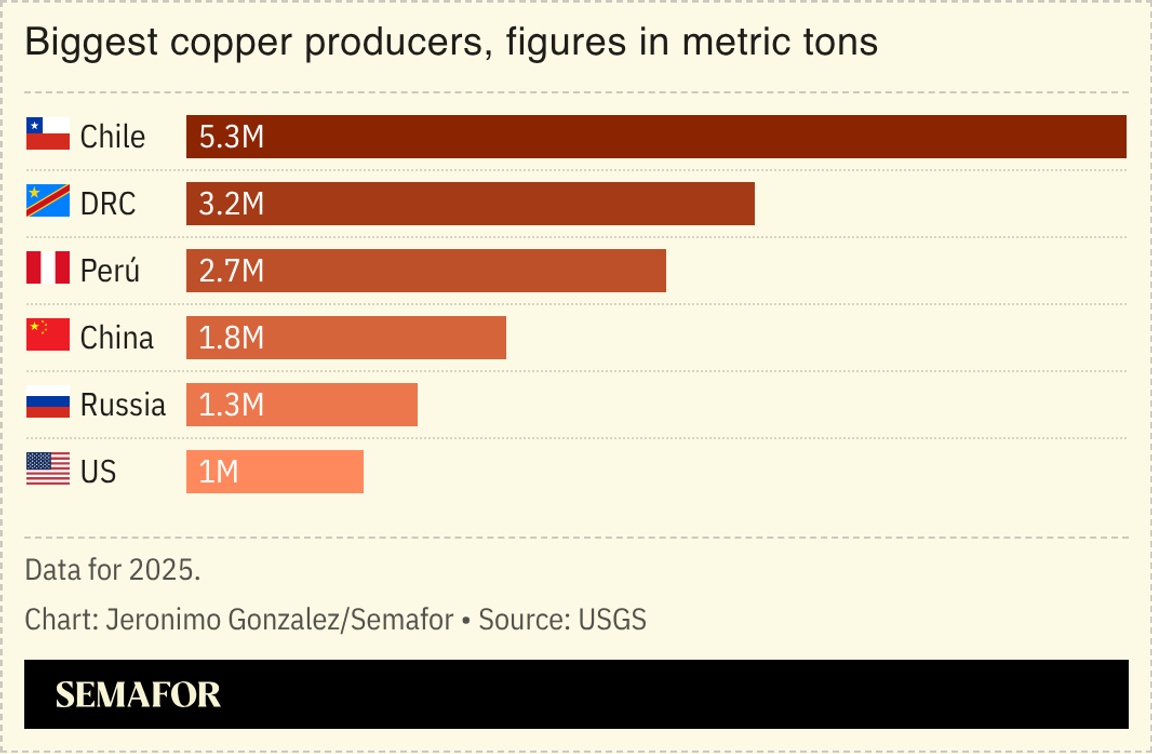 The threat of a worker’s strike at Chile’s La Escondida, the world’s biggest copper mine, sent prices for the metal near record levels, underscoring the Latin American country’s growing role in the industry. Other recent temporary closures in some of Chile’s copper mines, which are responsible for almost a quarter of global output, because of worker accidents and benefits disputes have also pushed up international prices. Demand for the metal has surged on the back of the AI data center and EV production boom, with countries globally racing to lock up supplies. But despite production rising to record levels in 2025, UBS nonetheless expects shortfalls to reach an all-time high next year. |
|
Africa’s cross-border investment problem |
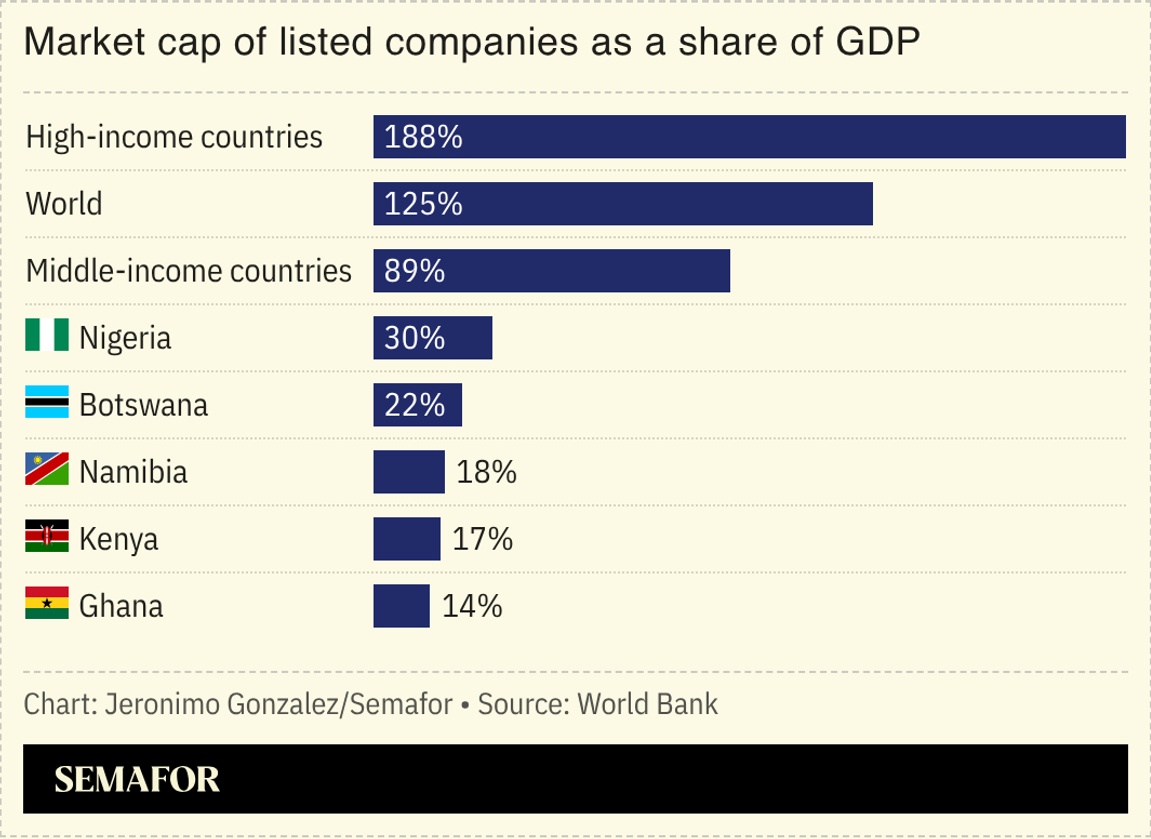 The recent public listing of Africa’s biggest oil refinery has exposed the barriers for cross-border investment across the continent. Aliko Dangote, Africa’s richest man, billed the IPO of his Lagos mega-refinery as a panacea for the continent’s capital markets, deliberately pricing shares cheaply to attract retail investors. However, the firm has struggled to adapt to multiple jurisdictions’ securities rules, hampering many local buyers, a challenge that Dangote referred to as a “teething problem.” Experts believe Africa could unlock billions of dollars in trade by boosting integration, with the World Bank recently estimating that creating a bloc that included almost every African country could see a 60% increase in commerce by 2035. |
|
Riyadh faces Houthi onslaught |
 An attack on the Riyadh airport. Saudi Ministry of Media/Handout via Reuters An attack on the Riyadh airport. Saudi Ministry of Media/Handout via ReutersIran-backed Houthi fighters reportedly hit the headquarters of Saudi Arabia’s national oil company in overnight strikes, stoking a conflict that risks spiralling into a wider war. The attacks follow a Houthi onslaught that killed 13, injured hundreds, and forced Riyadh’s airport to shut at least through Saturday, denting the kingdom’s reputation for stability and piling pressure on the country’s de facto ruler. Analysts fear the conflict could expand beyond the Arabian Peninsula: The Houthis are reportedly building an advanced missile using Chinese parts. US President Donald Trump has accused the group of “purposefully trying to drive up Oil Prices” ahead of November’s midterm elections; Tehran is reportedly targeting crude tankers in a bid to keep prices elevated. |
|
Bank of America’s record fine |
 Lucas Jackson/Reuters Lucas Jackson/ReutersUS authorities fined Bank of America $1.2 billion for failing to detect money laundering and other illegal activity, the biggest-ever such penalty. Officials said the bank — which reports third-quarter earnings today — had failed to detect $5 billion in suspicious activity, including some transactions they said posed a national risk. The fine sank the firm’s stock in after-market trading. Washington has in recent months stepped up its crackdown on financial crime, in particular targeting Chinese money laundering groups and Latin American drug cartels operating along the southern US border. “Financial institutions are on the front lines of protecting our economic and national security,” the US Treasury secretary said. |
|
India cracks down on growing protests |
 Priyanshu Singh/Reuters Priyanshu Singh/ReutersIndia cracked down further on anti-government protests that have grown substantially in recent months, escalating from attacking the authorities over education to frustration with what critics see as broader threats to the country’s democracy. Three leaders of an upstart political party were jailed and an historic protest site in central New Delhi — “the country’s most recognizable stage for public dissent,” per AFP — was shut down. The latest demonstrations have centered around a review of India’s electoral rolls that has led to an estimated 130 million people being barred from voting. Opponents of the effort say it has targeted minorities and critics of the ruling Hindu nationalist party; in Delhi, for example, The Hindu reported that Muslims were disproportionately affected. |
|
 ReflectionAI’s Ioannis Antonoglou thinks intelligence is the new electricity. On this week’s episode of Future Proof, presented by Google Workspace with Gemini, Reed Albergotti sits down with the former Google DeepMind researcher to discuss the latest trends in artificial intelligence, including optimizing for token efficiency and “AI sovereignty,” Chinese open-source models, the OpenAI-Hugging Face incident, and debate how we define “intelligence.” Listen to the latest episode of Future Proof now. |
|
Spain defends African territory |
 Pedro Nunes/Reuters Pedro Nunes/ReutersSpain’s king said his country’s control of exclaves in Africa was “non-negotiable,” after the cities became flashpoints in territorial disputes with Morocco and Europe’s anti-immigration debate. Ceuta rose to international prominence in July, when more than 70,000 people swept into the tiny exclave in a matter of hours. Most have returned to Morocco, which Spain’s prime minister accused of entering its territorial waters during the crisis. But European far-right parties have seized on the crisis as evidence that Madrid’s welcoming stance toward foreigners — it previously vowed to regularize hundreds of thousands of undocumented migrants — has backfired: “The future of Europe is being decided in Ceuta,” the leader of France’s hard-right National Rally party said while visiting the Spanish territory. |
|
|


