| | In this edition: IMF raises Africa growth outlook, ex-DRC president leads rebel group, Malawi’s fuel͏ ͏ ͏ ͏ ͏ ͏ |
| |  | Africa |  |
| |
|
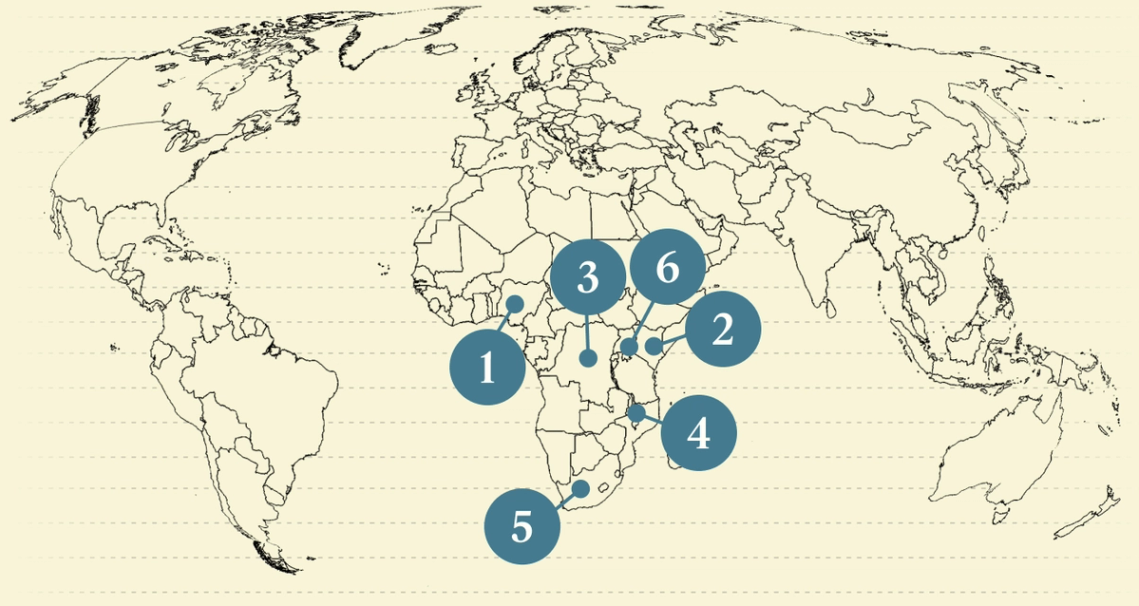 - IMF raises growth forecast
- Kenyans eye Dangote IPO
- Ex-DRC president leads rebels
- Malawi hit by fuel crisis
- S. Africa’s Chinese deluge
- Rwanda lands F1 Grand Prix
 A chess craze grips Kenya’s prisons. |
|
IMF raises growth outlook |
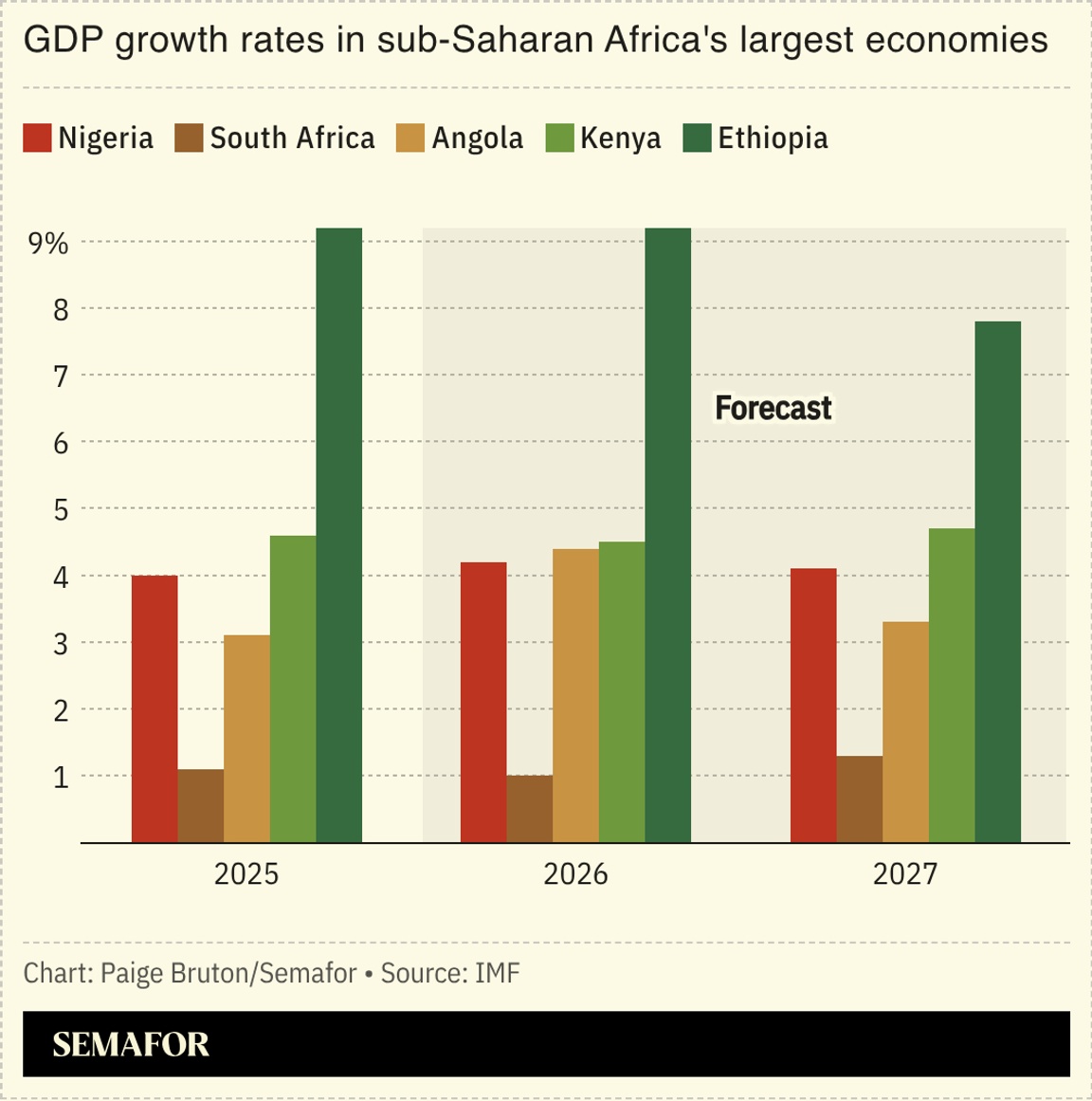 The IMF raised its 2026 growth forecast for sub-Saharan Africa to 4.5%, cementing its position as one of the world’s fastest growing regions. The IMF said the new projection, marginally higher than July’s 4.3%, “masks substantial divergence,” with oil-importing economies the most exposed to higher energy and food prices driven by Iran-war-related supply chain shocks. The IMF expects the continent’s biggest economy, South Africa, to grow more than four times slower than the region this year and next, as the higher oil prices hit its already fragile prospects. On the flip side, the fund raised its projected growth rate for Nigeria, Africa’s top crude oil producer, to 4.2%, citing a “favorable terms of trade effect.” Looking globally, the IMF named rising national debt as a growing risk to financial stability, “especially with high borrowing costs.” Last week, the World Bank said that nearly four-fifths of African countries spend more on interest payments than on health or education. — Tiisetso Motsoeneng |
|
Kenya opens Dangote IPO access to investors |
| |  | Martin K.N Siele |
| |
 Sodiq Adelakun/Reuters Sodiq Adelakun/ReutersKenyan investors hoping to participate in the $1.6 billion Dangote refinery initial public offering now have access through a financial instrument used for cross-border African investment for the first time on Nairobi’s bourse. Global depositary receipts enable backers to buy a stake in a foreign company without leaving their home market. Their use by the Nairobi Securities Exchange offers a template for exchanges to expand pan-African trade and broaden their investor bases. The refinery’s stock market debut was touted as a way for African investors to own a stake in the continent’s largest refining plant. But the IPO prospectus shows it was not registered as a public offering outside Nigeria, Reuters reported, leaving investors relying on their country’s regulations or finding workarounds using the few eligible online financial platforms. Dangote refinery on Monday extended the application period for its IPO by two weeks to Oct. 27. Ethiopian investors will be able to participate in the IPO, after the share sale was extended to allow for more regional buy-in. African policymakers are keen to deepen capital markets as a way to mobilize more of the continent’s domestic resources to fund infrastructure projects and reduce borrowing costs. |
|
Ex-DRC president leads rebel group |
 Arlette Bashizi/Reuters Arlette Bashizi/ReutersDR Congo’s former President Joseph Kabila has formed a new rebel movement incorporating Rwanda-backed forces, openly taking charge of the insurgency despite US sanctions against him. The move deepens the political and security threat to President Félix Tshisekedi’s government and challenges Washington’s efforts to end fighting and secure access to the country’s critical minerals. UN experts reported in June that Kabila’s growing prominence appeared intended to obscure Rwanda’s role by portraying the rebellion as a Congolese movement addressing a national problem. Rwanda has acknowledged defensive “security coordination” with the M23 insurgents, who have held large swaths of mineral-rich eastern DR Congo for more than a year. US sanctions against rebel leaders and Rwanda’s military, a Washington-brokered peace deal, and talks mediated by Qatar have so far failed to end the fighting. Insecurity has complicated DR Congo’s hopes of profiting from rising demand for copper, coltan, and cobalt used in digital infrastructure and the energy transition. Washington has paired its peace efforts with a bid to loosen China’s grip on mining in the world’s largest cobalt producer. — Ruben Nyanguila |
|
Malawi grapples with fuel crisis |
 Eldson Chagara/Reuters Eldson Chagara/ReutersMalawi launched a nationwide crackdown on fuel hoarders and black market sellers as the nation struggles with shortages that have left truckers queuing for up to a week and bus fares doubling on some routes. Diesel and petrol have been scarce for weeks because the country lacks the hard currency to buy fuel supplies, sparking a scramble for dollars that has seen the central bank sell off gold to pay suppliers and the government return to the IMF for a bailout. Malawi, which has among the highest fuel pump prices in Africa at more than $3 a liter, highlights the impact of a $100-plus per barrel crude price on import-dependent economies with thin buffers. Unlicensed resellers face arrest, and stations caught hoarding can lose their license under the new measures. The IMF last week said it was making “considerable progress” in designing a “package of macroeconomic policies.” Its last program was a $175 million loan that expired in May last year, the latest in a string of support packages for one of the continent’s poorest countries, whose agriculture-based economy has been hit hard by extreme weather patterns. — Tiisetso Motsoeneng |
|
S. Africa faces influx of Chinese goods |
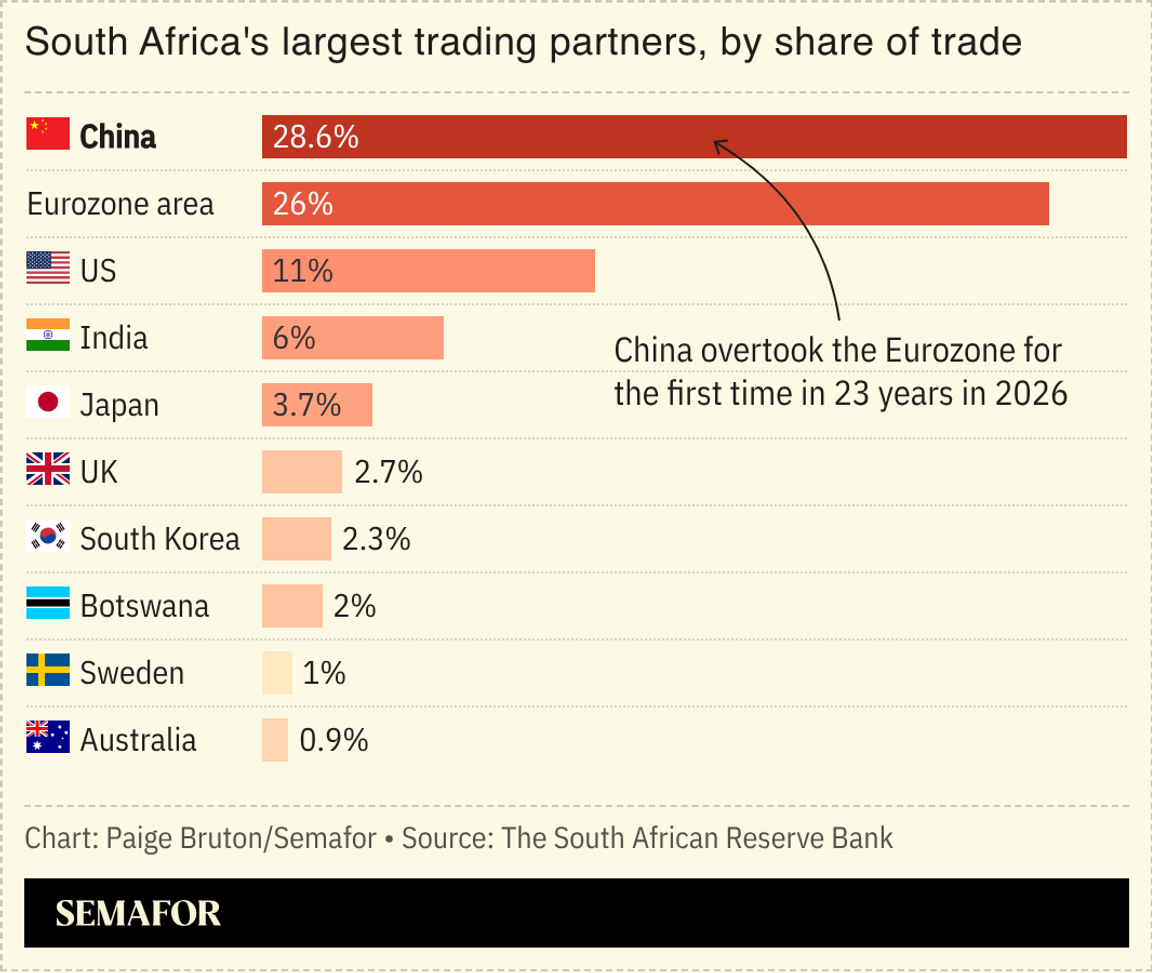 A surge of cheap Chinese imports has sent factory activity in South Africa cratering. While sub-Saharan Africa’s most industrialized economy has steadily increased trade with China in recent years, it has faced an influx of goods since US President Donald Trump imposed tariffs on Beijing, pushing Chinese companies to seek new markets. Southeast Asian nations are also buckling under a deluge of Chinese goods, with some fearing a new canal in South China could further widen the trade imbalance. Chinese exports reached a record in 2025 and have since accelerated, expanding 25% year-on-year in September. The surge risks hollowing out industries in poor and rich countries alike. “The current situation is unsustainable,” the EU ambassador to China said. A version of this item first appeared in Semafor’s twice-daily Flagship briefing. Subscribe here. → |
|
|
Rwanda wins the big prize |
 Rwanda’s President Paul Kagame. Jean Bizimana/Reuters. Rwanda’s President Paul Kagame. Jean Bizimana/Reuters.Formula 1 will be returning to Africa for the first time in more than three decades with a Grand Prix in Rwanda in the early 2030s, the sport’s governing body confirmed. The FIA, which has committed to a 10-year race deal, linked the move to expanding the global reach of F1, highlighting the “exciting growth opportunities” of the continent’s young fan base. After Rwanda beat South Africa to the honor of hosting a Grand Prix, President Paul Kagame said at the launch in the capital, Kigali, that “today belongs to Africa.” The race forms a significant addition to Rwanda’s growing portfolio of international events as it raises its global investment and tourism profile. But rights group Amnesty International has accused the FIA of handing the country a “sportwashing prize.” It accuses the authorities of arbitrary detention and torture of opponents, as well as stoking conflict in neighboring DR Congo — all of which Kigali denies. — Damian Zane |
|
| Healthcare from Semafor Washington, DC |
 A new era of healthcare policy is taking shape behind closed doors. With US health spending projected to hit $9 trillion annually by 2034, Medicaid cuts hanging in the balance ahead of the midterms, and increasing calls for regulation of clinical AI, the forces remaking policy are accelerating. Introducing Healthcare from Semafor Washington, DC, your weekly briefing on the politics, policy, and business driving the industry. Delivered every Thursday from David Lim, each edition will provide essential reporting and analysis on the emerging healthcare landscape, and what comes next. |
|
 Business & Macro |
|
|


