|
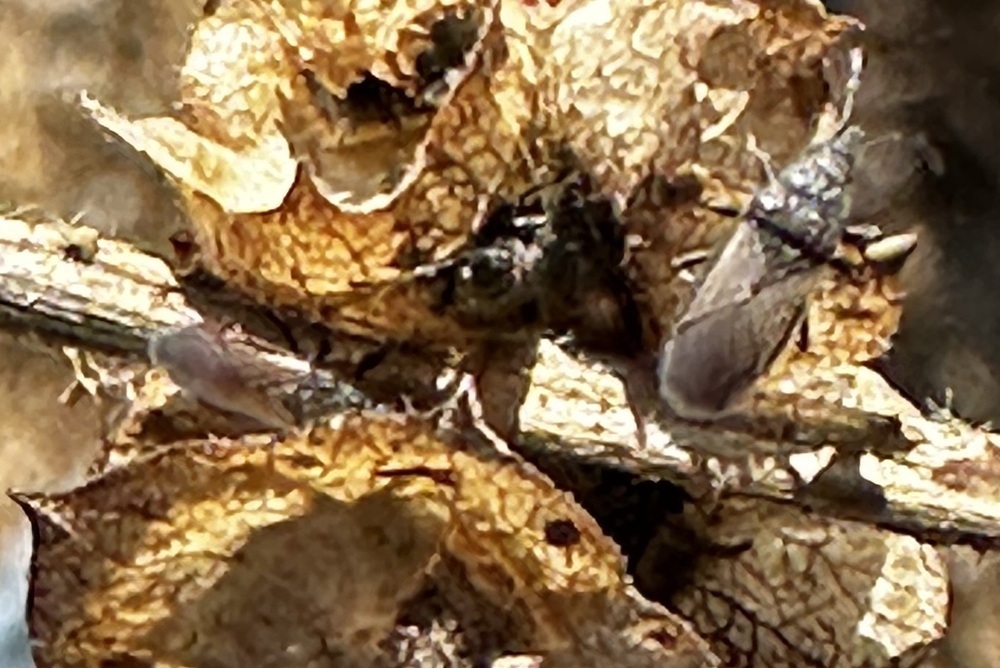
Cotton seed bug on dry Cheeweed. (USDA-ARS)
Cotton Pest’s Chemical Cues Open Door to New Controls
ARS researchers have created new chemical attractants to detect, monitor, trap, or control the cotton seed bug (CSB), an emerging threat to cotton, okra, hibiscus, and other host crops in the mallow family.
Since 2019, the 3.5- to 5-millimeter-long invasive pest has limited its presence to urban and residential areas of southern California. However, there’s concern CSBs will spread to cotton-growing areas beyond California.
In cotton, CSB feeding causes reductions in seed weight, germination rates, and oil content. At cotton gins, CSBs hidden in lint can get crushed, staining the cotton and reducing its quality. Neither scenario bodes well for the U.S. cotton industry, which accounts for $21 billion annually in products and services. Learn more...
The Agricultural Research Service is the U.S. Department of Agriculture's chief scientific in-house research agency. Daily, ARS focuses on solutions to agricultural problems affecting America. Each dollar invested in agricultural research results in $20 of economic impact.
|