The Watch
October 16, 2026
NOAA Ocean Podcast
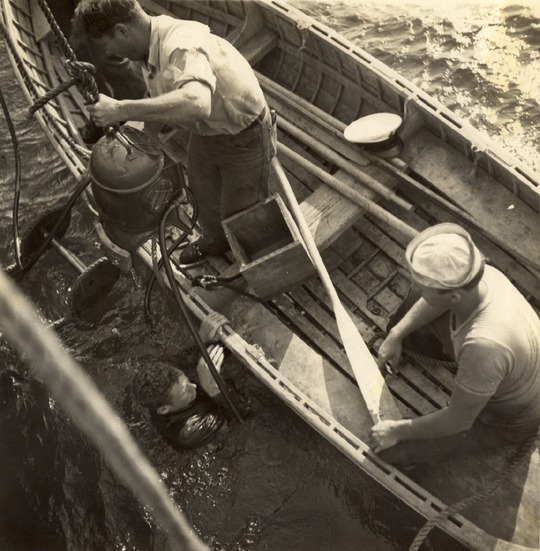 Hard hat diver cutting cable from propeller of Coast and GeodeticSurvey Ship LYDONIA. Credit: Family of Captain David M. Whipp, C&GS
In this episode, discover the origins of NOAA’s National Ocean Service, including how two U.S. founding fathers, President Thomas Jefferson and Benjamin Franklin, played a part in this ocean history lesson.
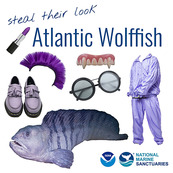
Spooky Sanctuaries
It’s October—time to creep into 13 dives of Halloween across your National Marine Sanctuary System. Explore these mysterious creatures and ocean oddities, and get inspired by spooky ocean decor, videos, and other content.
|
Upcoming NOAA Webinars
Friday, October 16, 2026 | 12 p.m. ET: How NOAA monitors and predicts the El Niño Southern Oscillation (ENSO)
Tuesday, October 20, 2026 | 2 p.m. ET: Place-Based Heat Research: Informing Solutions Across Rural, Coastal, and Marine Environments
Thursday, October 22, 2026 | 2 p.m. ET: To the Gulf and Beyond: Examples of Ongoing NOAA Uncrewed Systems Applications
Friday, October 23, 2026 | 12 p.m. ET: The Very Strong El Niño of 2026-2027: How a warm tropical Pacific Ocean may reshape weather worldwide
Tuesday, October 27, 2026 | 6 p.m. ET: Every River Reaches the Ocean: Engaging Students in Plastic Pollution Education
Thursday, November 5, 2026 | 3 p.m. ET: Living On the Edge: The Ecology of Mountain Goats and Avalanches in Alaska
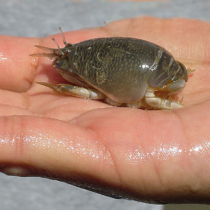
LiMPETS
Region: California Marine Protected Areas (MPAs)
LiMPETS (Long-term Monitoring Program and Experiential Training for Students) is a community science program for students, educators and volunteer groups. Community scientists monitor the coastal ecosystems of California’s national marine sanctuaries, increasing awareness and stewardship of these important areas. The statewide program connects over 6,000 citizens annually to the ocean, involves them directly in an immersive scientific endeavor and increases their knowledge of the marine environment, creating a new generation of informed and engaged ocean stewards.
Teachers are required to participate in training prior to class participation. Computer access will be needed to upload data. LiMPETS coordinators provide additional field testing equipment fish stock assessments, which are used by fishery managers!
|
 |
 |
|
Your Alien Dodecahedron
Make a twelve-sided object called a dodecahedron that will show examples of invasive species. The “Alien Dodecahedron” can be used to help people have a better understanding of the invasive species problem.
|

Choose your own (O)Adventure for ocean acidification (OA) education and outreach
Dive the NOAA Ocean Acidification Program's curated collection of background, classroom ready, regional and species-specific resources for educators, students and anyone interested in ocean and coastal acidification. Unlock ocean acidification with background, classroom ready, regional and species-specific resources - each vetted for teaching and communication best practices. The interactive gallery helps you quickly navigate our curated library to find the exact resources you need or you can browse the full collection.
|
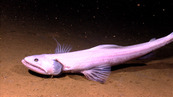
Creep Into the Deep This Halloween
Meet the ocean’s unusual inhabitants in the Creep Into the Deep video collection, where remarkable adaptations help animals survive in darkness. Bring a science twist to Halloween with classroom discussions about habitats, food webs, and the features that help deep-sea creatures find food and avoid predators.
|
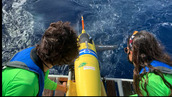
Ocean Robots Help Scientists Understand Hurricanes
How do scientists collect ocean data where hurricanes form and intensify? Introduce students to floats, underwater gliders, drifting buoys, and saildrones with Satellites of the Sea and discuss how their observations help improve hurricane forecasts.
|
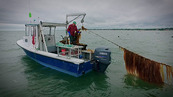
Celebrate Seafood Month: Explore the Future of Ocean Farming
Discover how farmers, scientists, and students are growing seafood and exploring new ways to farm the ocean in The Future of Ocean Farming video collection. Celebrate National Seafood Month with classroom connections to aquaculture, marine ecosystems, innovative technology, and ocean careers.
|
NOAA Ocean Exploration PD Workshops
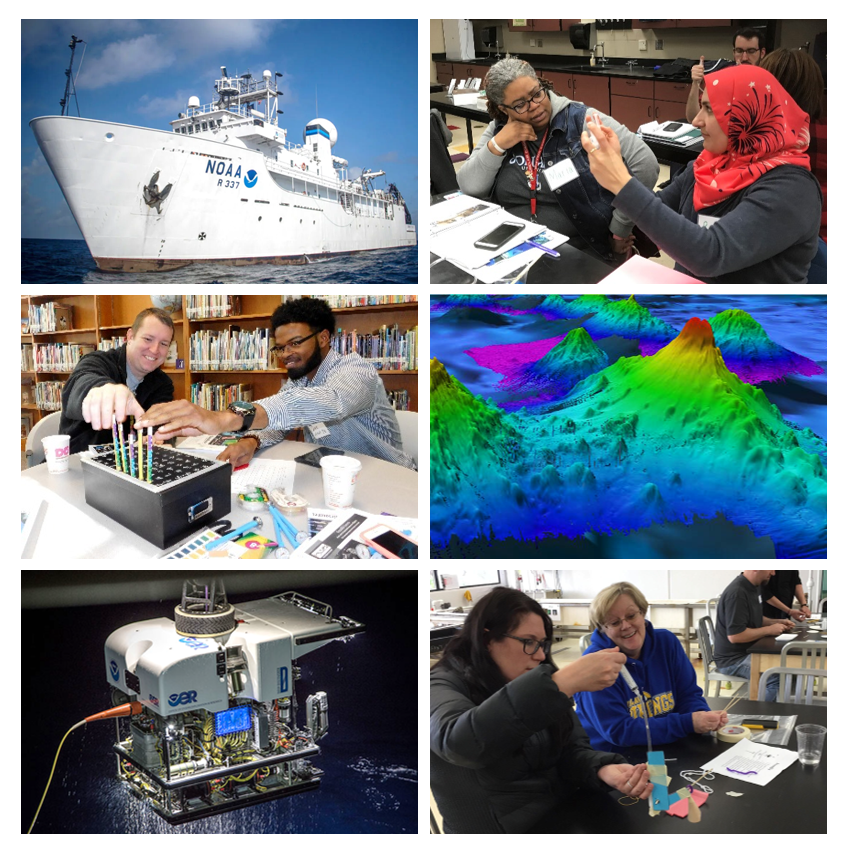 Join NOAA Ocean Exploration and fellow educators at a full-day, in-person professional development workshop to learn about the dynamic geologic and physical processes associated with seamounts and the complex coral and sponge communities that inhabit them. Participants will dive into phenomena-based student investigations and hands-on activities, and discuss implementation strategies to bring the excitement of ocean science and exploration into your classroom. See upcoming workshop sites for this fall’s topic “Exploring the Deep Ocean with NOAA”.
Atlantic Highly Migratory Species Art Contest Now Open
 Credit: Delisse Ortiz
Submission Deadline: Sunday, January 31, 2027
NOAA Fisheries holds an annual art contest open to kindergarten through eighth grade students. Through art, we hope to raise awareness about Atlantic highly migratory species (sharks, tunas, billfish, and swordfish) or “HMS.” Winning artwork is included in a calendar highlighting the importance of these species to healthy ecosystems and NOAA Fisheries’ successes in conservation through sustainable fisheries management.
The 2027 HMS art contest will highlight the sustainable fishing of Atlantic sharks, tunas, swordfish and billfish. Details on entry requirements, submissions, winning artwork, and more can be found on the HMS Art Contest website.
2027 NESTA Planet Stewards Program
Submission Deadline: Sunday, November 1, 2026, midnight PST
The National Earth Science Teachers Association (NESTA) has announced that applications for the Planet Stewards Program 2027 Cohort are now open! Funding is open to formal and informal educators. Applicants will be notified of their proposal status in January 2027; projects should begin in spring 2027 and conclude no later than the end of June 2028. Ten hands-on, action-based school or community stewardship initiatives will be funded for up to $5000 per project. Awarded stewardship projects must make a substantive, measurable impact on an environmental issue related to their community. Visit the Planet Stewards homepage for more information about the process, examples of past funded projects, and application materials. Please feel free to reach out to planetstewards@nestanet.org with any program questions.
|